When naps stop working
You’ve probably had that moment: you’re tired, your eyelids feel heavy, you lie down for a quick afternoon nap — and… nothing happens. You just lie there, fully awake, wondering how your brain can be this alert when your body feels so drained.
Napping is supposed to be one of the simplest forms of self-care. Just a short rest, a reset, a pause between busy hours. Yet for many people, naps are surprisingly elusive. Even when you’re exhausted, falling asleep during the day can feel impossible — and frustrating.
If this sounds familiar, you’re not alone. The ability to nap easily isn’t universal, and it depends on a delicate balance of your body’s internal clock, hormones, sleep patterns, and even emotions. The good news? Understanding why naps don’t come easily can help you find better ways to rest — with or without sleep.
The science of napping: what your brain needs to switch off
Napping is not just a shorter version of night sleep. It operates within a specific window of your body’s circadian rhythm — the 24-hour cycle that controls alertness, hormones, and temperature.
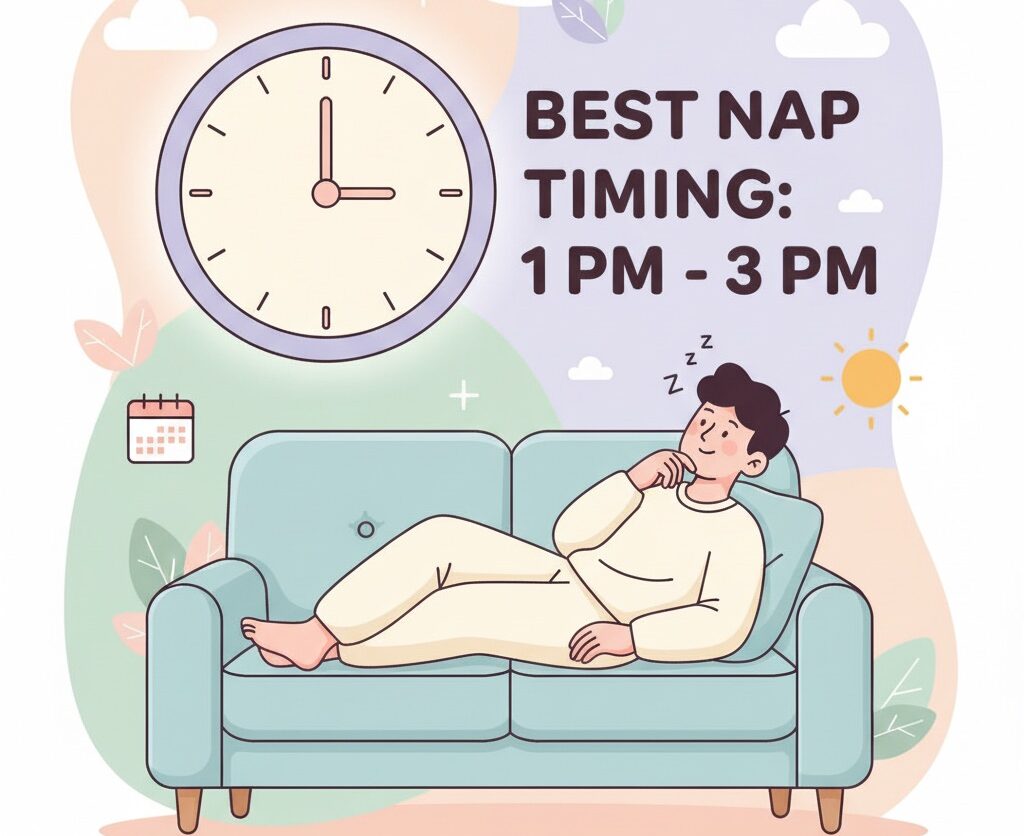
Most people experience a natural dip in energy in the early afternoon, usually between 1 p.m. and 3 p.m.. That’s when your core body temperature slightly drops and your brain releases adenosine, a chemical that builds sleep pressure. If you try to nap outside of that window — say, too early in the morning or too late in the evening — your body may resist, no matter how tired you feel.
Another key factor is sleep inertia — the grogginess that can follow a nap. Your brain moves through sleep stages, and if you wake up too late into a deeper stage, you can feel worse than before. That’s why short naps of 10–20 minutes are often recommended: they give your brain a light rest without plunging into deep sleep.
But biology isn’t the only thing at play. Stress hormones, caffeine, emotional associations, and even cultural beliefs about productivity all influence whether you can drift off during the day.
Common reasons you can’t nap — and what’s really going on
Let’s look at some of the most common (and overlooked) reasons naps don’t work — and gentle ways to make rest feel easier again.
1. Your timing is off
The timing of your nap matters more than you think. If you lie down too early, your sleep drive hasn’t built up enough. Too late, and your body’s preparing for nighttime sleep — so it resists a nap to protect that rhythm.
Try observing your energy curve. Most people find the sweet spot between lunch and mid-afternoon. If you’re trying to nap at 5 p.m., that’s likely too late — your brain’s internal clock already expects you to stay awake until bedtime.
2. You’ve had too much caffeine
Even small amounts of caffeine can block adenosine, the chemical that makes you sleepy. A morning coffee might seem harmless, but caffeine can linger in your system for up to 8 hours.
If you’re struggling to nap, notice when your last caffeinated drink was. Try cutting caffeine after 10 or 11 a.m. for a few days — you might be surprised how much easier it becomes to rest.
3. Your stress response is still active
Sometimes, the body feels tired but the mind doesn’t. When stress hormones like cortisol or adrenaline stay high, they keep your nervous system alert, even when you’re lying down.
Your body interprets relaxation as a “safety signal.” So before trying to nap, it helps to create a short wind-down: dim the lights, breathe slowly, or listen to calm music. Even three minutes of deep breathing can shift your body toward rest mode.
4. When tiredness isn’t the same as sleepiness
One of the biggest misconceptions about napping is that feeling tired automatically means you can fall asleep. But there’s a difference between physical fatigue and biological sleep drive.
You might be mentally tired — drained from focus, screens, or social interactions — but still physiologically alert. Your brain may be overstimulated, flooded with blue light or stress signals, so it refuses to switch off.
In that case, forcing a nap rarely works. Instead, try what neuroscientists call “non-sleep deep rest” (NSDR). It’s a state where your mind slows down without fully sleeping — like guided meditation, breathing exercises, or simply lying still with your eyes closed. Studies show that NSDR can restore energy, improve focus, and lower stress almost as effectively as a nap.
5. Your environment keeps your brain alert
Even subtle things in your environment can tell your brain: this is not the time to sleep. Bright daylight, background noise, or even the smell of coffee from another room can keep your senses active.
If possible, create a nap-friendly space:
-
Dim the light. Close curtains or use an eye mask.
-
Reduce noise. Try white noise or gentle ambient sounds.
-
Adjust temperature. A slightly cooler room (around 19–21°C) helps your body relax.
It doesn’t have to be perfect — even a couch corner or car seat can work if your brain learns to associate it with quietness. The key is consistency.
6. You’ve trained your brain to “resist rest”
For many of us, especially in busy or achievement-oriented cultures, resting during the day feels uncomfortable. You might feel guilty or anxious about “wasting time.” This mental resistance sends mixed signals to the body — part of you wants to rest, another part refuses to relax.
Learning to nap often means unlearning productivity guilt. Rest isn’t laziness; it’s a physiological need. A short nap can increase focus, stabilize mood, and boost creativity. Allowing yourself to rest — without self-judgment — is sometimes the biggest step.
Reconnecting with natural rest
If naps feel impossible right now, that’s okay. Your ability to nap can fluctuate with age, stress, hormones, and lifestyle. What matters is rebuilding trust with your body’s rhythms.
Start by simply noticing your daytime energy — when it dips, how your mood shifts, when your body feels heavier. That awareness alone can help you align your rest habits more naturally with your biology.
Your body isn’t “bad” at napping. It’s simply communicating — through restlessness, tension, or wakefulness — that it needs a different kind of care.
How to train your body to nap again
If naps haven’t been working for you lately, think of it as a skill that your body can relearn — gently, without pressure. Instead of trying to force sleep, the goal is to rebuild trust with your body’s natural rhythm.
Start small. For a week, set aside the same short time window each day — maybe around 1:30 p.m. or 2:00 p.m. — as your “quiet reset” time. Don’t expect to sleep; just lie down, close your eyes, and focus on slowing your breathing.
This consistent routine helps your brain associate that time with calmness. After a few days, your body may naturally start to release tension at that hour. For some people, sleep begins to return without effort.
You’re not teaching yourself to nap — you’re teaching your nervous system that it’s safe to pause.
1. Redefine what “rest” means
We often think rest must mean sleep — but it doesn’t have to. There are many forms of daytime rest that can give your brain the same recharge.
Try experimenting with short, intentional breaks that don’t require sleeping:
-
Lie down and breathe deeply for five minutes.
-
Listen to a calming playlist or ambient nature sounds.
-
Do a short body scan — bring awareness to each muscle and release tension.
-
Sit by a window and let your mind drift without screens or distractions.
These quiet moments engage the body’s parasympathetic system — the “rest and digest” mode that restores energy even without sleep.
When you stop measuring the “success” of rest by whether you fall asleep, it becomes easier to truly relax.
2. Use gentle sensory cues
Our senses are powerful in signaling the brain when it’s time to unwind. To encourage your body into a nap-friendly state, use small, consistent sensory associations:
-
Scent: Light a calming candle or use lavender or chamomile essential oil.
-
Sound: Choose soft, repetitive background noise like rain, waves, or white noise.
-
Touch: Wrap yourself in a soft blanket or use a weighted throw for a feeling of safety.
-
Light: Dim the brightness around you — or wear a light-blocking eye mask.
The more consistent these cues are, the more your brain will learn to associate them with rest. Over time, simply smelling a familiar scent or hearing a certain sound can help your body begin to relax automatically.
3. Try mindful mini-naps
Mindful napping is a hybrid between meditation and sleep — a simple practice to help your body rest without pressure.
Here’s how to do it:
-
Lie down comfortably or recline in a quiet space.
-
Close your eyes and take slow, deep breaths.
-
Focus on the rise and fall of your chest.
-
If your mind wanders, gently return to your breath.
-
Stay here for 10–15 minutes, without trying to “fall asleep.”
Some days you might doze off. Other days you won’t. Either way, you’ll come out feeling calmer and more refreshed.
This approach works well for people who overthink naps or find it hard to “switch off.” It reframes rest as something your body receives naturally — not something you must achieve.
4. Avoid “nap sabotage” habits
There are a few common habits that unknowingly make napping harder. Becoming aware of them can make a big difference:
-
Too much screen time before resting. Blue light suppresses melatonin and keeps the brain alert. Try to step away from screens 15–20 minutes before lying down.
-
Overscheduling your rest. If your “nap time” feels like another to-do list item, your brain will resist. Instead, keep it flexible — a soft boundary, not a strict rule.
-
Overthinking your fatigue. When you lie there thinking “why can’t I sleep?” you activate your alertness loop. Try repeating a gentle mantra like “It’s okay to rest, even if I don’t sleep.”
Rest thrives in acceptance, not effort.
5. Tune into your natural rhythm
Some people are natural “nappers.” Others simply aren’t — and that’s okay. Your genetic makeup, age, and daily exposure to light all affect how your circadian rhythm works.
If you notice that you never feel drowsy during the day, it might mean your internal rhythm is more consolidated. Instead of trying to nap, you can focus on optimizing nighttime sleep — by adjusting light exposure, temperature, and bedtime routines.
Listening to your body’s cues — yawning, eye heaviness, slow thoughts — is more reliable than following clock-based rules.
6. The role of nutrition and hydration
Sometimes the ability to nap comes down to how your body feels physically. If you’ve eaten a large or heavy meal, your digestion may keep your system too active to sleep. On the other hand, low blood sugar or dehydration can make you feel “wired” even when tired.
Aim for a light, balanced lunch with a mix of complex carbs, healthy fats, and protein. And drink enough water throughout the morning so you don’t feel bloated or parched when you rest.
Small details like these can make your afternoon energy dip feel smoother — and your body more open to rest.
7. Shift from “performance rest” to “permission rest”
We live in a culture that values doing over being. Even rest becomes something to “optimize” — tracking sleep data, monitoring naps, trying to meet recovery goals.
But the body doesn’t respond to performance pressure. It relaxes through permission — the internal message that you are safe, allowed to slow down, and free from expectation.
Try this simple mindset shift:
“I’m not trying to sleep. I’m allowing rest.”
This softens the edges around rest and makes it more accessible.
The beauty of resting awake
You might not fall asleep every time you lie down — and that’s perfectly fine. Resting awake is not a failure. In fact, neuroscience shows that just lying still with your eyes closed allows the brain to enter restorative alpha-wave states.
Your body doesn’t measure rest by whether you sleep; it measures by whether your nervous system relaxes.
So even if you don’t nap, your effort to pause, breathe, and soften still counts as recovery.
Making peace with your energy
Energy naturally fluctuates throughout the day — and from day to day. Some days you’ll need more movement, others more stillness. By letting go of the idea that you must nap a certain way or for a certain time, you make room for your body’s wisdom to lead.
Resting well is less about control and more about listening.
Whether that means drifting into a short nap, lying quietly for ten minutes, or stepping outside to watch the light change — it’s all part of the same intention: to meet your energy with kindness.
Final thoughts: it’s okay if you can’t nap.
If you’ve tried everything and naps still feel out of reach, please know this — nothing’s wrong with you. Some bodies are simply wired for consolidated nighttime sleep. Others thrive with short bursts of daytime rest.
What matters most is giving yourself permission to rest in whatever form feels natural.
A nap is not a measure of how tired you are, but a reflection of how safe and supported your body feels. When you let go of the expectation to “nap perfectly,” you might just find — one quiet afternoon — that your body drifts off on its own.