Sleep is no longer seen as just the hours we spend in bed — it is now considered an essential pillar of wellness, equal to nutrition and exercise. With the rise of smart home technology, the bedroom has become one of the most innovative spaces in our lives. More people are asking: how can technology help us sleep better, not just keep us awake longer?
Smart home sleep is about creating an environment where your room automatically adjusts to your body’s needs. Instead of simply putting on a sleep mask or opening a window, you can rely on intelligent devices that monitor air quality, control lighting, adjust sound, and regulate temperature. This shift reflects a larger wellness trend where technology is no longer the enemy of rest but a partner in restoring balance.
As researchers at the Sleep Foundation highlight, the sleep environment has a major impact on the quality of rest. Poor air, wrong lighting, or uncomfortable temperature can prevent deep sleep stages. Smart systems are designed to correct these factors in real time.
Air quality: breathing easier at night
We often underestimate the role of air in our sleep quality. Stale, dry, or polluted indoor air can make it harder to breathe comfortably at night. High levels of CO₂, dust, or allergens may cause micro-awakenings, even if you don’t notice them. Over time, this leads to fragmented sleep and morning fatigue.
Smart air purifiers and humidifiers are designed to address these issues. Unlike traditional devices, they are connected to sensors that monitor air quality in real time. For example, a smart purifier can automatically increase its power when it detects high levels of dust or pollen. A humidifier can maintain the ideal range of 40–60% humidity, preventing dry skin and irritated airways.
Some devices even measure CO₂ concentration, a factor that is strongly linked to restless sleep. Elevated CO₂ levels in poorly ventilated rooms make the air feel “heavy” and reduce oxygen intake. Smart systems can send alerts or trigger air circulation at the right moment.
In practice, this means with smart home you don’t need to wake up stuffy or dry-throated anymore. By optimizing bedroom air quality, smart devices support deeper, uninterrupted rest. If you are interested in details, you can also check our earlier guide: Air quality, indoor pollution and sleep.
Smart lighting: syncing with circadian rhythms
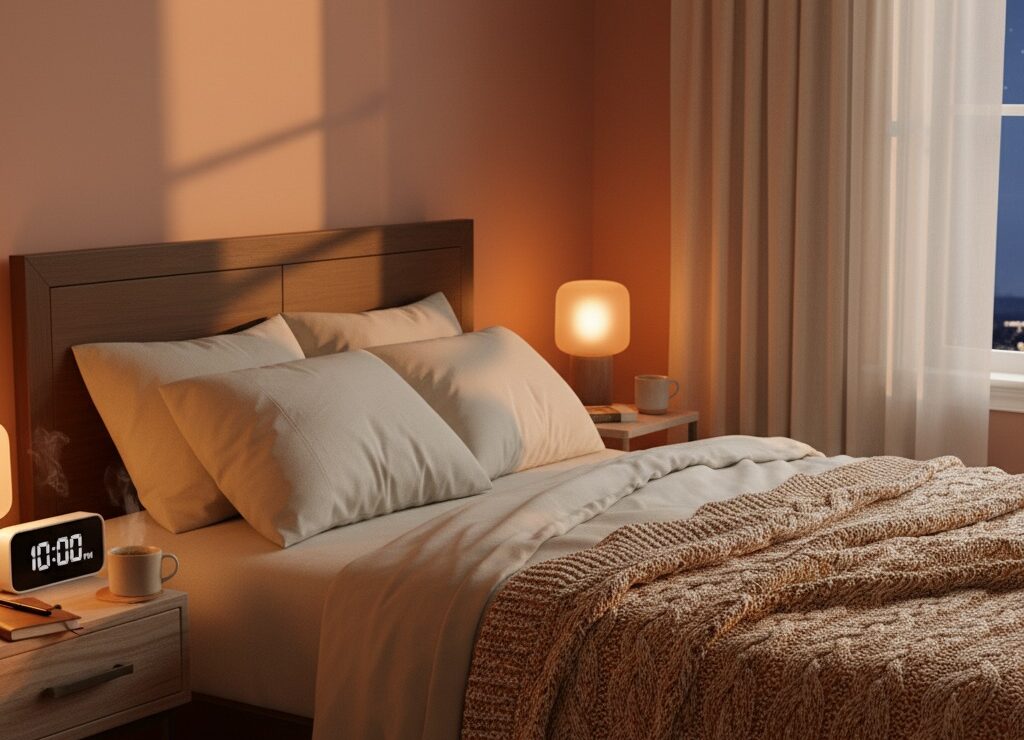
Lighting is one of the most powerful regulators of the circadian rhythm — the body’s internal clock that tells us when to feel awake and when to feel sleepy. Exposure to bright, cool light in the evening can delay the production of melatonin, the sleep hormone. On the other hand, gradual dimming and warm light tones signal the body to wind down.
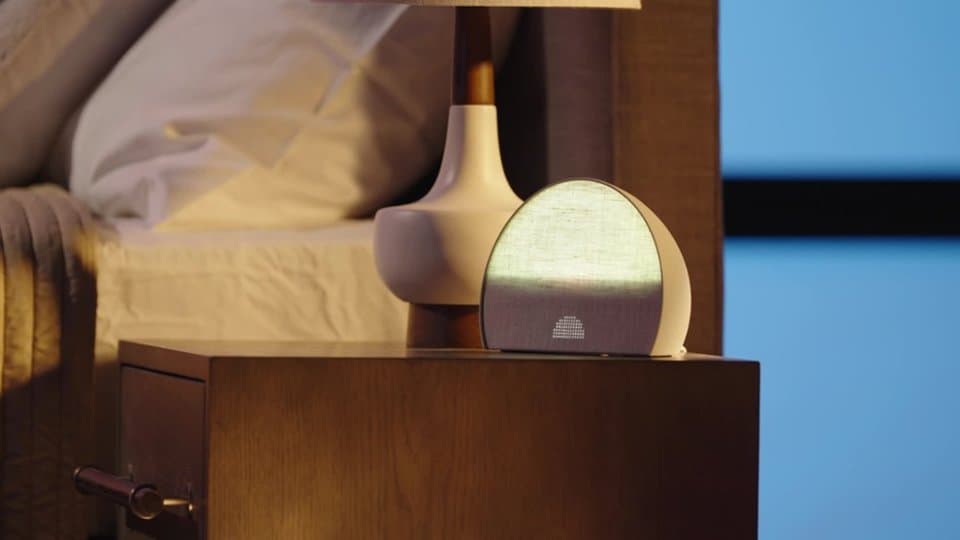
This is where smart lighting systems come in integrated in smart home. Unlike a simple bedside lamp, smart bulbs such as Philips Hue, Nanoleaf, or Casper Glow are designed to follow natural light patterns. You can program them to gradually dim in the evening and simulate sunrise in the morning.
The benefit is that your body gets cues aligned with its biological needs. Instead of suddenly turning off a bright overhead light and struggling to fall asleep, the transition is smoother and more natural.
Some advanced systems even integrate with sleep trackers, adjusting brightness depending on your bedtime. For example, if your tracker shows that you are going to sleep later than usual, the lights can start dimming earlier to gently guide you toward rest.
Smart lighting is not just about convenience or aesthetics. It’s about reclaiming a healthier relationship with natural light cues in an age where screens dominate our evenings.
Soundscapes and noise control
Noise is one of the most underestimated disruptors of sleep. Even low-level background noise, such as distant traffic or neighbors, can fragment your sleep architecture without fully waking you up. Over time, this prevents you from reaching deep restorative stages.
Smart home technology offers a modern solution: adaptive soundscapes. Unlike a basic white noise machine, smart sound systems can respond to changes in your environment. For example, if sudden noise occurs outside, the device can increase the sound masking level to cover it.
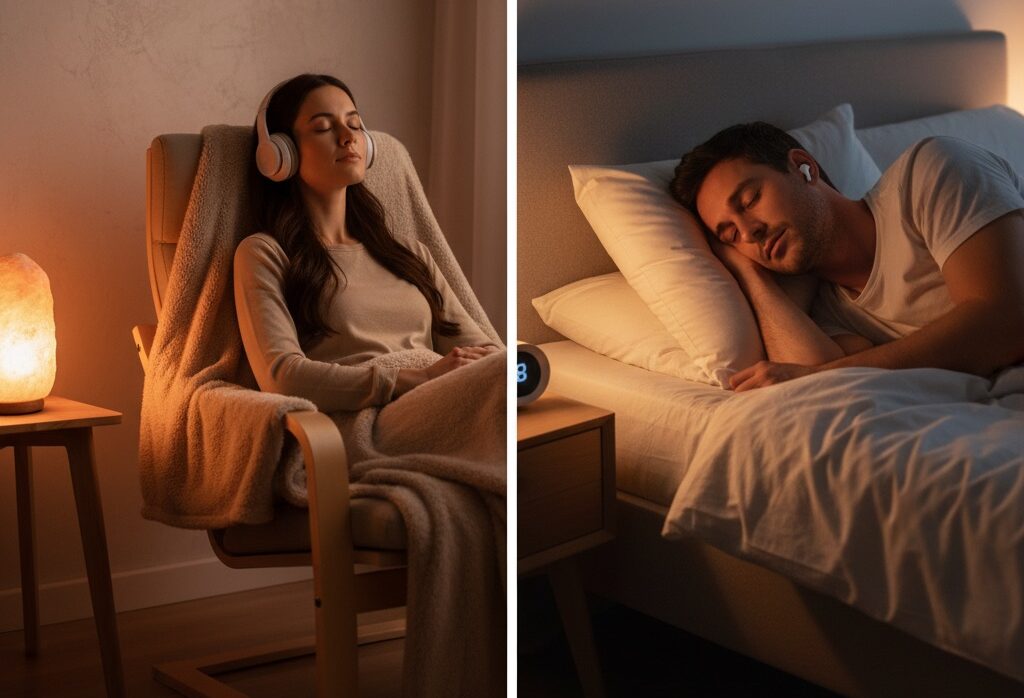
Some systems of smart home integrate with voice assistants such as Alexa or Google Home, allowing you to create “sleep routines.” You can say “good night,” and your bedroom will instantly adjust: lights dim, temperature drops, and calming sounds begin.
Popular devices include smart speakers with built-in sleep features, as well as dedicated sound machines that connect to apps. These allow you to personalize your sound environment, choosing from gentle rainfall, forest sounds, or consistent white noise.
Sound is deeply personal — some people fall asleep best with silence, others need a consistent hum. Smart devices allow for this customization, ensuring that you can create the exact soundscape that helps you drift off and stay asleep.
Temperature control: the foundation of comfort
If there is one factor most people notice immediately, it’s temperature. Too hot or too cold, and sleep becomes restless. Research shows that the optimal sleep temperature is typically between 16–19°C (60–67°F). But our bodies are not static: core temperature naturally drops at night, and the right environment of smart home should support that change.
Smart thermostats like Nest or Ecobee allow you to pre-set temperature schedules, automatically cooling the room before bedtime and warming it up just before you wake. Even more advanced are smart mattresses and sleep systems, such as Eight Sleep or BedJet, which provide dual-zone control — perfect for couples with different comfort needs.
These devices don’t just offer comfort; they can track your sleep stages and adjust in real time. For instance, if your tracker notices you’re restless, the mattress can cool down slightly to help you enter deeper sleep.
The ability to fine-tune temperature on such a personal level represents one of the most transformative aspects of smart home sleep. Instead of layering blankets or constantly adjusting the thermostat manually, your environment adapts to you.
Creating a fully integrated smart bedroom
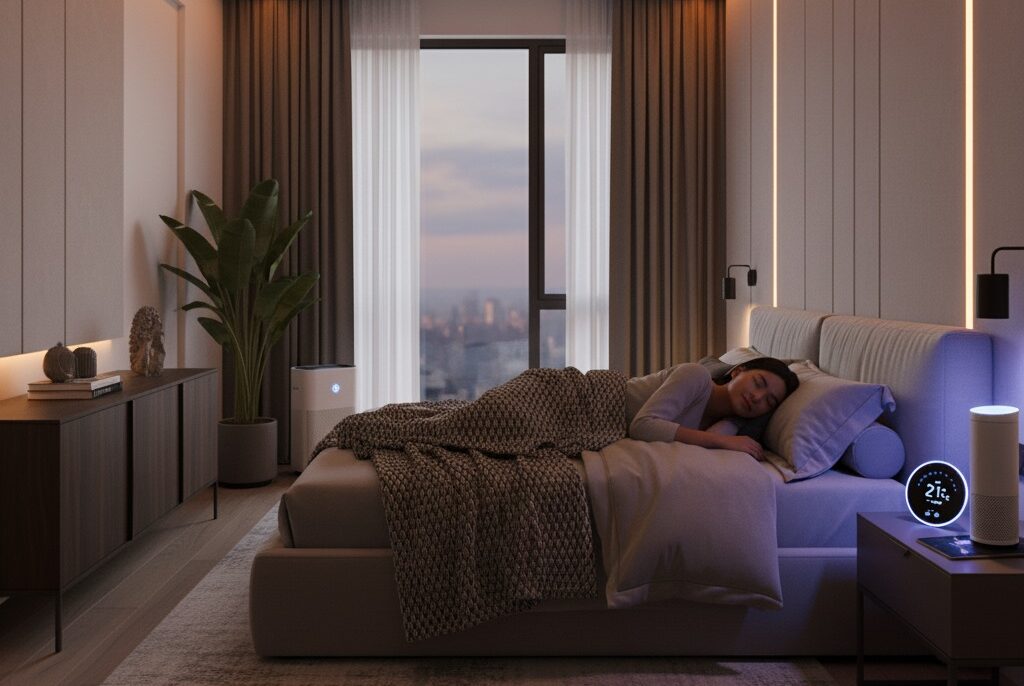
Individually, smart home devices can improve sleep — a purifier for clean air, a lamp that dims in the evening, a thermostat that cools the room. But the true potential emerges when these systems work together. Integration is what makes a smart bedroom more than the sum of its parts.
Platforms like Apple HomeKit, Google Home, and Amazon Alexa allow you to connect devices from different brands into one ecosystem. That means you can create “scenes” or “routines” — single commands that trigger multiple changes.
For example, a “bedtime” routine might include:
-
The lights gradually dimming to warm amber tones.
-
The air purifier switching to a quiet nighttime mode.
-
The thermostat lowering to the ideal sleep temperature.
-
A calming soundscape starting automatically.
Instead of managing multiple devices individually, you can set and forget. Once your preferences are saved, the system of smart home learns over time, adjusting to your habits and even responding to external conditions like weather, pollen count, or city noise levels.
This integrated approach makes technology feel less like a distraction and more like an invisible support system.
The balance: technology and simplicity
One concern people often raise is whether introducing too much technology into the bedroom creates more stress than it removes. After all, the modern sleep crisis is often blamed on constant screen use and digital overload. Isn’t adding more devices counterproductive?
The key is intentional design of smart home. Smart sleep is not about adding gadgets for the sake of it — it’s about simplifying the environment so that once the system is set up, you don’t need to think about it again. Ideally, technology fades into the background.
For example, instead of fiddling with a humidifier or changing the thermostat every night, you simply say “good night” and the system takes over. Instead of scrolling through apps, you can set your preferences once and let automation do the rest.
Another important balance is limiting visible technology in the bedroom. Smart devices today are designed with minimal, calming aesthetics — soft lighting, silent operation, neutral designs that blend with your room rather than dominate it.
The goal is to make sleep effortless, not to turn your bedroom into a high-tech lab.
Challenges and considerations
Despite the benefits, smart home sleep technology also comes with challenges.
Cost: Smart devices can be expensive. A smart mattress, purifier, or lighting system may require significant investment. While the wellness benefits can be meaningful, it’s important to choose essentials rather than overloading your room with unnecessary gadgets.
Compatibility: Not all devices work smoothly together. Some are tied to specific ecosystems, making it tricky to integrate everything under one control. Choosing platforms that allow wide compatibility (Google Home, Alexa) can reduce frustration.
Privacy and data: Many smart sleep systems collect data on your habits, such as bedtimes, sleep quality, or air quality levels. While this data can provide insights, it also raises privacy questions. Choosing devices from trusted brands with transparent policies is key.
Over-reliance: Finally, there’s the risk of becoming too dependent on technology. The foundation of good sleep still lies in healthy habits: consistent bedtimes, limiting caffeine, reducing screen time. Smart devices should complement, not replace, these basics.
The future of smart sleep
Looking ahead, smart home sleep is moving toward greater personalization. Current systems already adjust lighting and temperature, but the next generation will likely be more predictive and adaptive.
Imagine a bedroom that:
-
Adjusts humidity levels based on your skin hydration.
-
Chooses a soundscape based on your current stress level.
-
Learns your chronotype (early bird or night owl) and adjusts schedules accordingly.
-
Synchronizes with wearable health data, such as heart rate and breathing patterns, to optimize rest in real time.
Some companies are experimenting with AI-driven adaptive environments, where machine learning algorithms anticipate your needs. For instance, if your wearable detects restlessness during deep sleep, the mattress might cool by two degrees to guide you back into stable sleep.
We may also see integration with wellness programs — linking smart sleep data to nutrition apps, stress management tools, and even telehealth platforms. Sleep will no longer be a passive act but part of a connected lifestyle of longevity and health.
Practical steps for beginners
If the idea of transforming your bedroom into a smart home environment feels overwhelming, start small. You don’t need every device at once. Here are steps to get started:
-
Focus on air and temperature first. These are the most impactful environmental factors. A smart purifier and thermostat can dramatically improve comfort.
-
Add smart lighting. Replacing bulbs with circadian-friendly ones is simple and relatively affordable.
-
Experiment with soundscapes. Try a smart speaker or noise-masking device to find what works best for you.
-
Integrate gradually. Once you’re comfortable, start connecting devices into routines.
-
Observe results. Notice if you wake up more refreshed, fall asleep faster, or experience fewer disturbances. Adjust settings accordingly.
The bedroom is evolving into a wellness hub, and smart home technology is leading the way. Air quality monitors, adaptive lighting, personalized soundscapes, and dynamic temperature control are no longer luxuries — they are becoming practical tools for better rest.
But the true promise of smart home sleep lies not in individual devices but in their seamless integration. A room that anticipates your needs, adjusts quietly, and supports your body’s rhythms can transform sleep into a restorative, effortless experience.
As technology of smart home continues to advance, the line between biology and environment will blur. Sleep will no longer depend on chance — it will be designed. And when rest becomes intentional, it can become one of the strongest foundations for health, energy, and longevity.
Read also: Home sleep hacks: how to optimize your bedroom environment