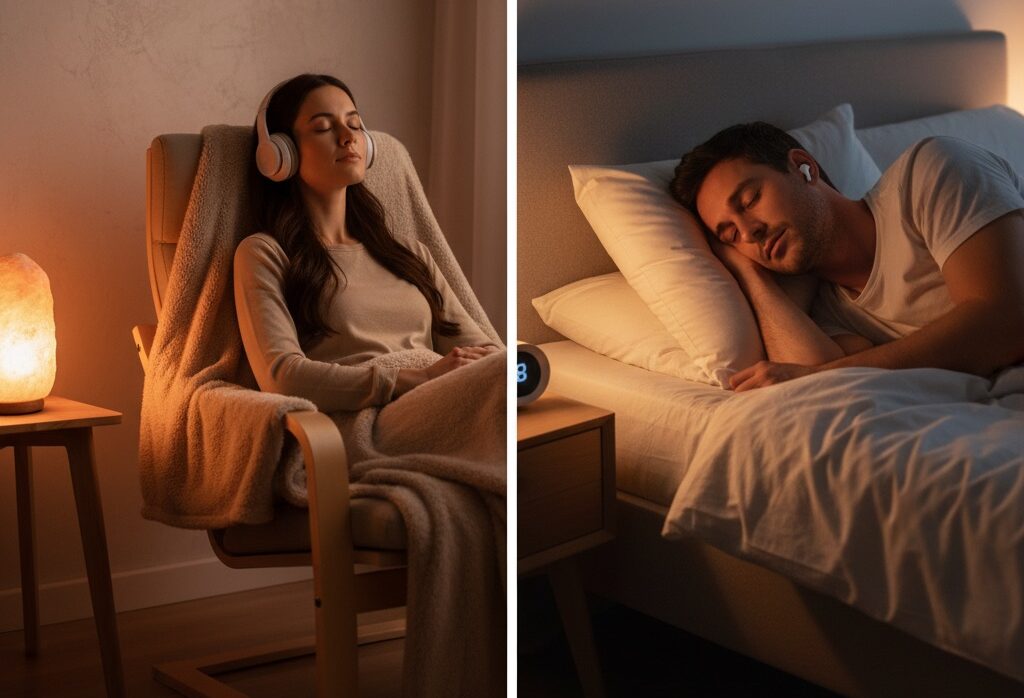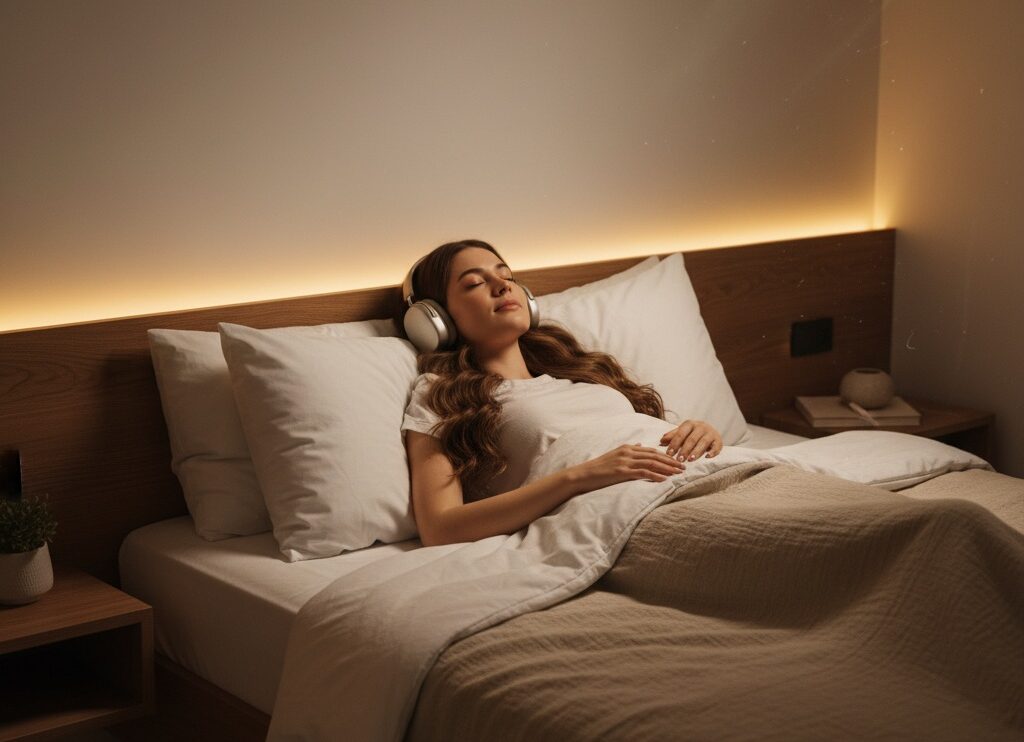
Falling asleep isn’t always about how tired your body is, it’s often about how calm your mind can become. In a world of constant noise, endless scrolling, and racing thoughts, guided meditations offer a gentle bridge between wakefulness and rest. They’re not just about quieting the mind; they guide your attention, rhythm, and breath in a way that naturally prepares your body for sleep.
When you listen to a guided meditation, your brain begins to slow its frequency from active beta waves into alpha and theta states — the same stages that precede deep sleep. Your breathing deepens, your heart rate steadies, and your muscles release tension you didn’t even realize you were holding.
But perhaps the most powerful aspect of guided meditations is that they give your mind something soothing to focus on. Instead of spiraling through tomorrow’s to-do list or replaying conversations from the day, you follow a calm voice that gently anchors you to the present moment. Over time, this becomes a signal for your body: “It’s time to rest now.”
Sleep meditations are also deeply adaptable. Whether you prefer soft music, silence, nature sounds, or a steady voice, there’s a format for everyone. You don’t need prior experience with mindfulness or meditation — you just need a quiet space, a pair of headphones, and the intention to let go.
What makes a sleep meditation effective
Not all guided meditations are created equal, especially when your goal is rest. An effective sleep meditation shares a few key qualities that help your nervous system unwind.
First, the voice. The tone, pace, and warmth of the speaker’s voice have an immediate impact on relaxation. Calm, slow speech with natural pauses allows your breathing to sync and your body to follow. Many people find that a lower-pitched voice — whether male or female — is easier to follow at night.
Second, the rhythm. Sleep meditations tend to have a slower cadence than daytime mindfulness tracks. The pacing gradually encourages your brain to drift toward drowsiness, rather than staying alert. You might even notice moments of intentional silence between sentences — those pauses are designed to help your mind rest.
Third, sound design. Gentle ambient music or nature sounds (like rain, ocean waves, or rustling leaves) can help mask environmental noise and set a tranquil mood. The key is subtlety: the sound should be background, not the main focus.
Finally, the intention. A good sleep meditation doesn’t pressure you to “fall asleep.” Instead, it encourages a mindset of softening, releasing, and surrendering. The goal isn’t perfection; it’s peacefulness. Ironically, the less you chase sleep, the more easily it arrives.
Four guided meditations to try
Below are four types of guided meditations that work especially well for improving sleep quality. Each one supports relaxation in a slightly different way, so you can experiment and find what resonates most with your bedtime rhythm.
1. Body scan sleep meditation
The body scan is a classic relaxation technique used in mindfulness-based stress reduction and yoga nidra practices. The concept is simple: you mentally travel through your body, noticing and releasing tension in each area.
It often begins at the crown of the head and moves slowly downward — through the face, neck, shoulders, arms, chest, and legs — all the way to the toes. As you move your awareness, you might visualize each body part softening and sinking into the mattress.
This type of meditation is ideal for people who hold physical tension or find it hard to “switch off” at night. By focusing your attention on the body, you gently draw energy away from racing thoughts. Over time, this trains your nervous system to associate lying in bed with safety and calm.
Apps like Headspace and Insight Timer offer beautifully narrated body scan meditations ranging from 10 to 45 minutes. Try one for a week and notice how your body begins to respond.
2. Visualization journey
Visualization (or guided imagery) meditations use storytelling to evoke a sense of comfort and tranquility. You might be guided to imagine walking along a quiet beach at sunset, floating among stars, or resting in a peaceful forest.
The sensory details — soft sand under your feet, gentle waves lapping at the shore, the distant sound of birds — give your mind a soothing landscape to inhabit. For many people, this helps distract from intrusive thoughts and replaces them with calm, cinematic imagery.
Visualization meditations work particularly well if your mind tends to wander or overthink before bed. They engage your imagination in a positive way, encouraging relaxation through gentle escapism.
Platforms like Calm and Sleepiest have entire sections of sleep stories and visual meditations — some narrated by familiar voices that feel almost like bedtime storytellers for adults.
3. Loving-kindness meditation (metta)
If anxiety or emotional restlessness keeps you awake, loving-kindness meditation — often called metta — can be profoundly soothing. This practice focuses on cultivating warmth, compassion, and gentle goodwill toward yourself and others.
A typical session begins by repeating simple phrases such as:
“May I be calm. May I be safe. May I rest easily.”
Then, you gradually extend the same wishes to loved ones, acquaintances, and eventually to all beings. This meditative shift from inner tension to empathy has measurable effects on the nervous system, lowering cortisol levels and increasing oxytocin — the “connection hormone.”
Practicing loving-kindness before sleep can soften difficult emotions from the day. It transforms mental agitation into emotional warmth, which naturally supports deeper, more restorative rest.
If you’re new to this form of meditation, try a short track (10–15 minutes) with a gentle background of ambient tones. The repetition of compassionate phrases creates a rhythm that can lull you into calm awareness before sleep.
4. Yoga nidra (yogic sleep)
Yoga nidra, or “yogic sleep,” is often described as a conscious state between waking and sleeping. Unlike traditional meditation, where you sit upright, yoga nidra is practiced lying down — making it perfect for bedtime.
During a session, a guide will lead you through stages of awareness: setting an intention, focusing on body sensations, observing the breath, and visualizing peaceful scenes. The process systematically relaxes the body while keeping the mind gently awake — a deeply restorative combination.
Studies show that yoga nidra can reduce anxiety, improve sleep quality, and even enhance cognitive recovery after periods of stress or exhaustion. Many practitioners say it feels like experiencing several hours of rest in a 30-minute practice.
You can find excellent yoga nidra tracks on YouTube or apps like Insight Timer. Look for teachers such as Rod Stryker or Uma Dinsmore-Tuli, who specialize in deeply restorative, traditional forms of the practice.
Building your bedtime meditation ritual
Like most habits that improve sleep, guided meditations work best when you build them into a gentle, repeatable evening ritual. You don’t need elaborate setups or long sessions — just consistency and intention. Think of it as creating a small ceremony of slowing down.
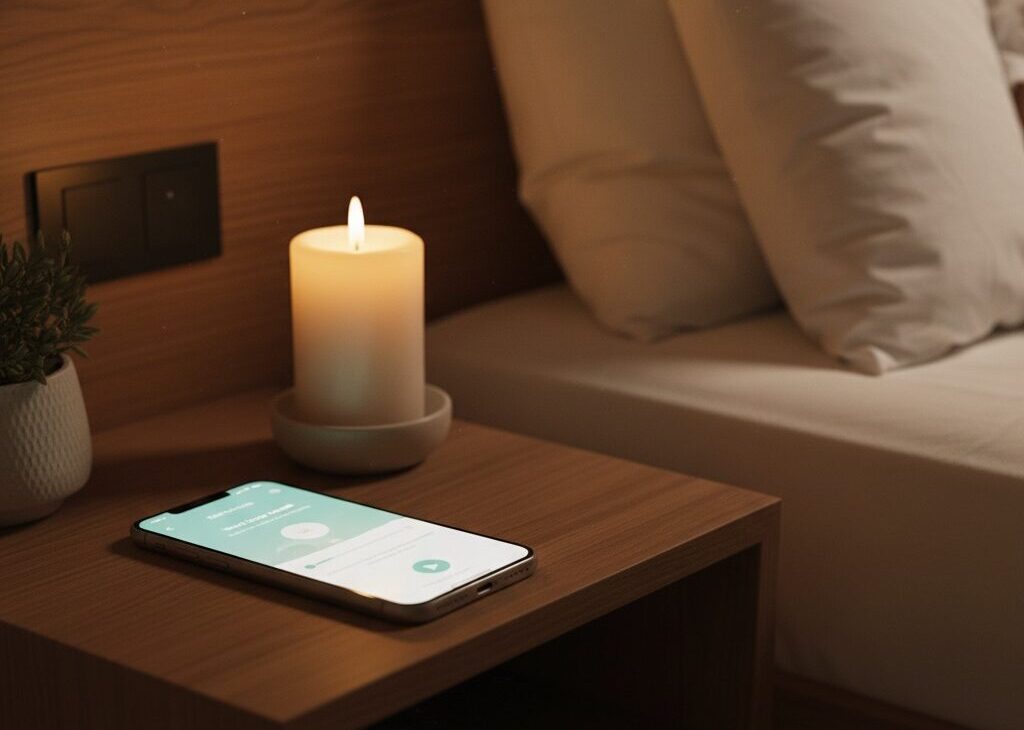
Start by setting your environment. Dim the lights, silence notifications, and make sure your phone is on “do not disturb.” If possible, keep your screen brightness low or switch to an audio-only setup. The fewer visual distractions, the easier it becomes for your body to release tension.
Next, choose your position. While some people prefer meditating upright, for sleep-focused sessions it’s completely fine to lie down. You can even do it in bed. The goal is comfort, not posture. Add a blanket, adjust your pillow, and let your limbs fall naturally.
Then, decide on timing. A short 10–15 minute meditation can be surprisingly effective, but if you struggle to fall asleep, you might benefit from longer sessions (up to 45 minutes). Experiment for a week or two and see what feels right for your rhythm.
Finally, use signals to tell your body it’s time to rest — maybe dimming the lamp, lighting a candle, or taking three slow breaths before you press play. Over time, these cues become powerful triggers that help your brain associate meditation with the transition into sleep.
If you prefer variety, rotate between the four types of guided meditations from the first part of this article. For example:
Monday and Thursday: body scan
Tuesday and Friday: visualization
Wednesday and Sunday: yoga nidra
Saturday: loving-kindness
This gentle rotation keeps your mind engaged while giving your body consistent relaxation.
Combining guided meditation with other sleep-friendly habits
Meditation is powerful, but it’s even more effective when it’s part of a holistic nighttime routine. The way you structure your evening — the light, sound, and rhythm — all affects how well your mind responds to guided relaxation.
Start with lighting. About an hour before bed, lower the intensity of your lamps or switch to warm tones. Avoid bright blue light from screens; if you must use devices, enable night mode or wear blue-light-blocking glasses.
Next, consider sound. White noise, pink noise, or soft ambient music can help mask outside disturbances. Some people prefer using meditation tracks that blend seamlessly into these soundscapes — so even if you don’t fall asleep right away, your mind remains in a calm sensory field.
Your breathing environment also matters. A slightly cooler room (around 18–20°C) and clean air can make a huge difference in sleep quality. You can integrate a few deep breathing cycles before starting the meditation — try the 4-7-8 technique: inhale for 4 counts, hold for 7, exhale for 8.
And most importantly, consistency is your ally. Guided meditations train your brain through repetition. After a week or two of regular practice, you’ll start feeling drowsy as soon as you hear the familiar voice or music. That’s neuroconditioning in action — and it’s the same mechanism that makes lullabies work for children.
Common mistakes that prevent results
It’s easy to assume meditation will work instantly, but like any relaxation skill, it requires gentle patience. Here are some of the most common pitfalls — and how to avoid them.
1. Expecting immediate sleep.
If you approach guided meditation as a “sleep button,” you may end up more anxious when you don’t fall asleep right away. Instead, treat it as a transition tool. The purpose is to relax your body and slow your thoughts — sleep will follow naturally once you release the expectation.
2. Using overly stimulating tracks.
Some meditation audios include dramatic music, sudden chimes, or emotional storytelling. These can be engaging but not ideal for bedtime. Stick with calm, slow, monotone voices and minimal sound layers.
3. Overthinking the “right” technique.
There’s no perfect form of guided meditation. What works one week might not work the next — and that’s okay. Experiment, mix, and adapt. The goal is comfort and calm, not mastery.
4. Multitasking while meditating.
If you’re checking your phone, replying to messages, or glancing at notifications mid-session, your brain stays in alert mode. Even five uninterrupted minutes of full focus will be far more effective than 30 distracted ones.
5. Giving up too early.
It can take several nights (or even weeks) for your body to form the relaxation association. Keep going — consistency matters more than perfection.
How to personalize your guided meditation experience
Every sleeper is different — and guided meditations can be customized to fit your personality and sleep patterns.
If you’re a visual thinker, choose guided journeys or sleep stories that let your imagination wander. If you’re more body-oriented, body scan or yoga nidra meditations will feel grounding and physically soothing.
You can also customize duration. Short meditations (5–10 minutes) are great for power naps or resetting between stressful tasks. Longer ones (30–45 minutes) help you fully transition into sleep after a busy day.
Another option is to combine practices — for example, starting with a few minutes of breathwork or journaling before beginning your meditation. Writing down your worries or to-do list beforehand helps clear mental clutter, making it easier to relax when you press play.
If you share your space with a partner, consider couples’ guided meditations. Some apps, like Calm, offer dual-voice tracks designed for shared listening — an intimate, synchronizing experience that deepens emotional connection while promoting relaxation.
The science behind guided sleep meditations
Scientific studies on meditation and sleep continue to show measurable benefits for both body and mind.
Research published in JAMA Internal Medicine (2015) found that adults with moderate sleep disturbances who practiced mindfulness meditation for six weeks reported significantly less insomnia, fatigue, and depressive symptoms than the control group.
Another study from Frontiers in Neurology (2021) demonstrated that guided meditations help reduce sympathetic nervous system activity — the “fight or flight” mode — while increasing parasympathetic activation, responsible for rest and recovery.
Even short sessions can shift brainwave activity into alpha and theta ranges, associated with relaxation and light sleep. That’s why many people drift off mid-session — their brains naturally enter pre-sleep states before the meditation ends.
In the long run, guided sleep meditation can also improve sleep efficiency — the ratio of time spent asleep to time spent in bed — by reducing sleep-onset latency (the time it takes to fall asleep).
Final reflection — letting rest be enough
In a world obsessed with productivity and performance, guided sleep meditations offer a quiet rebellion. They remind us that rest is not wasted time — it’s restoration.
When you choose to lie down, close your eyes, and listen to a calm voice guide you into stillness, you’re not escaping life — you’re replenishing the energy needed to live it fully. Each meditation is an act of trust: trust that your body knows how to rest, that your mind can let go, and that you deserve peace without having to earn it.
There’s no single “best” meditation for sleep. The best one is the one you’ll return to night after night, the one that feels like an exhale after a long day.
So tonight, put your phone aside, press play, and allow the gentle rhythm of a guided meditation to lead you home — not just to sleep, but to stillness itself.