When creativity turns restless
It’s 2:14 a.m. Your project file is open, the cursor blinks, and every idea you rejected during the day suddenly feels urgent again. You scroll through notes, tweak a sentence, revisit color palettes, or stare into the ceiling — all while your brain hums with unfinished thoughts.
For creative minds, the boundary between inspiration and exhaustion can be dangerously thin. The same imagination that fuels innovation also refuses to rest. When you can’t “turn it off,” sleep becomes the first casualty. And over time, what begins as late-night brainstorming can spiral into burnout — an invisible, mental loop that quietly drains energy, joy, and creativity itself.
The hidden link between creativity and insomnia
Creativity and insomnia share a complicated relationship. The creative process often depends on moments of hyperfocus, emotional intensity, and curiosity — all states that activate the brain’s reward and alertness systems. Artists, designers, and writers frequently describe entering a “flow” that keeps them awake far beyond midnight.
This hyperarousal might feel productive at first, but biologically it mimics stress. Elevated cortisol, rapid thought cycles, and sensory overstimulation keep the nervous system alert long after the workday ends. Even when you finally close your laptop, your brain continues to rehearse, revise, and reimagine.
According to the Sleep Foundation, creative professionals report higher rates of irregular sleep patterns, nighttime rumination, and light sleep quality than non-creative workers. The very traits that enable innovation — divergent thinking, emotional openness, perfectionism — also make it difficult to detach mentally.
In short, the creative brain doesn’t just seek ideas; it resists stillness.
What creative burnout really feels like
Burnout isn’t just “being tired.” It’s a slow emotional dimming — a sense that your once-bright ideas now feel dull, forced, or unreachable. You might notice that you’re producing more but feeling less. Projects that used to excite you now spark anxiety or guilt.
Creative burnout develops when sustained emotional and cognitive effort outpaces recovery. Symptoms often include:
Chronic fatigue or “wired but tired” energy — your body is exhausted, but your mind keeps racing.
Difficulty concentrating or feeling detached from your own work.
Sleep disturbances: lying awake with mental loops, vivid dreams, or waking unrefreshed.
Emotional numbness — losing the spark that once made your creative flow natural.
The American Psychological Association (APA) connects this pattern to “mental overload,” where overuse of executive functions (planning, creating, evaluating) leads to neurological fatigue similar to muscle overtraining. You’re not lacking talent or drive — your brain simply needs recovery time to regenerate creative pathways.
The sleep deficit spiral
When you’re in a creative rut, the instinct is often to push harder. But sleep deprivation only magnifies the problem. Poor sleep reduces activity in the prefrontal cortex — the area responsible for abstract thinking and emotional regulation — making it harder to focus or feel inspired.
Research on sleep and creativity consistently shows that REM sleep (the dream phase) supports insight, associative thinking, and emotional integration. When REM cycles are cut short — as they often are during stress or burnout — your ability to form new connections weakens.
At the same time, chronic lack of sleep disrupts the balance of dopamine and serotonin, the brain chemicals tied to motivation and mood. The result: ideas come slower, self-criticism gets louder, and rest feels impossible.
This creates a vicious loop:
You feel creatively blocked → you work longer hours to “force” inspiration.
You sleep less → cognitive flexibility declines.
You feel even less inspired → anxiety rises.
The cycle repeats.
Overthinking — the quiet engine behind creative burnout — keeps this spiral alive. When your brain treats every problem as unsolved, bedtime becomes an endless brainstorming session.
The emotional cost of overthinking
Overthinking feels productive because it mimics problem-solving, but it’s actually a form of mental stalling. You replay conversations, ideas, or unfinished drafts — believing that a breakthrough is near — while your nervous system remains in low-grade alert.
For creatives, this can be particularly draining. You may find yourself questioning your worth, doubting your originality, or fearing that rest equals laziness. These thoughts often appear at night when distractions fade and your inner critic grows louder.
In cognitive terms, this is known as “repetitive negative thinking” — a mental loop that increases stress hormones and delays sleep onset. According to a 2023 study published in Nature and Science of Sleep, individuals who report higher creative ideation scores also experience more frequent night-time rumination.
That’s why many creators describe insomnia not as an absence of sleep, but as an overflow of thought. The brain refuses to rest because it hasn’t emotionally processed the day’s creative tension.
When rest becomes resistance
For some, rest feels like a rebellion — especially in creative cultures that idolize output and “always being inspired.” Taking a full night off can trigger guilt or fear of falling behind. Yet this mindset is precisely what deepens burnout.
In truth, sleep is not a pause from creativity; it’s a continuation of it. Neuroscientist Matthew Walker describes sleep as the “editor” of the brain — organizing fragments of ideas, filtering noise, and forming associations we couldn’t reach consciously.
Without adequate rest, creative work becomes repetitive, predictable, and emotionally shallow. Sleep restores the imagination not by adding more energy, but by clearing space.
That’s why some of the most prolific minds — from Leonardo da Vinci to Salvador Dalí and Einstein — valued sleep as part of their process. They understood that inspiration thrives not in constant activity, but in recovery.
Read also Emotional detox before bed: how to clear your mind for deeper sleep for techniques to unwind mentally after creative overload.
Breaking the cycle: real recovery habits
Escaping creative burnout isn’t about producing less — it’s about recovering better. Rest, structure, and mindful detachment can rebuild mental energy without suffocating creativity. These habits don’t suppress your creative drive; they help you sustain it.
1. Rebuild boundaries between work and rest
Creative people often blur the line between passion and profession. You may start your “evening wind-down” but suddenly open your sketchbook or revise an idea because it feels harmless. Yet every small re-engagement signals your brain that work mode is still active.
Create clear transition rituals that signal the end of creative activity — for example:
Shut down all tabs and apps related to work.
Change lighting (switch to warm, dim tones).
Move physically to another area of your home.
Play a specific playlist that represents “off hours.”
These cues tell your brain it’s safe to power down. Over time, this simple separation rebuilds the natural circadian rhythm that creativity often overrides.
2. Schedule blank space
It might sound counterintuitive, but unstructured time is critical for creative recovery. When you plan every hour, your subconscious never has space to wander — the very state in which innovative ideas are born.
Set “white space” blocks in your day: morning walks, silent coffee breaks, or screen-free intervals. Don’t fill them with podcasts or self-improvement. Just be still. This quiet mental drift activates the default mode network (DMN) — the brain system responsible for reflection and idea incubation.
According to neuroscience research from Frontiers in Human Neuroscience, people who regularly engage in daydreaming or quiet rest periods show improved creative insight and faster recovery from mental fatigue.
3. Sleep as creative incubation
Sleep isn’t wasted time; it’s cognitive composting. During deep sleep, your brain replays and reorganizes memories, filtering useful ideas from background noise. REM sleep, in particular, links distant concepts and emotional tones — the foundation of creative synthesis.
To harness this:
Keep a notebook beside your bed. Write one unresolved question or project idea before sleep.
Don’t analyze it. Simply write and close the notebook.
In the morning, note any dream fragments, emotions, or spontaneous thoughts.
This technique, used by writers like Franz Kafka and musicians like Brian Eno, transforms sleep into part of the creative process instead of an interruption to it.
4. Reconnect with your body
Creative burnout often traps people in the mind. When you spend hours in conceptual space, you lose track of physical cues — hunger, posture, breath. Reconnecting with your body is one of the fastest ways to ground your nervous system and quiet overthinking.
Try evening routines that reconnect body awareness:
Gentle stretching or yoga nidra before bed.
Breathing techniques (4-7-8 or box breathing).
Warm shower or foot bath to lower cortisol and trigger relaxation.
Lying flat for a few minutes while focusing on each muscle group.
This physical decompression tells your body that the creative chase is over for the day.
5. Rethink your definition of productivity
One of the biggest mental blocks for creatives is guilt — the belief that rest equals stagnation. But true productivity requires alternating between focused output and deliberate recovery.
You wouldn’t expect a musician to perform indefinitely without silence between notes. The same applies to your creative rhythm. The pauses are not breaks from creativity — they are part of its composition.
Consider adopting the “creative sprint and restore” model:
Work intensely for 90–120 minutes.
Step away for at least 20 minutes — ideally with no screens or stimulation.
Repeat no more than three major sprints per day.
This balance preserves mental freshness and prevents cognitive fatigue from snowballing into burnout.
Rest as part of creativity
There’s a reason so many artists and thinkers describe their best ideas arriving after sleep or during rest. Einstein’s “thought experiments” came while drifting between wake and dream; Dalí intentionally used micro-naps to access surreal imagery.
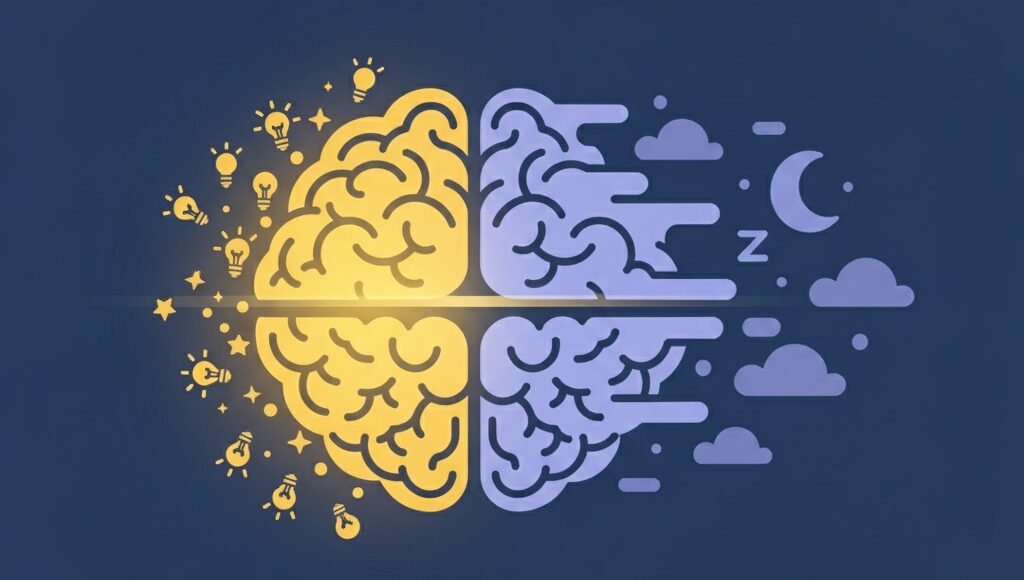
Modern neuroscience explains why: sleep and restful states allow the brain to switch from focused thinking to diffuse thinking — the slower, associative mode that connects distant ideas.
When you consistently deprive yourself of rest, you trap your cognition in focus mode — great for editing or problem-solving, terrible for originality. Rest creates the mental distance necessary to see the whole picture.
So instead of pushing through creative block, treat rest as the invisible half of your craft.
Building a bedtime ritual for creatives
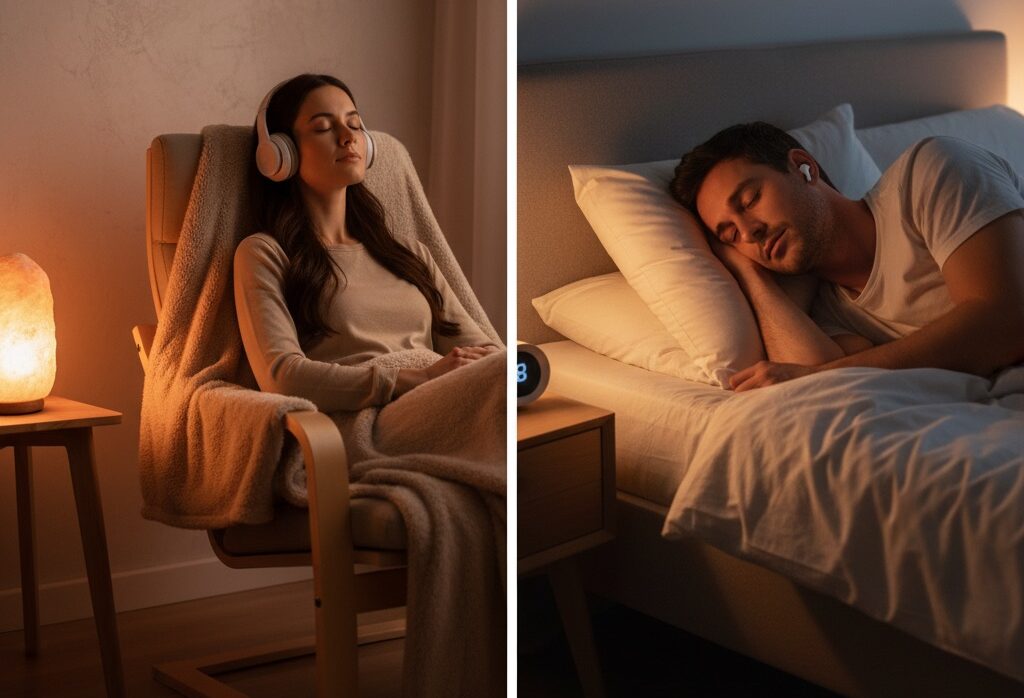
A bedtime routine for a creative mind shouldn’t feel like shutting down; it should feel like transitioning from expression to reflection. Try this simple structure:
Digital closeout (30–60 minutes before bed): turn off design tools, social feeds, and email. Avoid visual stimulation — it activates the same neural circuits as creative work.
Mental unload: jot down every unfinished idea, task, or worry. Seeing it on paper releases your brain from holding it overnight.
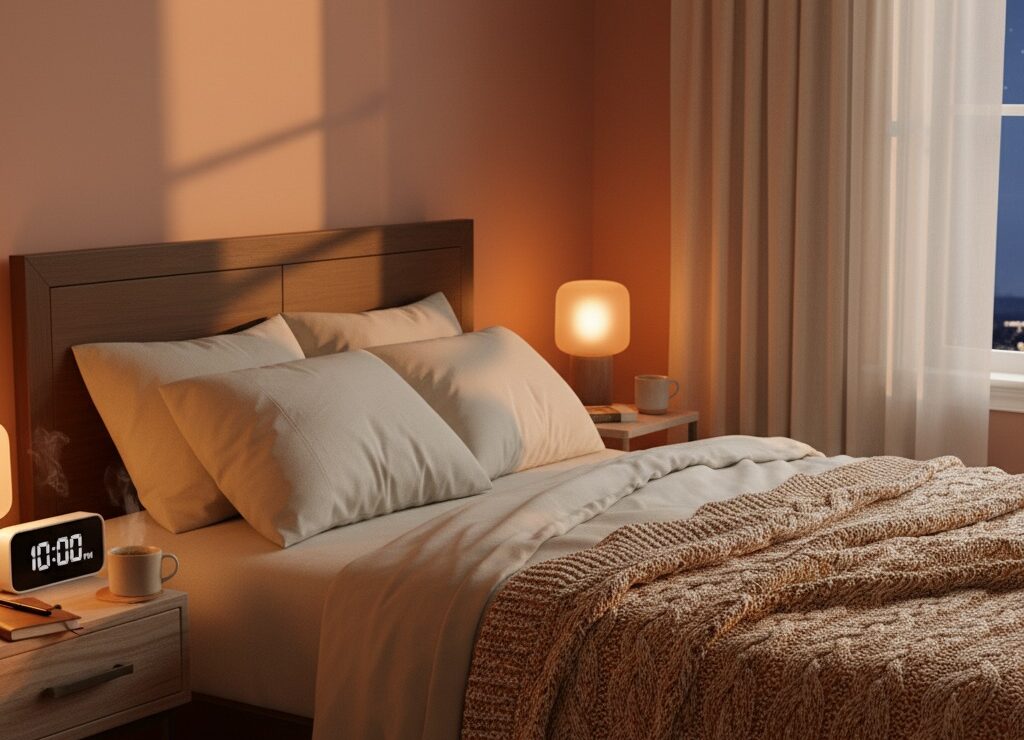
Atmosphere reset: lower lighting, play ambient music, or use scent cues (lavender, sandalwood). Sensory calmness reduces cortisol and tells your brain it’s time to rest.
Micro-meditation: a 5-minute gratitude or visualization session. Picture your next day flowing with calm focus.
Non-goal sleep: don’t chase sleep or monitor it obsessively. Simply rest. If thoughts come, imagine placing each into a slow-moving stream.
This process transforms bedtime from a “performance” into a ritual of gentle unwinding — something every overthinking brain needs.
A note on overthinking and identity
Many creatives tie their identity to their ideas — which makes rest emotionally difficult. If your value feels dependent on constant output, silence can feel like failure. But rest doesn’t erase identity; it restores perspective.
Overthinking thrives in uncertainty. When you allow yourself to step back, even for one night, you remember that your worth isn’t measured by what you produce before morning.
As author Julia Cameron writes in The Artist’s Way, “Rest is an act of faith — a belief that the flow of ideas will return when you are ready.”
You don’t have to choose between imagination and rest. They are extensions of the same rhythm — inhale and exhale. The real mastery lies not in forcing inspiration, but in learning when to pause and let recovery do its quiet work.
When you finally close your notebook, your sketchpad, your editing window — you’re not abandoning the creative process. You’re nurturing it.
Because sometimes, the most productive thing you can do for your art is to turn off the light.
Read also: Sleep anxiety and orthosomnia: when sleep tracking backfires