The rise of colored noise for better sleep
If you’ve ever fallen asleep to the hum of a fan, the rustle of rain, or the soft buzz of a white noise machine, you’ve already experienced the power of sound in shaping your rest. Over the past few years, “colored noise” has become a buzzword — not just white noise, but also pink, brown, and now blue. Sleep apps and playlists now offer dozens of these sound profiles, each promising better relaxation or deeper sleep.
But what do these “colors” really mean, and how do they affect your brain when you’re drifting off? The short answer: it’s about how sound frequencies are distributed — and how your mind responds to them.
Blue and white noise might seem similar at first, but they influence your sleep in different ways. Understanding their characteristics can help you choose the sound that works best for your sleep style, environment, and sensitivity to noise.
Understanding noise colors — from white to blue and beyond
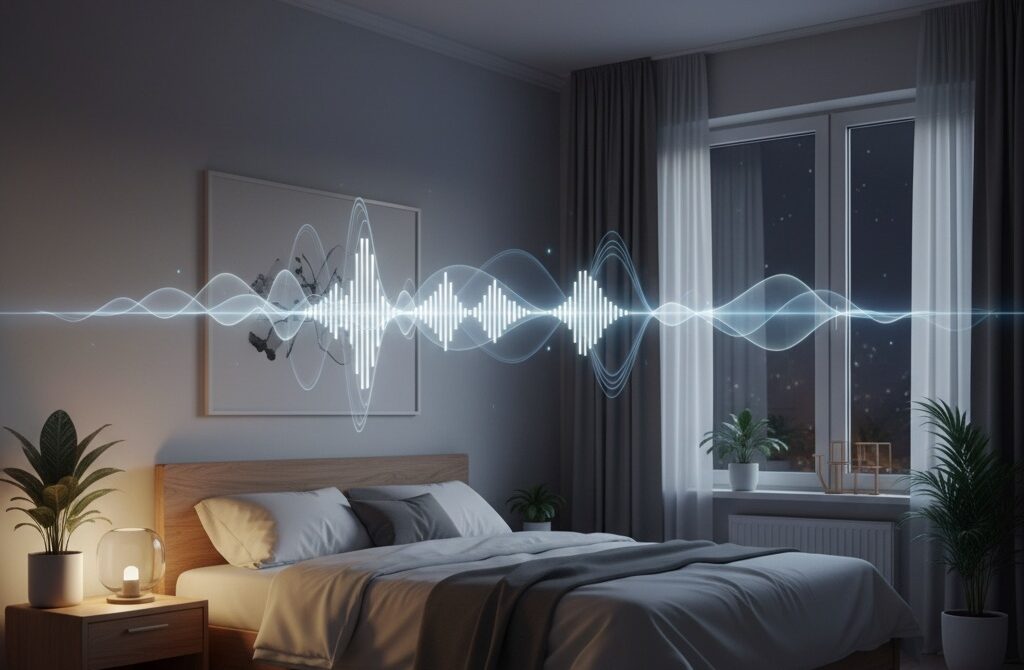
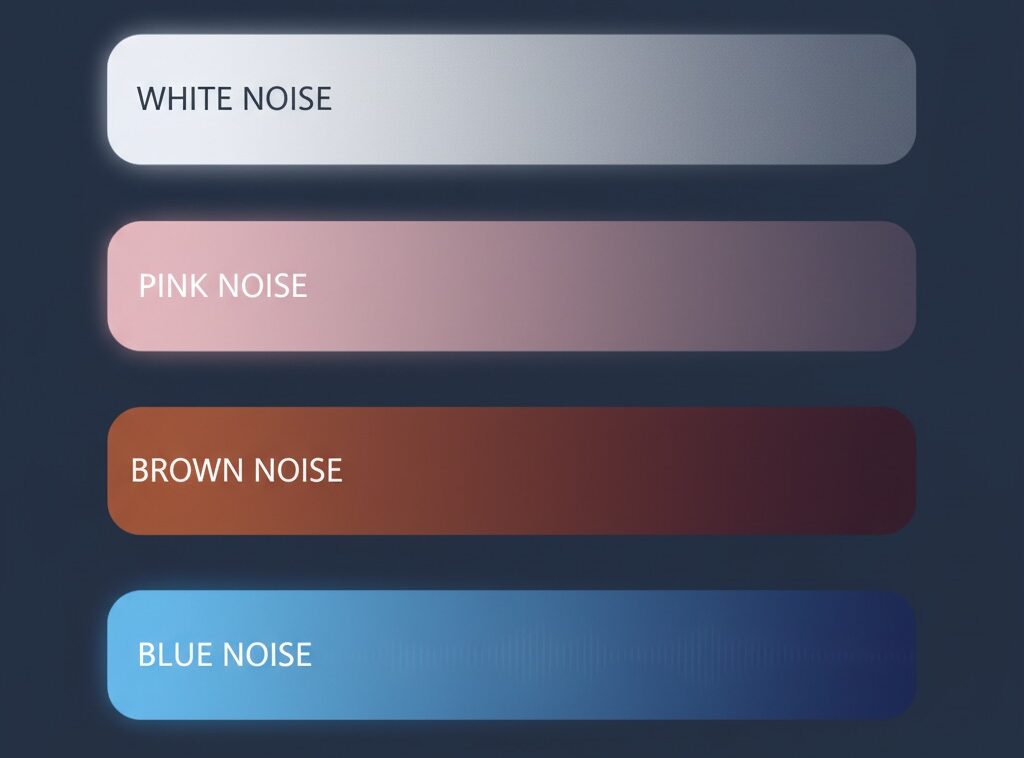
Sound has “color” because, like light, it has a spectrum. The color names — white, pink, brown, blue — describe how energy is spread across frequencies.
-
White noise has equal intensity across all audible frequencies, much like white light contains all colors of light. It sounds like a constant “shhh” — similar to a TV static or air conditioner.
-
Pink noise is softer and more balanced, with more energy in lower frequencies. Think of rainfall or steady waves.
-
Brown (or red) noise is even deeper and smoother, resembling a low rumble or wind.
-
Blue noise, in contrast, emphasizes higher frequencies, producing a sharper, crisper sound.
While pink and brown noises tend to soothe and calm, blue noise is more energetic — often used for focus, masking tinnitus, or creating clarity in digital sound systems. Yet some studies suggest that, under the right conditions, blue noise may also improve sleep quality for certain people.
This variation means that the ideal “noise color” isn’t universal — it’s about how your nervous system responds to different frequencies.
White noise — the classic sleep aid
White noise is the most widely used and studied sound type for sleep. Because it evenly distributes energy across frequencies, it can mask environmental sounds that might otherwise wake you — like traffic, snoring, or a ticking clock.
For light sleepers or those in urban environments, white noise creates a stable “acoustic blanket.” This consistency reduces the likelihood of sudden awakenings caused by unpredictable sounds.
Research from the Sleep Foundation and Frontiers in Human Neuroscience supports these effects. In one study, hospital patients exposed to white noise fell asleep 38% faster and woke less frequently during the night. Another study found that white noise helps maintain sleep continuity by reducing variations in external sound intensity.
However, white noise doesn’t work equally well for everyone. Some people find its high-frequency hiss distracting or even irritating, especially if played at higher volumes. That’s why modern devices and apps allow users to fine-tune frequencies, mix ambient tones, or switch to pink or brown noise for a more natural feel.
White noise remains the go-to choice for most sleepers — especially for:
-
People living in noisy areas who need consistent sound masking.
-
Light sleepers who wake easily to small noises.
-
Babies and toddlers, whose sleep cycles are more sensitive to sound variation.
Blue noise — sharper frequencies for mental focus and clarity
Blue noise is less common in sleep discussions but is rapidly gaining interest, particularly among people who seek mental relaxation through auditory stimulation.
Unlike white noise, which treats all frequencies equally, blue noise increases energy with frequency — meaning it’s more pronounced in the higher range. The result is a crisp, airy hiss that some describe as “clearer” or “fresher” than white noise.
In technical terms, blue noise amplifies high-pitched components that resemble sounds like rainfall, soft sprays, or light wind through leaves — but without low-frequency rumble. Because of this, it’s often used in sound masking for offices, digital systems, or even to improve hearing aid comfort.
But what about sleep?
Some studies in psychoacoustics suggest that exposure to blue noise before bed may enhance mental decompression — the gradual transition from cognitive activity to rest — especially for people who struggle with intrusive thoughts. The reasoning is that the sharper sound draws focus outward, gently quieting inner chatter.
However, blue noise’s higher frequencies may also stimulate alertness if played too loudly or too close to bedtime. For this reason, it’s best used as a pre-sleep relaxation sound, not necessarily throughout the night.
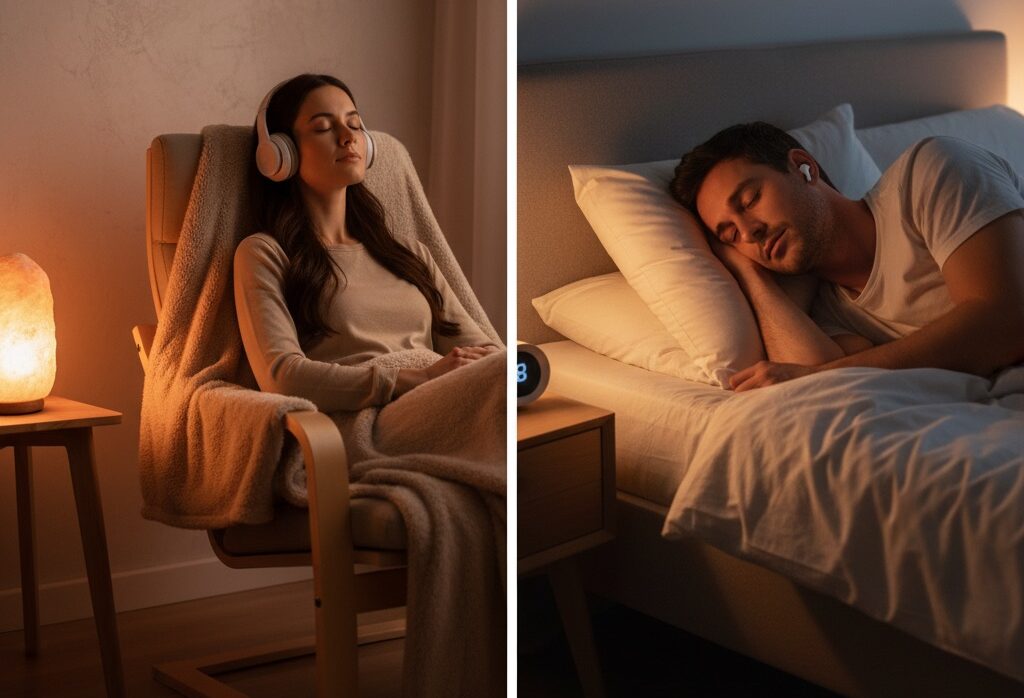
For example, listening to blue noise for 15–20 minutes during your wind-down routine — while journaling, stretching, or practicing breathing — may help release mental tension before switching to softer noise or silence.
Brain and body response — how different noises affect sleep stages
The relationship between noise and sleep goes deeper than masking external sounds. Certain frequencies can actually influence brainwave activity, aligning with the rhythms of relaxation or alertness.
During wakefulness, your brain operates primarily in beta waves (active thinking) and alpha waves (relaxed alertness). As you drift into sleep, these shift toward theta and finally delta waves, which dominate deep sleep.
-
White noise supports this transition by creating a consistent auditory environment. The predictability helps your brain downshift into slower rhythms.
-
Blue noise, with its high-frequency emphasis, can gently stimulate the auditory cortex. When used strategically, it may aid in clearing cognitive “static” — helping you detach from thoughts — before deep sleep begins.
Still, overexposure or misused intensity can keep your brain slightly alert. The key is moderation and mindful use: let the sound guide you into rest, not overpower it.
Practical insight: How to listen effectively
Here are a few early takeaways before we move to the next section (where we’ll explore how to choose between them):
-
Start soft: keep volume below 50 dB — similar to quiet conversation.
-
Set a timer: if using blue noise, let it fade after 20–30 minutes.
-
Match your environment: choose higher-pitched noise if your surroundings are loud, or lower tones if you need calm continuity.
-
Combine sounds: layering white noise with gentle ambient elements (like rain or wind) can balance clarity with comfort.
Choosing the right noise for your sleep profile
By now, it’s clear that there isn’t a one-size-fits-all answer when it comes to colored noise. The choice between white and blue noise depends on your sleep environment, sensitivity to sound, and personal preference. Here’s a practical guide to help you decide:
-
Light sleepers: White noise usually works best, as its uniform spectrum masks unpredictable disturbances, reducing micro-awakenings.
-
Heavy sleepers: You may benefit from both white and blue noise. White noise ensures uninterrupted sleep, while a short blue noise session before bed can help release mental tension.
-
Anxious minds or overthinkers: Blue noise may be particularly useful during the wind-down phase, helping your brain redirect focus and reduce racing thoughts.
-
Noisy environments: Urban apartments, shared housing, or offices near your bedroom benefit from continuous white noise to mask sounds like traffic, neighbors, or pets.
-
Tinnitus sufferers: Layering blue noise with soft white or pink noise can provide relief while keeping high frequencies gentle on the ears.
Creating a sleep-friendly soundscape
Once you’ve identified your preferred noise type, consider how and when to use it:
-
Timing: Start your sound session 15–30 minutes before bed to prime your mind for rest. For blue noise, this brief pre-sleep window prevents overstimulation. White noise can run throughout the night if it’s soothing to you.
-
Volume: Keep it soft — roughly 40–50 decibels. Loud sound may disturb your natural sleep architecture.
-
Layering: Combine noise with other ambient sounds like gentle rainfall, forest ambience, or ocean waves to create a richer and more immersive experience. Some apps allow custom layering for personalized soundscapes.
-
Consistency: Use the same sound consistently over a period of days or weeks. Predictable auditory cues help train your brain to associate certain noises with sleep.
-
Devices: Smart speakers, white noise machines, or apps with timers and fade-out features improve usability. Adaptive devices that adjust volume and frequency based on real-time sleep monitoring are emerging and can further enhance your rest.
Scientific perspective: what research tells us
Although colored noise is widely used, scientific studies offer nuanced insights:
-
White noise studies consistently show improvements in sleep continuity, faster sleep onset, and reduced night awakenings. These effects are especially pronounced in infants, hospital patients, and individuals in noisy environments.
-
Blue noise research is limited but promising. Some studies indicate that high-frequency sounds can modulate attention and cognitive load, indirectly supporting mental relaxation before sleep.
-
Brainwave synchronization: Predictable, continuous sound — whether white, pink, or blue — reduces abrupt auditory surprises. This helps maintain delta waves during deep sleep and may enhance slow-wave activity, crucial for memory consolidation and physical recovery.
It’s worth noting that individual differences are significant. Factors like age, sensitivity to sound, existing sleep disorders, and environmental noise all influence how a person responds to different sound types. Experimentation with short sessions is often necessary to find the optimal configuration.
Common mistakes to avoid
When using colored noise, there are several pitfalls to keep in mind:
-
Too high volume: Loud noise can backfire, stimulating the brain and increasing micro-awakenings.
-
Improper timing: Running blue noise throughout the night may reduce deep sleep for some individuals.
-
Neglecting sleep hygiene: Noise alone cannot compensate for poor habits — a consistent bedtime routine, dark room, and comfortable bedding remain essential.
-
Ignoring personalization: Not everyone responds the same way. Track your sleep quality and adjust sound type, timing, and volume accordingly.
Advanced approaches: personalized and adaptive sound environments
Technology is now enabling smart, adaptive soundscapes:
-
AI-driven apps analyze sleep patterns using wearable devices and adjust sound frequencies in real time.
-
Custom fading: Gradual changes in noise intensity throughout the night can support different sleep stages.
-
Interactive soundscapes: Some tools combine ambient noise, binaural beats, and gentle music to optimize mental relaxation and deep sleep.
By integrating these innovations, sleep enthusiasts can craft a bedroom environment that not only blocks disturbances but actively promotes restorative rest.
Practical tips for getting started
-
Test and compare: Spend several nights with white noise, then several nights with blue noise. Record subjective sleep quality and any notable changes in alertness the next day.
-
Use timers wisely: If you prefer blue noise, use it during the wind-down period and let white noise carry through the night.
-
Combine with routine: Pair your chosen sound with pre-sleep activities such as reading, stretching, or meditation. This strengthens the mental association between sound and relaxation.
-
Monitor effects: Keep a simple sleep journal or use a tracking app. Note how each noise color influences sleep onset, duration, and depth.
Conclusion — your personal path to sound-assisted sleep
The debate between blue noise and white noise isn’t about one being universally “better.” It’s about matching the sound to your personal needs, environment, and sensitivity. White noise remains the classic, reliable choice for masking disturbances and supporting uninterrupted sleep. Blue noise, when used thoughtfully, can help with mental relaxation and winding down, especially for anxious or overactive minds.
Ultimately, the best approach is experimentation and mindful listening. By combining noise with good sleep hygiene, consistent routines, and adaptive sound technology, you can create a sleep environment tailored to your unique physiology.
Your bedroom can become more than just a place to lie down — it can be a sanctuary where sound, comfort, and routine work together to support deep, restorative sleep.