Night texting feels harmless. Almost everyone does it — replying to a message from someone we care about, scrolling through conversations, continuing emotional threads long after the day should be over. Phones in the evening have become a cultural default, and people no longer question whether this is “normal” — it just is. For many, the bed is the safest, most private place to talk. It becomes a space where people open up, reveal more, say what they don’t say during the day. Night equals intimacy. Night equals honesty. Night equals emotional access.
But night texting is not neutral. It has specific psychological consequences — on sleep quality and on the relationship itself. The nighttime environment changes how messages are processed, how meaning is interpreted, and how quickly emotions escalate. And because it happens right before sleep, the nervous system does not have enough time to reset. Words that come at 23:48 or 00:17 don’t land the same way as words sent at 14:30. Night transforms tone, expectation and intensity.
Why the brain becomes more sensitive to texting at night
After sunset, melatonin gradually increases. Cortisol drops. The brain shifts toward internal processing: reflection, memory consolidation, emotional integration. In this state, every message feels louder. The cognitive filter is thinner. Meaning becomes heavier, even if objectively nothing unusual is happening. The brain is closer to the dream-state, not the analytical day-state. This is why at night the mind tends to replay conversations, analyze tone, try to decode subtext.
Night texting also disrupts the “boundary” between day and sleep. Instead of signaling to the body that the day is closing, the brain receives a stimulation that keeps circuits active. Emotional arousal at this moment delays sleep onset and increases sleep fragmentation.
People rarely consider this. They focus on the conversation, not the timing. But timing is the mechanism. A message received at night is not just information — it’s an emotional trigger entering the nervous system at the most vulnerable moment.
Why night texting feels more intimate (and why this is not neutral)
Night is the time when:
there are fewer distractions
the mind feels more private
messages are often longer, more vulnerable
dopamine reward per message is higher
This creates a specific pattern: the brain learns that night = emotional closeness. Even if the conversation is lightweight, the body codes the context as intimate. For some people, this becomes addictive. They wait for night to talk. They expect the emotional “high” from the late messages.
This dynamic has consequences. When emotional connection is built mostly at night, the relationship becomes linked to dysregulated sleep. The bond becomes enmeshed with physiological dysregulation.
How night texting affects sleep architecture
We often talk about screens and blue light — but the main disruption is not light. The main disruption is meaning.
Night texting elevates:
emotional activation
cognitive rumination
sympathetic nervous system tone
This combination delays sleep onset because the brain stays in “interpretation mode.” People fall asleep later than they intended. And when they do finally fall asleep, the emotional residue of the conversation disrupts REM phases.
REM is where the brain processes emotional memory. When REM is fragmented, emotions remain “unfinished.” The brain carries that unresolved emotional load into the next day.
Why the mind can’t let go after night texting
The brain does not distinguish between physical presence and strong social signal. When you receive a message, especially from someone who matters to you, the brain interprets it as social contact — proximity. At night, this social signal conflicts with the sleep signal. The nervous system cannot serve both masters at once. So the brain stays alert. It stays engaged. It rehearses what was said. It anticipates the next reply. It projects meaning. It becomes hyper-focused.
This is how night texting converts into sleep latency, and then into unrestful sleep.
The relational consequences
Night texting also affects how relationships evolve because it changes the emotional timeline of communication. People develop expectations: instant replies, fast emotional reassurance, constant signal availability.
Night texting also becomes a convenient way to avoid difficult daylight conversations. People process feelings in bed instead of in real time. This creates a false sense of progress — things feel resolved because they were “talked about,” but nothing actually shifted in behaviour.
Relationships built mostly at night become dependent on altered-state communication. They are less grounded in the executive functioning of the day. They become reactive rather than intentional.
Why people return to night texting even when they know it hurts their sleep
Night texting is not just a habit. It is a coping mechanism. People come back to it because it gives something:
a sense of connection
immediate emotional reward
momentary escape from the day’s stress
Night texting also helps avoid loneliness. The bed is the most vulnerable physical space of the day. Being alone in bed feels different than being alone at lunch. A message in that moment feels like someone is “with you.” It is companionship by proxy.
This is why night texting is so persistent. People are not addicted to the screen. They are addicted to not feeling alone.
The identity shift: the bed is no longer a sleep space
The bed becomes a digital-social environment — the place where conversations happen, where meaning intensifies, where emotional validation is offered and received.
Once the bed becomes a communication platform, the brain starts associating bed with alertness and anticipation. This association competes with the association of bed = sleep.
This is a core mechanism behind many sleep problems.
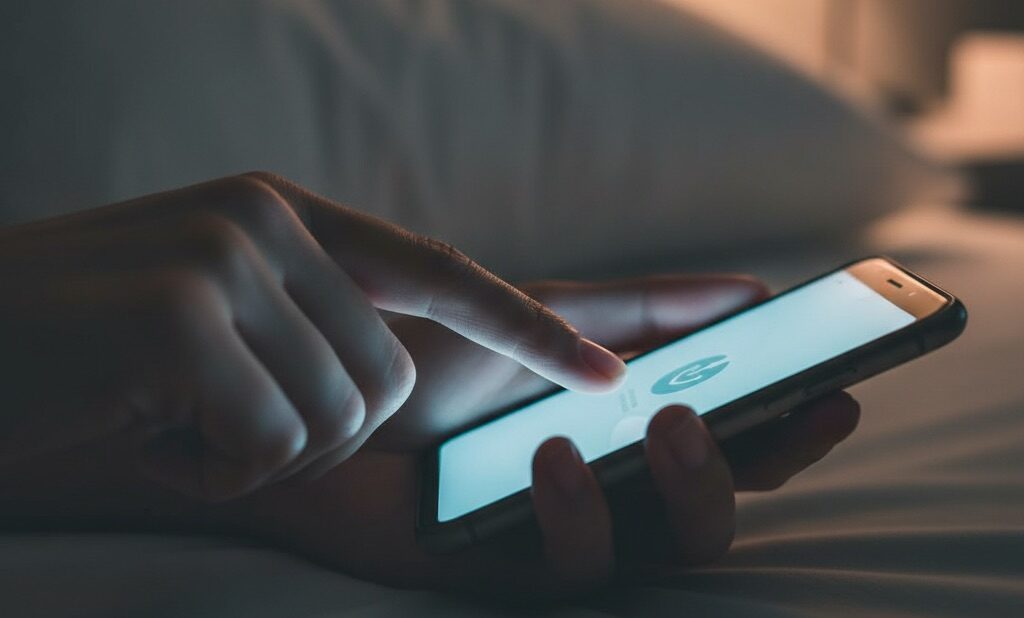
Night texting becomes especially impactful for people who already carry emotional intensity into the evening. The moment the external environment becomes quiet, the mind finally has space to process everything it ignored during the day. This makes night a hotspot for unresolved emotion. When texting enters that state, it amplifies what is already there. People begin to text from their emotional body, not their rational mind. This is why late messages often sound more extreme, more romantic, more anxious, more dramatic, more confessional. Words at midnight come from a different nervous system than words at noon.
Why night texting traps the brain in “unfinished” mode
The brain hates incomplete loops. When a conversation is open and unresolved, the mind continues to process it even after the phone is turned off. This is trigger maintenance. A message that ends with “We’ll talk tomorrow” does not close the loop. It holds the door open — and your brain stands in the doorway, refusing to go to sleep.
This is the same mechanism behind cognitive replay. The brain rehearses what should have been said, what could have been said, or what the other person might be thinking. This is how night texting creates emotional residue that contaminates sleep. People wake up with a “hangover of thought” — not because of alcohol, but because the nervous system couldn’t fully shut down at night.
This is validated by research. According to the Sleep Foundation, texting in bed increases sleep disruptions by elevating emotional activation and delaying the melatonin curve.
The cost of “instant access” in relationships
Night texting also shapes relational attachment patterns. People who engage in intense emotional messaging at night often feel more bonded than the actual relationship can support. The intimacy is artificially inflated. The relationship becomes anchored in the dreamlike logic of the night rather than the grounded logic of daytime.
This is particularly common in early dating or situationships — the ambiguity amplifies emotional reward. Late messaging becomes the main location of closeness. The day becomes logistics and tasks; the night becomes intimacy and meaning.
And that is unstable for both sleep and emotional health.
The nervous system is not wired for double states
Sleep is a downshift into parasympathetic dominance. Night texting pulls the nervous system back into sympathetic activation. The brain cannot deeply rest and be emotionally engaged at the same time. It tries to do both — and does neither well.
That is the root issue.
People think: “It’s just texting before sleep.”
But the body experiences it as: “I must remain alert.”
Emotional detox versus stimulation
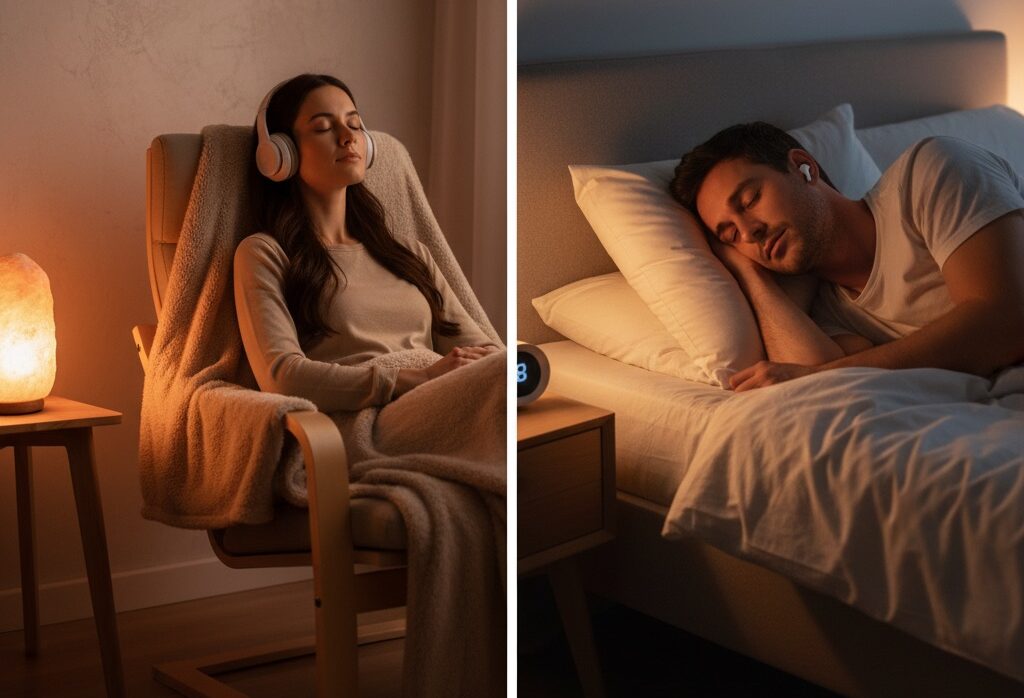
Compare this with a gentle emotional wind-down ritual — which research shows helps the mind detach, settle, and transition to sleep.
Read also about emotional decompression.
One is downregulation.
The other is escalation.
Night texting is escalation.
Why the brain misinterprets tone at night
The prefrontal cortex — the part of the brain responsible for context and interpretation — becomes less active at night. This is why misunderstandings escalate at midnight. People take messages personally, interpret ambiguity as rejection, or seek validation more aggressively. The same text sent at 22:45 may feel colder or more confusing than if sent at 13:15.
This is not a character flaw.
It is brain chemistry.
And because nighttime is an emotionally “unprotected” window, people who are prone to overthinking end up catastrophizing more when messaging in bed.
How to break night texting without losing connection
It is unrealistic to expect people to suddenly stop messaging at night. People want human contact. Connection is part of wellbeing. So the goal is not abstinence — the goal is containment. We can create small behavioural interventions that reduce damage without removing connection entirely.
Here are three examples that clients in sleep therapy often find effective:
Micro rule 1: move important conversations into the day
If something matters, schedule it. “Can we talk about this tomorrow after lunch?” This sets expectation and prevents emotional spirals at night.
Micro rule 2: transition to voice notes before bed
Voice notes close loops faster than text. The brain feels less need to decode tone, because tone is transmitted directly.
Micro rule 3: create a “night boundary phrase”
A gentle phrase that signals closure. For example:
“I’ll sleep on this and we’ll pick it up tomorrow.”
The brain registers a boundary.
These are small adjustments with large impact.
The role of light
Even if you text with dimmed brightness, the light still impacts circadian alignment. Circadian scientists recommend giving your brain a “digital sunset” — letting light drop gradually instead of having harsh brightness before sleep.
Read also about digital sunsets.
Light is a clock.
Night texting changes the clock.
Night texting is not just a modern communication habit.
It is a psychological and physiological disruptor that enters at the most sensitive window of the day — right before sleep. It delays rest, fragments sleep architecture, elevates emotional arousal, and distorts how relationships form.
Connection at night feels deeper — not because it is higher quality — but because the brain is less defended, more open, and more impressionable.
Better sleep does not require giving up closeness.
It requires giving closeness a better schedule.
Move emotional communication earlier.
Move decompression later.
Protect the brain in its most vulnerable window.
Good sleep is not only about what you do before bed — it is about what you choose not to bring into your bed.