For many people today, work happens almost entirely at a desk. Hours pass while shoulders round forward, hips tighten, and the neck quietly strains toward a screen. At the end of the day, you may not notice the accumulation immediately — but your body does.
The stiffness that builds up from prolonged sitting isn’t just a daytime inconvenience. It follows you into the evening, influencing how deeply you relax, how comfortable you feel in bed, and even how easily your mind settles. When the body holds tension, the nervous system stays slightly alert — and that can make drifting into sleep slower than it needs to be.
This is why a short pre-bed stretching routine can be transformative for desk workers. Not intense exercise, not a workout — just simple, slow mobility moves that release the “desk patterns” your body adopts throughout the day. These patterns are predictable, and the good news is that they’re also reversible.
By targeting tight hips, rounded shoulders, a stiff upper back, and the tension from staring at screens, you help your body transition out of “work mode” and into a calmer, more grounded state. This gentle reset doesn’t just feel good — it prepares your body for rest in a way that supports a smoother, more natural path to sleep.
How sitting all day affects sleep
Prolonged sitting isn’t just about posture. It affects multiple systems of the body, many of which play a role in sleep readiness.
1. Muscular tension and discomfort
Long periods spent in the same position create tightness in predictable areas:
hip flexors shorten,
shoulders drift forward,
the upper back rounds,
the neck compensates by reaching for the screen.
When you lie down at night with these patterns still active, your body may struggle to settle fully.
2. Restricted circulation
Sitting slows blood flow in the lower body and contributes to stiffness in the spine. This can create a sense of heaviness or restlessness that becomes noticeable only when you try to relax.
3. Nervous system activation
Tight muscles send subtle signals of discomfort to the brain. Even if you don’t consciously feel “tense,” your nervous system may still be operating in a mild state of alert, which isn’t ideal for winding down.
4. Stress accumulation
According to Harvard Health, prolonged sitting is linked not just to physical tension but to increased mental fatigue — and mental fatigue often makes it harder to disconnect from the day before sleep.
Together, these effects create a body that feels “stuck” in the shape of a workday. Mobility stretches help reverse this shape, releasing stored tension and calming the systems that influence sleep.
Why stretching before bed helps
Stretching isn’t only about flexibility — it’s a form of signaling. Slow, controlled movement tells your body:
the workday has ended,
you’re safe,
and it’s time to soften.
Here’s why mobility before bed works so well, especially for desk workers:
1. It releases areas that compress during sitting
The hips, chest, upper back, and neck are the main “tension zones” of a desk-bound body. A few targeted stretches can reverse hours of static posture.
2. It activates the parasympathetic nervous system
Gentle stretching increases body awareness and slows breath, shifting the nervous system toward “rest and digest” mode — the state your body needs for sleep.
3. It reduces discomfort that appears only at night
Many people feel tension only when lying down. By releasing tight tissue beforehand, you give your muscles permission to fully relax into the mattress.
4. It improves your sleep environment from the inside out
As discussed in Home sleep hacks: how to optimize your bedroom environment, comfort comes from both your surroundings and your internal state. Stretching contributes to that internal environment.
Stretching before bed is not about “working out.” It’s about creating space in your body so sleep feels more accessible.
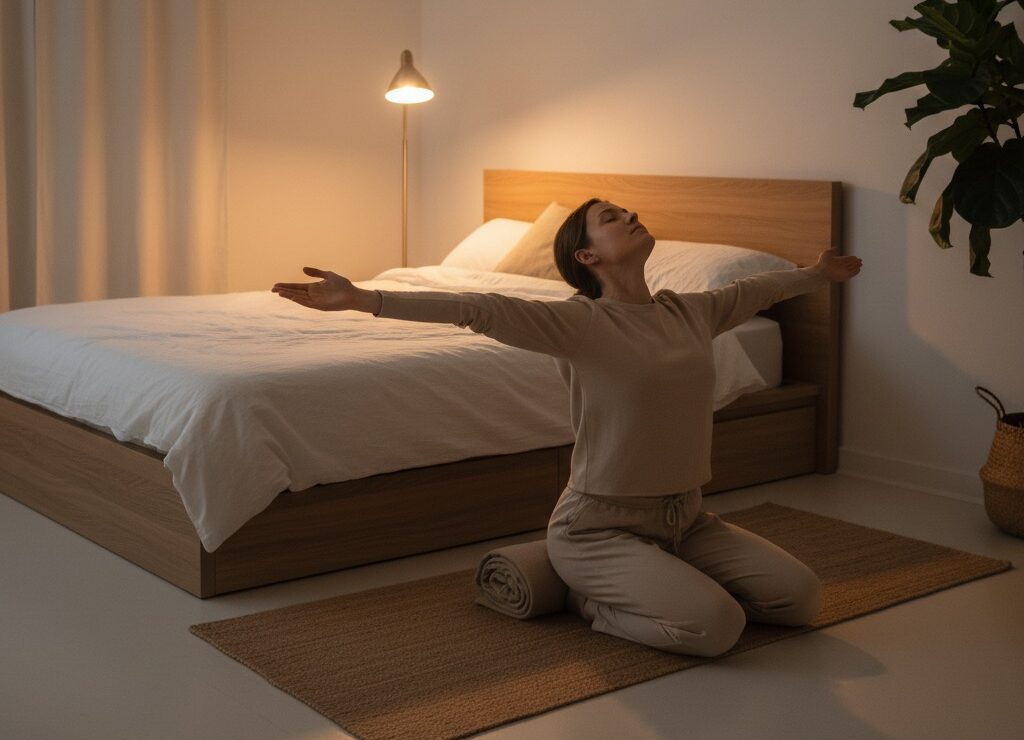
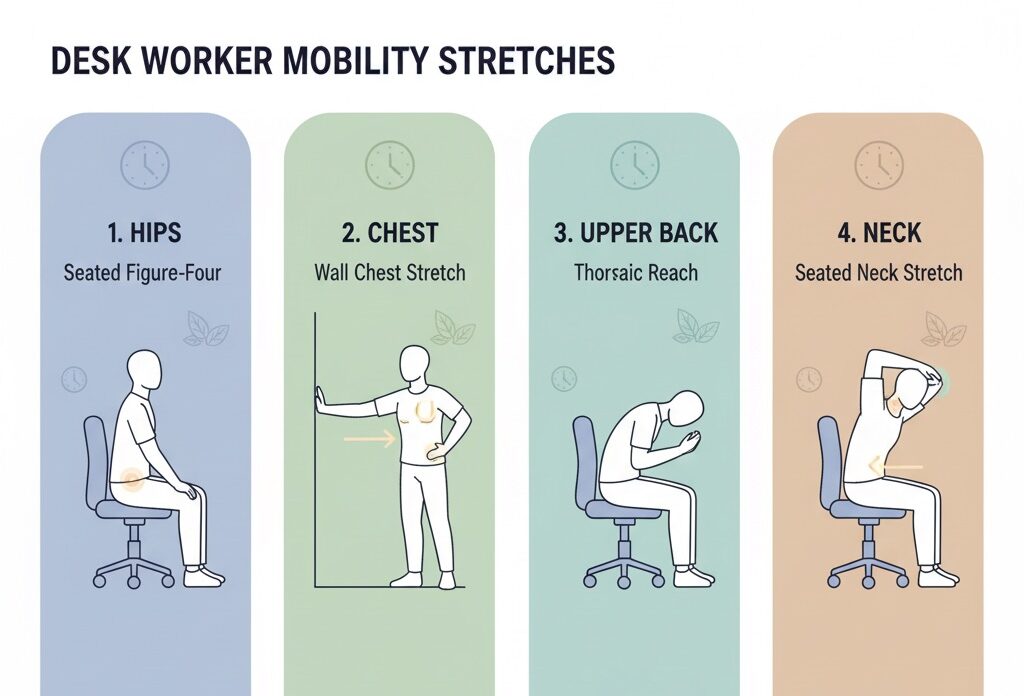
Move 1: Chest opener for rounded shoulders
Target areas: chest, fronts of shoulders, upper back
Why desk workers need it: Sitting pulls the shoulders forward and encourages the chest to tighten. This disrupts posture and makes it harder for the upper back to relax when lying down.
How to do it:
Stand or kneel near a doorway.
Place your forearm or palm against the frame at a 90° angle.
Gently lean forward until you feel a stretch across your chest.
Keep your neck long, shoulders down.
Hold for 20–30 seconds, breathing slowly.
Switch sides.
Why it helps before bed:
Opening the chest allows the shoulders to settle back into a neutral position. This reduces upper-body tension that otherwise carries into the night.
Move 2: Hip-flexor reset for prolonged sitting
Target areas: hip flexors, quadriceps, lower back
Why desk workers need it:
When you sit for hours, the muscles at the front of your hips shorten. This can tilt the pelvis forward and create pressure in the lower back — discomfort that becomes noticeable when lying in bed.
How to do it:
Kneel on one knee with the opposite foot in front (a low lunge).
Keep your torso upright and lightly tuck your tailbone under.
Shift forward until you feel a stretch at the front of the hip.
Hold for 20–30 seconds without forcing the movement.
Switch sides.
Why it helps before bed:
Releasing the hips reduces pressure in the lower back and creates a more comfortable alignment for sleeping. It also sends a relaxation signal through the psoas — a deep muscle linked to stress and tension.
Move 3: Thoracic rotation for a stiff upper back
Target areas: mid-back, rib cage, shoulders
Why desk workers need it:
The upper back is designed for mobility, but sitting at a computer holds it still for hours. This leads to stiffness around the ribs and spine, which contributes to poor posture and shallow breathing.
How to do it:
Lie on your side with knees bent and stacked.
Extend your arms straight in front of you.
Open your top arm toward the opposite side, rotating your upper body.
Let your gaze follow your moving hand.
Keep your lower body still.
Hold for 15–20 seconds, then switch sides.
Why it helps before bed:
Rotating the thoracic spine frees tension that restricts breathing. When your breath expands, your nervous system relaxes — a key ingredient for pre-sleep calm.
Move 4: Neck and trap release for screen tension
Target areas: upper trapezius, sides of the neck, base of the skull
Why desk workers need it:
Screens pull the neck forward and encourage the shoulders to creep upward. This creates the classic “tech neck” pattern — stiffness that often turns into nighttime discomfort.
How to do it:
Sit tall on the edge of your bed.
Gently tilt your right ear toward your right shoulder.
Keep your shoulders relaxed; avoid lifting them.
Optionally, rest your right hand lightly on the side of your head for deeper stretch.
Hold for 20–30 seconds, switch sides.
Finally, nod your head slowly up and down to loosen the base of the skull.
Why it helps before bed:
Releasing the neck and traps sends an immediate calming signal to the nervous system. This is one of the most effective stretches for people who “carry stress in their shoulders.”
How long and when to perform these stretches
One of the reasons this routine works so well for desk workers is that it doesn’t require much time. You don’t need a full yoga session, a mat, or a strict schedule. These mobility moves are most effective when they feel approachable — a small ritual rather than a task.
Here’s how to make them part of your evening with ease:
Duration:
Aim for 5–8 minutes in total.
Each stretch should last about 20–30 seconds, with slow breathing. This is enough to gently lengthen tight tissue without overstimulating your muscles before bed.
Timing:
The best moment to stretch is during your wind-down window, the 30–60 minutes before sleep. This aligns with your circadian rhythm’s natural drop in alertness and prepares your nervous system for rest.
You can also use these stretches:
after a long meeting-heavy day,
after commuting home,
after screen-heavy tasks,
or anytime you sense your shoulders creeping upward.
Consistency:
You don’t need to follow a strict daily routine. Even 3–4 evenings per week can noticeably reduce tightness. As the Cleveland Clinic highlights in their guide to stretching benefits, the body responds well to small, repeated mobility work — especially when the goal is relaxation rather than performance.
Think of this routine as a gentle signal you send to your body:
“We’re done for today. You can soften now.”
Pairing stretching with other calming bedtime habits
Mobility alone is powerful, but combining it with simple, calming habits can deepen the transition into rest. Desk workers often have overstimulated nervous systems — fast thoughts, fast typing, fast decision-making. The body benefits from anything that helps break that momentum.
Here’s how to elevate your routine:
1. Pair your stretches with slow breathing
One of the simplest ways to enhance relaxation is to breathe deeply and evenly. Even a gentle pattern — such as inhaling for four seconds and exhaling for six — activates the parasympathetic nervous system.
You can also follow the technique described in:
Deep breathing for better sleep: a simple nighttime technique
Combining mobility with breathwork turns mild physical release into whole-body calm.
2. Lower the lights
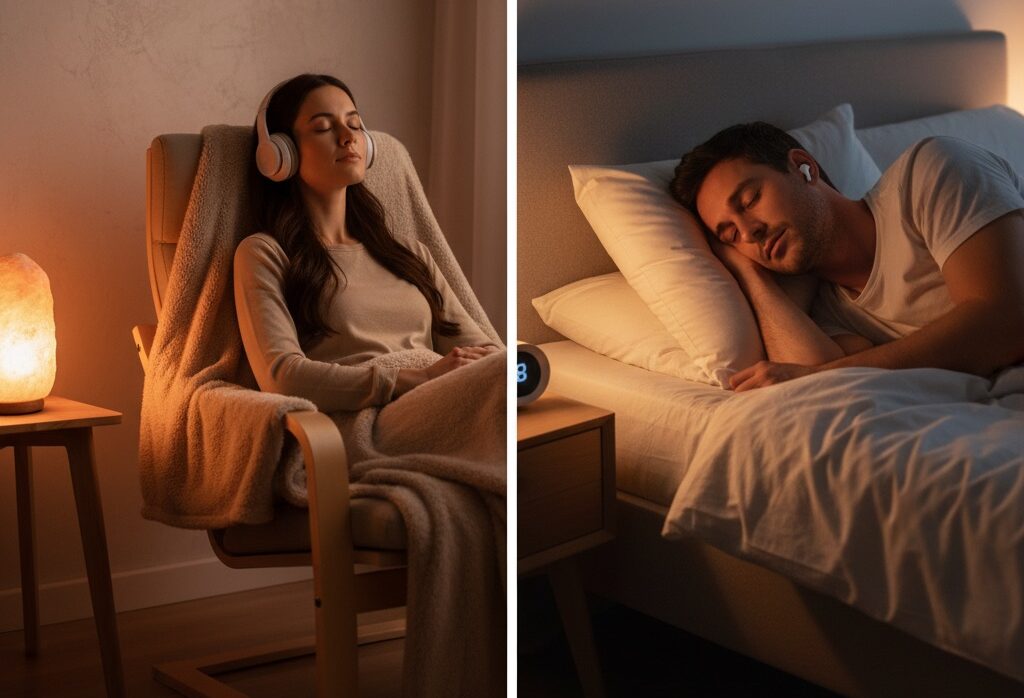
Dimming lights while stretching helps your brain transition toward melatonin release. Think warm, soft lighting — a lamp, salt light, or indirect glow.
3. Reduce screen stimulation
Try to avoid bright screens within your stretching window. If you need guidance, keep brightness low or turn on “warm mode” to minimize alertness.
4. Add heat or cold strategically
If certain areas feel particularly tight — like the neck or lower back — gentle heat can soften surrounding tissue. For inflammation or swelling (rare but possible after long desk hours), a cool compress may feel better.
See:
Cold and hot therapy for better sleep: how and when to use them
The combination of warmth, mobility, and low lighting creates a highly effective pre-sleep reset.
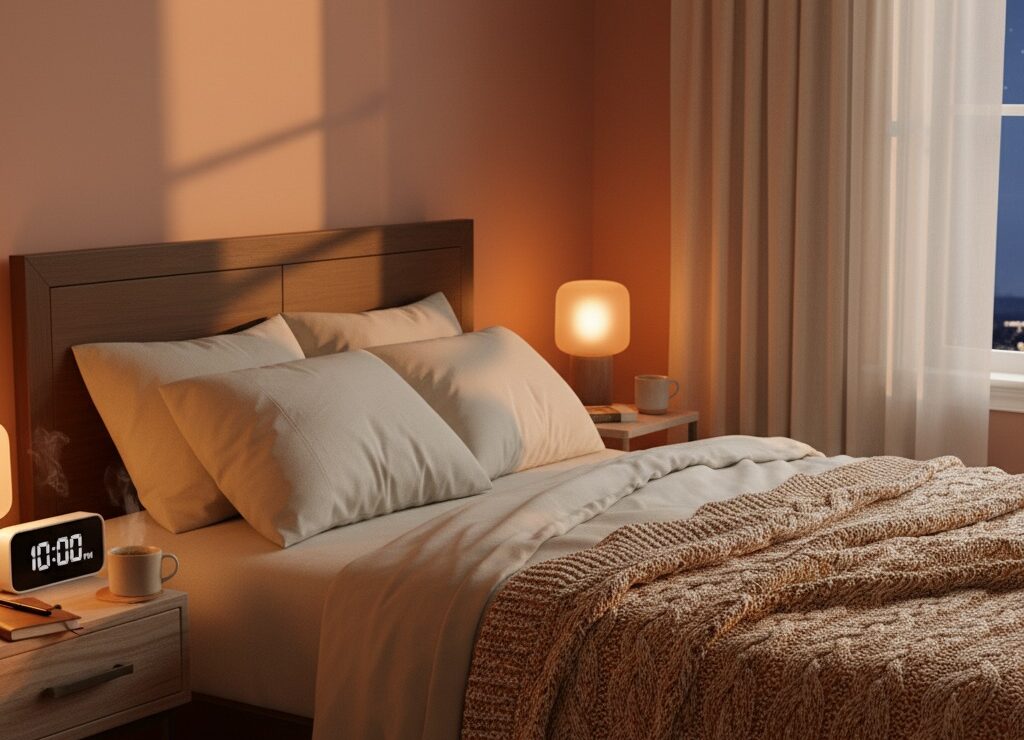
5. Create a consistent wind-down environment
Calm Sleeply already emphasizes environment as part of nighttime wellbeing. Your surroundings can either reinforce your relaxation or pull you back into work mode.
If you need guidance on creating a cozy, supportive space, explore:
Home sleep hacks: how to optimize your bedroom environment
Stretching works best in a peaceful, uncluttered atmosphere that signals “this is your time.”
How stretching supports sleep quality (beyond flexibility)
Desk workers often assume that stretching only affects muscles. But its impact on sleep goes deeper.
1. It reduces physical discomfort that disrupts falling asleep
A tight hip or rounded back may feel tolerable during the day, but in bed those small discomforts are amplified. Releasing tension beforehand helps you settle into your preferred sleep position more easily.
2. It calms the nervous system through slow movement
Your body responds to gentle mobility by lowering heart rate and reducing cortisol spikes. This creates the conditions for a smoother transition into sleep.
3. It supports deeper, slower breathing
When your chest and upper back are tight, your breathing becomes shallow. Thoracic mobility reverses this pattern, making room for fuller, more relaxed breaths.
4. It signals “the workday is finished”
This psychological reset is vital. Desk work often creates a mental blur between productivity and rest. Stretching provides a clear physical pause — a line between day and night.
5. It reduces stress stored in the muscles
Muscles hold emotional patterns. Tense shoulders often reflect a long day of multitasking; a tight neck may reflect concentration or overload. Gently moving these areas helps release both the physical and emotional weight of the day.
Stretching before bed isn’t about athletic performance — it’s about preparing the body to feel safe enough to rest.
What desk workers commonly misunderstand about stretching
To get the most out of your routine, it helps to understand a few frequent misconceptions.
Misconception 1: “I need long or intense stretches.”
Not at all. Gentle mobility is more effective for sleep than deep static stretches, which can overstimulate your nervous system.
Misconception 2: “Stretching is only for flexibility.”
Mobility improves circulation, reduces tension, and activates calming pathways — all of which support sleep readiness.
Misconception 3: “I need perfect form.”
There’s no need for yoga-level accuracy. As long as the movement feels comfortable and relieving, you’re doing it right.
Misconception 4: “If I miss a night, it doesn’t work.”
Stretching doesn’t require perfection. Even intermittent practice creates relief and improves your evening comfort.
Misconception 5: “It’s too late to undo desk posture.”
The body is remarkably adaptable. A few minutes of mindful movement can reverse hours of sitting — and the benefits are cumulative.
A sample 7-minute pre-bed sequence for desk workers
Here’s how your evening mobility ritual might look:
Minute 1:
Slow breathing, light chest opener.
Minutes 2–3:
Hip-flexor reset (each side).
Minute 4:
Thoracic rotation on the right side.
Minute 5:
Thoracic rotation on the left side.
Minutes 6–7:
Neck and trap release.
Finish the routine by taking two slow breaths while placing your hands gently over your ribs or chest — a gesture that encourages grounding and calm.
This short sequence can become an anchor in your nighttime routine, especially on demanding days.
A gentle reminder: stretching is self-care, not a performance
Your evening mobility practice is not something to achieve — it’s something to experience. It doesn’t matter how far you reach, how flexible you are, or whether the stretch looks “correct.” What matters is how it feels in your body.
Desk workers often live in their minds all day — thinking, planning, responding. Stretching brings your attention back to your physical self, reminding you that rest requires embodiment, not just exhaustion.
See it as a moment of self-kindness.
A pause.
A reset.
A soft way to say to your body:
“Thank you for getting me through today. Now let’s prepare for rest.”
Conclusion: a nightly reset for body and mind
For desk workers, pre-bed stretching is more than a mobility routine. It’s a way to undo the patterns of the day — the rounded shoulders, the tight hips, the stiff back, the heavy neck — and to reclaim a sense of ease before sleep.
These four gentle moves help:
release accumulated tension,
calm the nervous system,
encourage deeper, slower breathing,
and create a clear transition from work to rest.
Small rituals matter. And this one, just 5–8 minutes long, can transform how your body feels as you lie down at night — lighter, calmer, more open to sleep.
Because the quality of your rest doesn’t begin the moment you close your eyes.
It begins the moment you decide to slow down.