For many people, nighttime silence isn’t calming — it’s loud. The moment the room gets quiet, your mind becomes noisier: replaying conversations, analyzing the day, or scanning for every tiny sound. That’s where soothing background noise comes in. It can smooth out auditory inconsistencies, reduce environmental disruptions, and create a stable sonic “blanket” that helps the brain settle.
But not all noise is created equal. In the sleep world, two types stand out: white noise and pink noise. They’re often mentioned together, yet they work in different ways and can feel very different in your body. Depending on your sleep type, stress levels, and sensitivity to sound, one may help you drift off more easily than the other.
Understanding the difference isn’t complicated — it simply requires knowing how each noise distributes energy across frequencies, and how that interacts with the human brain during rest.
White noise and pink noise both belong to the family of constant, broadband sounds. But their “texture,” intensity, and emotional effect differ. These differences influence whether you fall asleep faster, stay asleep longer, or simply feel more at ease when trying to wind down.
This article explores how each noise works, what research says about their impact on sleep, and — most importantly — how to choose the one that fits your sleep style.
What white noise actually is
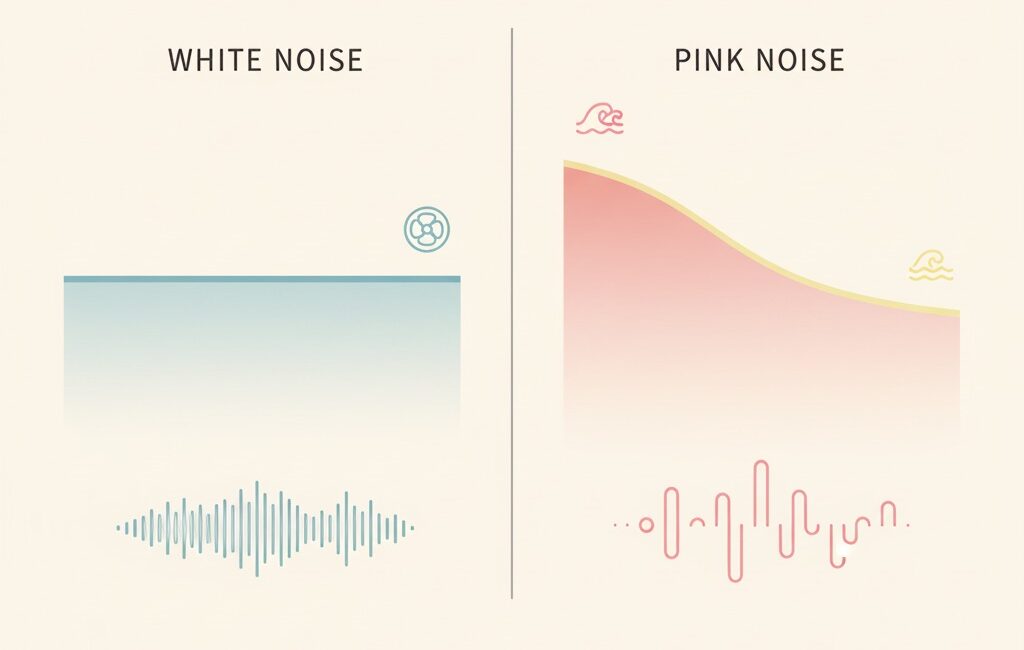
White noise contains equal energy at every frequency the human ear can hear. Think of it as the sound version of bright, neutral light — everything blended together at equal intensity. Because it spreads energy evenly, white noise has a sharp, steady, and slightly airy quality.
People often describe it as:
-
a fan running at high speed,
-
static from an untuned radio,
-
air conditioner hum,
-
or a steady “hiss” that quickly fades into the background.
White noise’s defining feature is its even distribution of sound energy. This makes it especially effective for masking sudden changes in your environment. If you live near traffic, share a bedroom, or have a partner who wakes earlier than you do, white noise can level out those disruptions so they don’t reach your consciousness as strongly.
Because of this, white noise is often recommended for:
-
light sleepers,
-
people who wake easily from external sounds,
-
apartment dwellers,
-
and parents soothing babies.
It creates a protective acoustic barrier — one reason pediatric sleep researchers often use white noise in infant studies when analyzing sleep onset.
What pink noise is — and why it feels different
Pink noise also includes all audible frequencies, but it distributes energy differently: it reduces intensity as the frequency increases. This creates a sound profile that feels warmer, softer, and more natural than white noise.
Where white noise resembles static, pink noise resembles:
-
steady rain,
-
ocean waves,
-
rustling leaves,
-
or a calm waterfall.
Because lower frequencies dominate, pink noise aligns more closely with patterns found in nature. As a result, studies suggest it may enhance the brain’s slow-wave activity, especially during deeper stages of sleep. These waves are associated with memory consolidation and physical restoration, which is why deep sleep is so reparative.
Research referenced by the Sleep Foundation describes how pink noise exposure at night may help stabilize sleep architecture and improve perceived sleep quality, particularly for those who feel overstimulated or mentally “busy” in the evening.
In other words:
If white noise is neutral “sound light,” pink noise is a warm, natural “sound environment.”
Why some sleepers prefer one over the other
Your response to white noise vs. pink noise depends on two things: your nervous system sensitivity and your main sleep challenge.
People who struggle with external disruptions — footsteps in the hallway, traffic, neighbors, a partner shifting in bed — often find white noise more effective. Its flatter energy distribution masks sharp or sudden sounds exceptionally well.
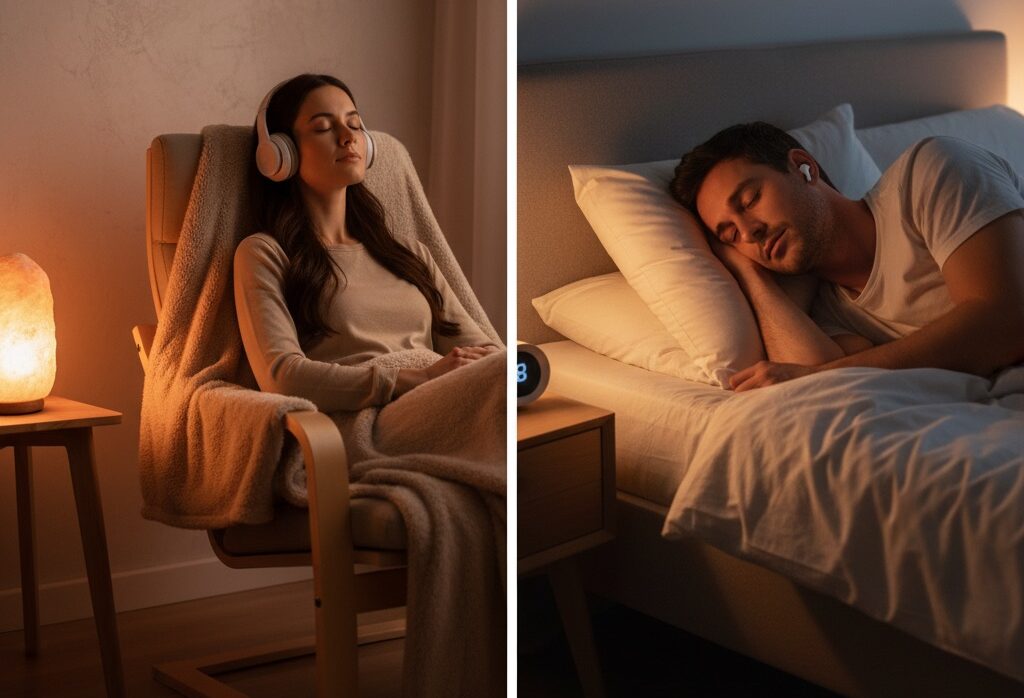
Meanwhile, people who struggle with mental tension — overthinking, stress, difficulty unwinding — may find pink noise more soothing. Its natural rhythm and softer tone support a calmer emotional state, which helps reduce cognitive arousal before sleep.
This distinction becomes clearer when we look at sleep types:
-
Light sleepers often prefer white noise.
-
Sensitive or anxious sleepers often prefer pink noise.
-
People seeking deeper, slower breathing rhythms may gravitate to pink noise.
-
People who live in noisy environments may need white noise’s intensity.
There isn’t a right or wrong choice — only the one that feels like “your sound.”
How each noise interacts with the brain
The human brain is deeply responsive to sound, even during sleep. Noise influences sleep onset, sleep depth, and wakefulness depending on how predictable or unpredictable it is.
White noise works through a mechanism known as sound masking.
It creates a constant background level that makes unpredictable noises less noticeable. The brain doesn’t need to stay alert for sudden acoustic changes — the very changes that can trigger brief awakenings.
Pink noise, on the other hand, interacts with brain rhythms.
Because its energy decreases at higher frequencies, pink noise aligns more closely with the brain’s natural slow-wave oscillations. Some early research suggests it may support:
-
more stable deep sleep,
-
smoother transitions between sleep stages,
-
and improved memory consolidation.
While the evidence is still emerging, many people intuitively feel pink noise is easier on their nervous system.
The emotional difference between white and pink noise
An often-overlooked factor is emotional response. Sound is processed not only by the auditory cortex but also by emotional centers such as the amygdala.
White noise can feel “neutral,” “clean,” or “sterile.”
Some people love the simplicity. Others find it slightly sharp.
Pink noise tends to feel “natural,” “warm,” or “immersive.”
The auditory brainstem processes it similarly to environmental sounds found in nature, which may explain its grounding effect.
This emotional contrast is significant. Your subjective sense of comfort shapes your pre-sleep state — and your pre-sleep state shapes the first part of your sleep cycle.
Where sleep devices come into the picture
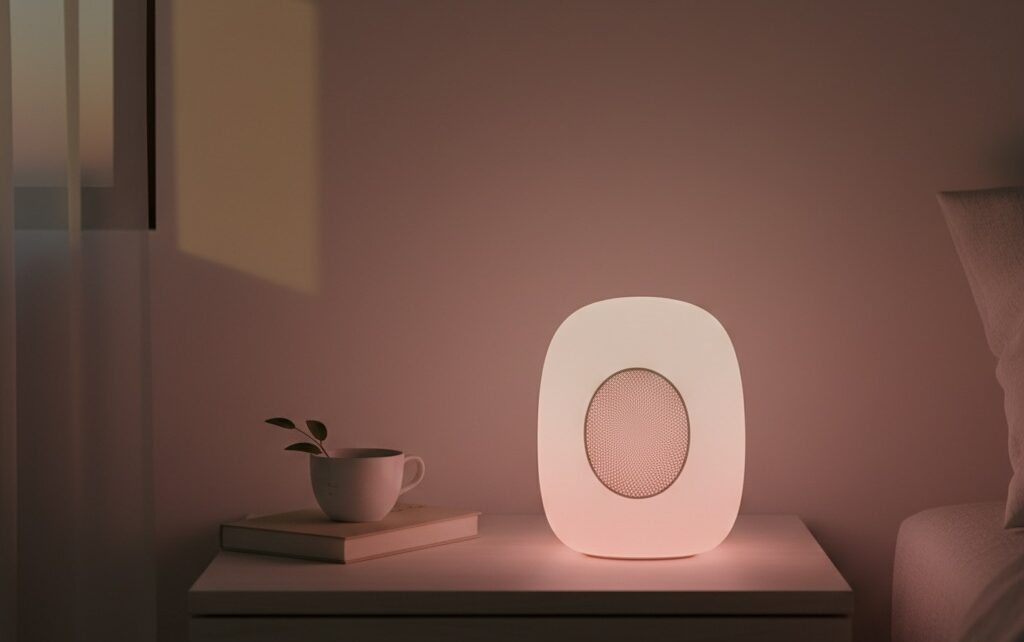
Today’s white and pink noise machines offer more options than basic “on/off” features. Many allow you to adjust:
-
the exact noise color,
-
the frequency emphasis,
-
the volume curve,
-
the looping smoothness,
-
or the fade-out timing.
Some devices even let you blend noise types or shift gradually from one to another during the night. For people with variable sensitivity, this customization can make a substantial difference.
Choosing a device is no longer about “white vs. pink” — it’s about tailoring the sound environment to your nervous system.
Matching noise types to your sleep patterns
Choosing between white and pink noise begins with understanding how your body responds to sound at night. Some sleepers need a strong, steady blanket of sound to drown out inconsistent noises. Others prefer a softer, more natural auditory atmosphere that feels less intense. What matters most is not the “superiority” of one noise type over another, but the way your mind interprets predictability and softness when trying to fall asleep.
White noise often works best for people who live in unpredictable environments — thin walls, city traffic, hallway echoes, pets, or shifting household activity. Its consistent, unchanged frequency creates a sonic barrier around you, masking interruptions before your brain has a chance to notice them. This is why it is frequently recommended for light sleepers or those with stress-induced hypervigilance.
Pink noise, on the other hand, supports a different kind of quiet. Because it mimics natural sound patterns — like distant rain or steady wind — it tends to blend with your internal rhythm rather than overpower the environment. Many people who already use calming rituals, such as gentle breathwork or warm therapy practices, find that pink noise integrates more smoothly into their evening routine. If you’re curious about how physical relaxation interacts with sleep, our article on cold and hot therapy explores this connection in more detail.
Sound consistency and the brain
The reason noise machines work at all is because the brain reacts strongly to inconsistency. Even small, sudden sounds — a cupboard closing, a car door outside, shifting pipes — can pull you toward wakefulness because your nervous system is trained to notice change.
White and pink noise both create a stable auditory field. The difference is in the texture of that stability.
White noise forms a dense wall of sound. Pink noise forms a softer, more aerated cushion. Both can reduce nighttime micro-arousals, but the experience of listening to them is different — and experience matters. If the sound itself feels irritating, your nervous system may stay active rather than settle.
Pairing either noise with calming habits increases its effectiveness. For example, a short deep breathing practice helps shift your focus inward, making the noise machine a supportive background layer rather than the main point of attention.
The role of environment and bedtime setup
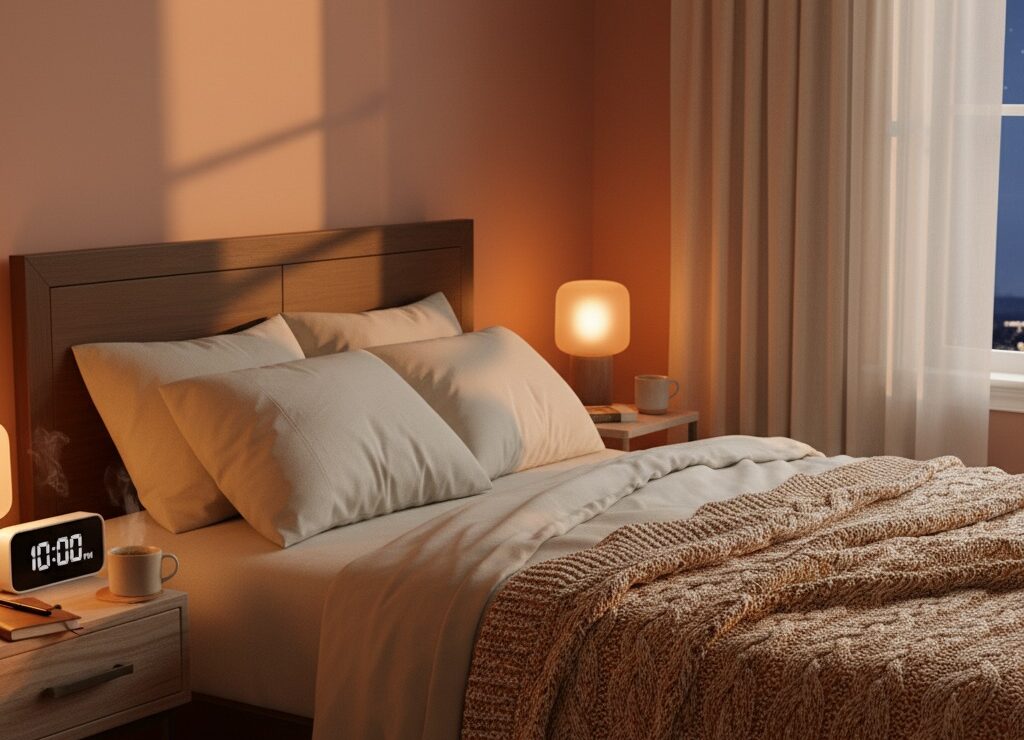
Noise devices are only one part of a larger nighttime environment. Their effect becomes stronger when the rest of your bedroom supports similar sensory consistency. Dim light, comfortable temperature and a predictable wind-down routine help your brain understand that it’s transitioning into safety and rest.
If you’re exploring ways to make your space more sleep-ready, our guide Home sleep hacks: how to optimize your bedroom environment offers practical environmental tweaks.
When your environment sends the right signals, white or pink noise becomes a subtle final layer of calm rather than a tool that has to “work alone.”
Choosing a noise device: what actually matters
You don’t need an expensive machine to benefit from sound therapy — but the right features can make the experience smoother. Look for devices that allow you to:
adjust volume precisely, not just in broad increments;
change between noise colors, so you can experiment;
set timers, especially if you prefer silence later in the night;
avoid abrupt sound loops, which can break the feeling of continuity.
Some devices now combine white, pink, and brown noise with calming nature recordings. If you’re sensitive to artificial sound textures, blended noise tracks may feel more organic.
Consider your sleep type:
light sleepers or those in noisy environments often prefer white noise;
sensitive, easily overstimulated sleepers usually gravitate toward pink noise;
people who enjoy multi-step rituals may combine pink noise with stretching, journaling, or temperature therapy as part of a grounding evening rhythm.
A note on nighttime anxiety
One of the hidden advantages of both white and pink noise is that they reduce internal noise — the mental chatter that grows louder in silence. By giving the mind something steady to rest on, these sounds can help reduce overthinking loops that otherwise delay sleep. If nighttime anxiety is a recurring pattern, using noise as a “cognitive anchor” can be genuinely helpful.
Still, remember that noise machines aren’t a standalone solution. They’re most effective as part of a constellation of calming habits — gentle transitions, reduced screen exposure, and grounding techniques. Many readers find combining pink noise with slow exhalations or guided body relaxation especially helpful, because the auditory and physical signals reinforce each other.
Final takeaway
White noise and pink noise devices share one purpose: to help your brain experience the world as predictable enough to let go. White noise does this by fully masking the environment. Pink noise does it by softening the environment.
Neither is universally better — but one will feel better for you. The most reliable method is experimentation: try one for a few nights, then the other, and pay attention to how your body responds during the first ten minutes of listening. That moment often tells you more than any specification list.
Because good sleep isn’t only about silence.
It’s about the right kind of sound — the kind that allows your mind to settle into itself.