There’s a reason you sleep better in some rooms than others. While we often focus on pillows, mattresses, or noise, few of us think about what’s swirling invisibly in the air. Yet the microclimate of your bedroom — the subtle interplay of humidity, temperature, and air composition — can have a surprisingly strong impact on the quality of your rest.
Your body is sensitive to even small changes in its environment during sleep. Humidity affects how efficiently you regulate heat. Airborne ions influence how deeply you breathe. And dry or stale air can quietly trigger micro-awakenings, mouth breathing, or even nightmares.
That’s why optimizing your bedroom’s air quality and climate may unlock deeper, more restorative sleep — not by adding new routines, but by supporting your body’s natural rhythms in the background.
What is a “microclimate,” and why does it matter for sleep?
A microclimate refers to the local, specific conditions in a small space — in this case, your bedroom. It includes:
Humidity levels (how moist or dry the air is)
Air temperature (and how it fluctuates overnight)
Airflow and ventilation
Presence of air ions, dust, or VOCs (volatile organic compounds)
Unlike general room temperature, a microclimate considers how these factors interact. For example, a room that feels cool but is overly dry can lead to poor thermoregulation, nasal dryness, and interrupted sleep.
Your body’s ability to enter and stay in deep sleep depends heavily on its core temperature and comfort at the skin and respiratory level. That means even if you’re on the best mattress, your body may still struggle to relax fully if the air is too dry, too stagnant, or too warm.
We explored similar ideas in Home sleep hacks: how to optimize your bedroom environment, where light, sound, and clutter were shown to influence rest. But microclimate adds another layer — invisible but impactful.
Humidity: the quiet regulator of nighttime comfort
Your respiratory system — nose, throat, and lungs — is designed to thrive in a humid environment. Too little humidity and your mucous membranes dry out, leading to:
dry throat or mouth
nasal congestion
irritation that triggers shallow or restless breathing
On the flip side, overly damp air can promote mold growth, dust mites, and sweating — especially when paired with synthetic bedding.
So what’s ideal?
Most sleep experts and environmental scientists recommend keeping bedroom humidity between 40% and 60%. According to a study published in the NIH database (source), this range helps support:
healthy skin hydration
nasal airflow and oxygen intake
reduced overnight coughing or snoring
Some advanced sleep trackers — both smart rings and watches — now offer ambient room sensors that show humidity variation through the night, giving users clues about environmental triggers.
A drop in humidity, for instance, might correlate with increased awakenings or lower deep sleep. This insight opens up a gentle path to better sleep: adjust the air, not just the routine.
How humidity and temperature work together
Humidity doesn’t act in isolation — it shapes how your body perceives temperature. High humidity can make a 22°C (72°F) room feel stuffy and stifling. Low humidity makes it feel cool but sharp — drying to the skin and lungs.
This relationship matters most during the sleep onset period, when your body must cool down slightly to initiate melatonin release and prepare for deep sleep.
If the room is too warm and humid: your body struggles to shed heat through sweat, leading to restlessness.
If the room is cool but dry: your core may cool too fast, triggering muscle tension or airway irritation.
The ideal microclimate for sleep, based on combined findings from the Sleep Foundation and environmental studies, is:
Temperature: 16–19°C (60–67°F)
Humidity: 40–60%
Light, indirect airflow: gentle, filtered ventilation
This balance supports your circadian rhythm, reduces sleep latency, and minimizes wake-ups caused by discomfort.
You can also support this through habits like adjusting your bedding (breathable fabrics, moisture-wicking materials) or using hot/cold therapy before sleep — as explored in Cold and hot therapy for better sleep.
Air ions: what they are, and why they matter
Now for the less obvious part of the microclimate equation — air ions. These are electrically charged particles in the air, formed naturally through processes like:
sunlight hitting water or soil
moving air (wind, showers, ocean waves)
certain air purification processes
Negative ions (which are actually beneficial) are believed to improve:
mood and alertness during the day
breathing and airway openness
possibly even sleep depth at night
In contrast, air polluted with positive ions (often from electronics, HVAC systems, or urban air pollution) may feel heavier, stuffier, and more fatiguing.
A 2017 study published in Sleep Health (ScienceDirect) found that subjects exposed to air with higher concentrations of negative ions during sleep reported:
fewer nighttime awakenings
improved subjective restfulness
better respiratory ease
The mechanisms aren’t fully understood, but researchers believe negative ions help regulate serotonin and improve autonomic nervous system balance, gently supporting parasympathetic activity — the same mode that promotes deep rest.

Creating your ideal bedroom microclimate
Now that we understand why air quality and balance matter, the next question is: How can we improve our bedroom microclimate without turning our space into a lab?
The answer lies in subtle adjustments. You don’t need five gadgets humming in the background — just a few thoughtful tools and habits that help your bedroom support sleep instead of interfering with it.
1. Track and balance humidity
Start by measuring your current humidity levels. A simple hygrometer (often built into air purifiers or smart thermostats) will tell you where your bedroom falls on the scale.
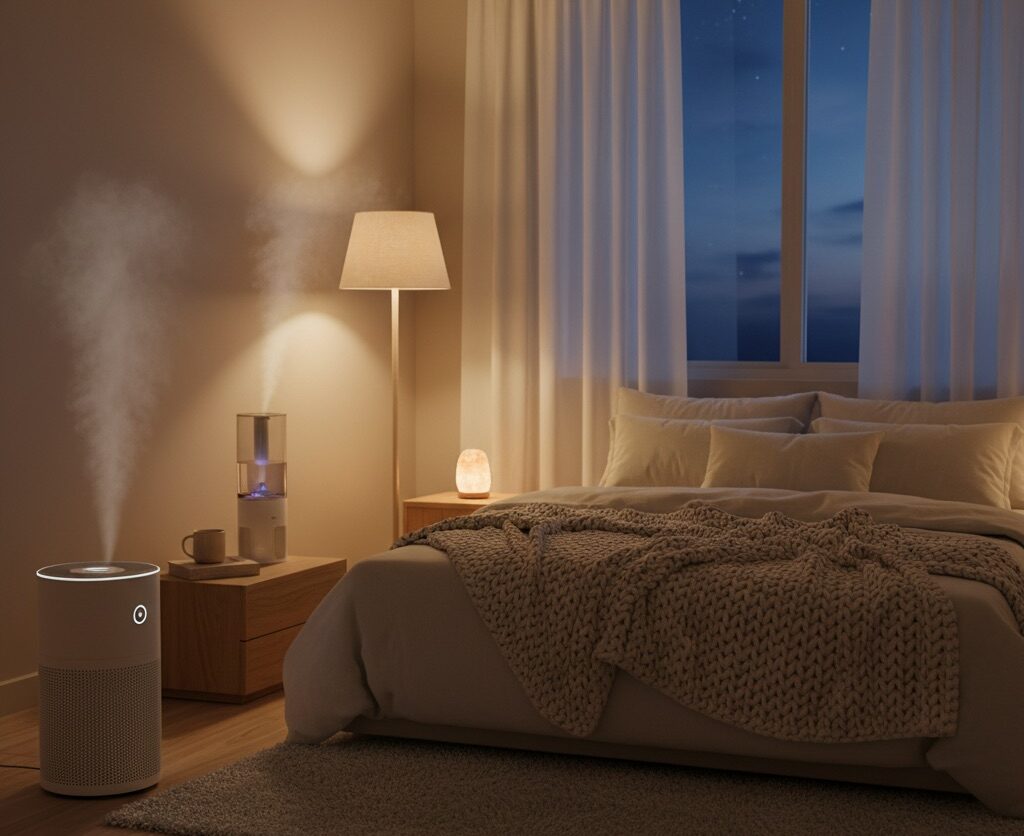
If humidity is below 40%, especially in winter or dry climates, consider adding a cool mist humidifier. It’s best to run it for a few hours before bedtime rather than all night to avoid over-humidification.
If humidity is above 60%, especially in summer or poorly ventilated rooms, a dehumidifier or improved airflow may help. High humidity can increase sweating and disrupt thermoregulation.
Tip: Clean your humidifier regularly to prevent mold and mineral buildup. The goal is to help your respiratory system rest — not introduce irritants.
2. Encourage gentle airflow
Air that stays still feels heavy. Even without a strong breeze, soft, filtered airflow helps regulate temperature and prevent carbon dioxide buildup overnight.
Open a window slightly if outdoor air is clean and not too humid.
Use a quiet fan to promote circulation — but avoid it blowing directly on your body.
Choose breathable bedding and avoid plastic mattress covers that trap heat.
As we noted in Does mouth taping really improve sleep?, nasal breathing plays a central role in high-quality rest. Good airflow supports open nasal passages and prevents dryness.
3. Introduce negative air ions mindfully
You don’t need a fancy ion generator to benefit from this natural process — though high-quality air purifiers with ionizing functions can be helpful.
Other accessible ways to encourage negative ions:
Keep houseplants near your sleep area (like peace lily or snake plant).
Air out your room daily with real ventilation, not just AC.
Spend time near nature (parks, water, fresh soil) during the day — your system carries the effects into sleep.
For those curious about tech support: ionizers like the Coway Airmega or Dyson Pure Cool models offer gentle purification without the ozone concerns of older devices. Just ensure filters are cleaned often and the device isn’t directly next to your head.
4. Layer your environment — not just temperature
Your sleep experience is about more than room temperature. Think in layers:
Base: Humidity, airflow, air cleanliness
Middle: Bedding, pajamas, mattress materials
Top: Emotional comfort — scents, light, familiarity
This concept aligns with what we covered in The psychology of comfort items: calming the nervous system involves all the senses. Your air isn’t just oxygen — it’s temperature, texture, scent, and sensation.
5. Avoid microclimate disruptors
Some habits or features unknowingly sabotage your sleep microclimate. Watch for:
Blocked vents or sealed rooms that trap CO₂ overnight
Running electronics near the bed that warm the air or emit light
Heavy synthetic bedding that traps moisture and heat
Burning candles or incense late at night — relaxing, but may increase airborne particles if ventilation is poor
Your goal isn’t sterile air — it’s dynamic balance, where air moves gently, holds just enough moisture, and doesn’t overload your senses.
Signs your microclimate may be disrupting sleep
Here’s how to know if your bedroom air may be working against your rest:
| Symptom | Possible Cause |
|---|---|
| Dry throat or nasal passages | Low humidity, poor airflow |
| Waking up sweating | High humidity or temperature |
| Stuffy feeling in morning | Poor ventilation, CO₂ buildup |
| Restless dreams or shallow sleep | Discomfort during thermoregulation |
| Increased nighttime wakeups | Air too dry, too damp, or too stagnant |
Tracking these patterns over a week or two — with or without a sleep tracker — can help pinpoint environmental culprits.
You can even correlate symptoms with your sleep tracker data to see if changes in humidity align with drops in deep sleep or longer sleep latency.
Why your bedroom air may be more important than your mattress
We often invest in better pillows or high-tech sheets, but neglect the invisible element we breathe every second: air.
Your bedroom air supports:
Thermal comfort
Breathing ease
Neurological calm via respiratory rate
Skin health overnight
Hormonal regulation (especially melatonin and cortisol rhythms)
Optimizing your microclimate doesn’t require expensive upgrades. A clean fan, a $30 humidifier, and a window crack can make more of a difference than luxury linens. It’s the passive, consistent support that matters.
As shared in Cold and hot therapy for better sleep, your body seeks balance — and the air around you is a key part of that balance.
Final thoughts: breathing your way into better sleep
The microclimate of your bedroom is like a silent sleep coach. You don’t hear it, touch it, or think about it often — but it influences every moment of your night.
By bringing awareness to humidity, air movement, temperature, and ions, you can create an environment where your body naturally feels safe to relax. It’s not about chasing perfection — it’s about removing friction between you and the rest you need.
So tonight, before you adjust your alarm or dim your screen, take a moment to notice the air. Cool? Dry? Still? Refresh the space if you can. Then let your breath lead you gently into the night.
Because sometimes, a better night’s sleep starts with the air around you.