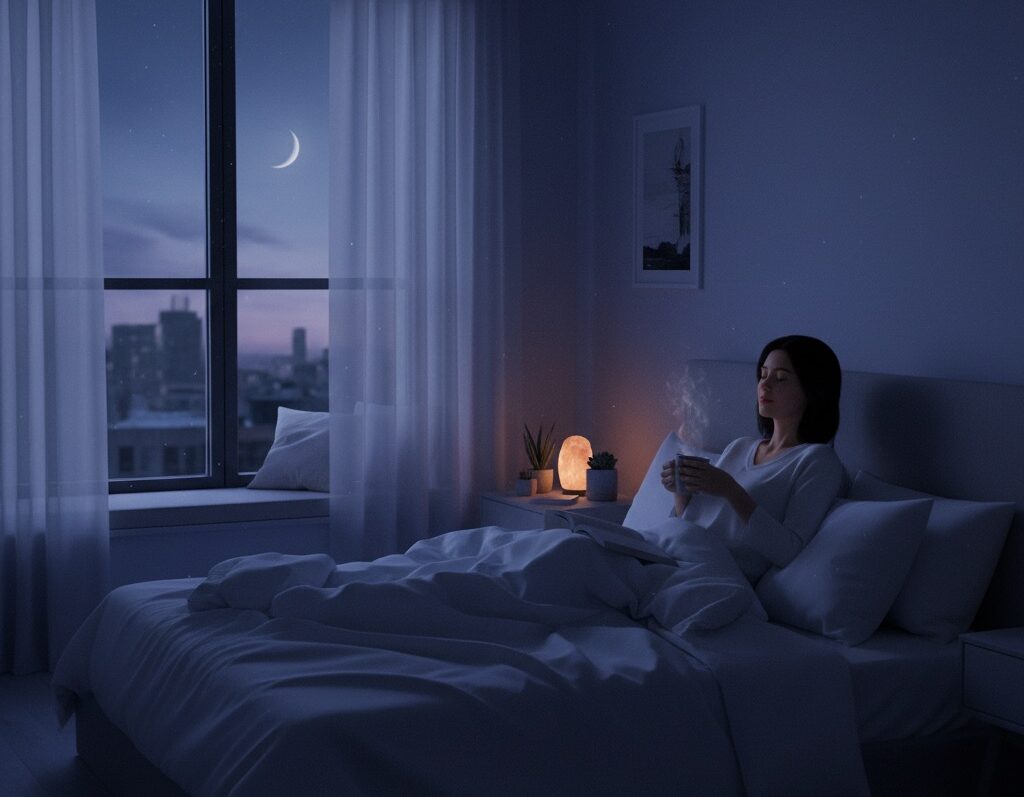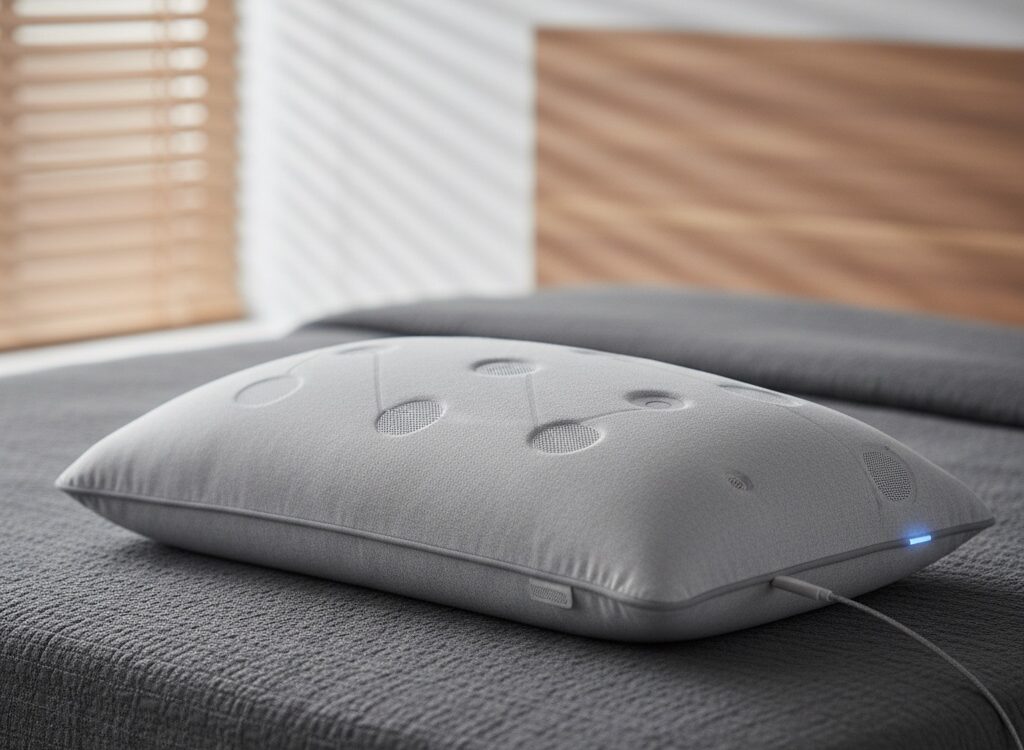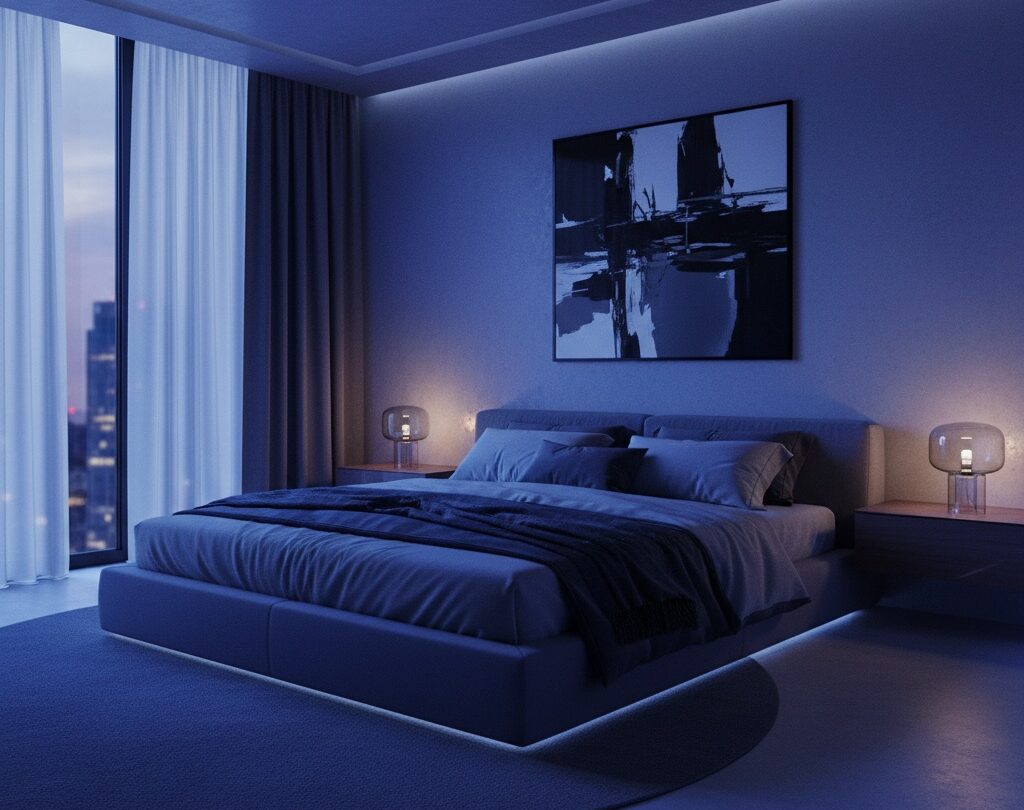
Most people today know that blue light before bed can delay sleep. The solution? Blue-light-blocking glasses, screen filters, amber lighting — even phone settings like Night Shift. But what if your protection didn’t stop with screens?
What if your bedding — the very fabric surrounding you while you sleep — could help shield you from disruptive wavelengths of light?
That’s the promise behind a new category of sleep products: blue-light-blocking bedding. These aren’t just blackout curtains in disguise. They use special textile technology to filter or diffuse short-wavelength light, with the goal of supporting melatonin production and maintaining your circadian rhythm — especially in bedrooms where light control is challenging.
But can your sheets really protect your biological clock? Or is this just clever marketing for anxious sleepers?
Let’s explore the science, the skepticism, and the potential of this quietly glowing trend.
From glasses to sheets: the logic of expanding protection
The interest in blue-light exposure — especially at night — has skyrocketed in recent years. And for good reason.
As the Sleep Foundation explains, blue light suppresses melatonin, the hormone that signals to your body it’s time to sleep. Even brief exposure to light from screens, bulbs, or outside sources can delay your natural wind-down process.
Blue-light-blocking glasses help — but they rely on consistent use and can’t filter ambient light that touches the skin and environment. Enter a more passive solution: bedding that claims to reduce blue-light influence not just on your eyes, but across your entire sleep space.
It’s a logical leap: if light can signal wakefulness via the eyes and skin, perhaps fabrics can soften that message.
What does blue light actually do?
Let’s pause on the core idea: why does blue light disrupt sleep?
Blue light, particularly in the short-wavelength range (450–495 nm), is known to:
Suppress melatonin more than other light types
Delay circadian phase — pushing your internal clock later
Increase alertness and heart rate
Reduce time spent in deep sleep if exposure is close to bedtime
These effects are especially strong in the hour or two before sleep, and most damaging when blue light comes from overhead lighting, screens, or streetlights filtering into the room.
The NIH confirms that exposure to artificial blue light — even at moderate levels — can shift circadian rhythms, especially in environments without good evening light hygiene.
Which leads us to an important point: not everyone has perfect light control. Urban apartments, late-night schedules, co-sleeping with partners who read or watch screens — these realities make passive protection appealing.
How do blue-light-blocking textiles work?
This is where things get interesting.
Unlike glasses, which use tinted lenses to physically block blue light wavelengths from reaching your retina, blue-light-blocking fabrics use special fiber treatments or weaves that aim to reflect, absorb, or scatter blue light frequencies.
Some use mineral-infused fibers (like titanium dioxide or zinc-based coatings) that claim to neutralize high-energy visible (HEV) light, while others focus on dye-free, naturally pigmented fibers that minimize light bounce in the blue spectrum.
A few key approaches include:
Photonic fabrics: Designed with specific weave densities that scatter certain wavelengths
Infrared-enhancing blends: Promote heat retention and may counteract blue light’s stimulating effects
Pigment filtering: Using dark or amber-toned threads to absorb light before it reaches the skin
While many brands avoid disclosing exact formulations (for proprietary reasons), some have begun sharing certifications or testing data showing the degree of blue-light diffusion under controlled conditions.
What’s the real effect on your body?
This is where science meets marketing — and where claims should be taken with nuance.
Let’s be clear: no fabric can block all blue light, and the body’s primary sensitivity to blue light comes through the eyes, not the skin. That said, there’s emerging evidence that the skin contains photoreceptors that may influence peripheral circadian signaling — including heat regulation, metabolism, and immune response.
One small study published in Cell Reports in 2019 showed that exposing the skin to light at night (even without eye involvement) still shifted gene expression related to circadian rhythm. While more research is needed, this opens the door to the idea that light-safe environments may matter more than we assumed.
From a practical perspective, blue-light-blocking bedding works best as part of a layered system:
If your room gets external light at night
If your partner uses screens in bed
If you struggle with light sensitivity or poor melatonin response
If you already wear glasses but want to reduce full-body light exposure
It’s not a miracle product — but it may serve as an amplifier of other circadian-friendly habits.
Who benefits most from blue-light-blocking bedding?
Like many emerging sleep products, this isn’t a one-size-fits-all tool. But certain types of sleepers may find it especially useful:
1. Urban dwellers with external light pollution
If you live in a city with streetlamps, signage, or nearby buildings with lights that leak into your bedroom, blue-light-filtering bedding could reduce passive nighttime stimulation, especially around your upper body and face.
2. Night shift workers or irregular sleepers
People who need to sleep during non-traditional hours often battle with ambient light filtering into their room — especially in the daytime. While blackout curtains help, light-absorbing bedding adds another layer of circadian protection during naps or offset sleep cycles.
3. Highly light-sensitive individuals
Some people are more neurologically reactive to light — a trait often seen in those with migraines, sensory processing differences, or certain sleep disorders. For these individuals, every form of light minimization matters, and full-body coverage makes a difference.
4. Co-sleepers with mismatched routines
If one partner stays up reading or watching content, blue-light-resistant bedding (especially a top sheet or pillow cover) can help buffer that spillover light from reaching the other person’s sleep zone.
Still, if your room is already pitch dark and screen-free, you may not notice a big difference. As with most passive products, it’s most helpful where a real problem exists.
What to look for when choosing blue-light-blocking bedding
Not all bedding that claims to block blue light is equally effective. Here’s what to consider:
● Material composition
Look for fabrics that use natural mineral blends, such as titanium dioxide, zinc oxide, or graphene-enhanced fibers. These can offer light diffusion and antimicrobial properties — an added bonus for sleep hygiene.
Avoid purely synthetic materials unless they’re lab-tested. Some cheap imitations simply rely on dark dyes, which may absorb light but also trap heat, which can disrupt sleep.
You can read more about how smart fabrics influence sleep in our article on temperature-tech sleepwear.
● Certifications and transparency
Look for OEKO-TEX®, GOTS, or third-party lab testing reports. If a brand claims blue-light blocking, ask for specific nanometer ranges, like “blocks light from 450–490nm.”
A credible company should explain how the blocking works — not just say it does.
● Layering function
This technology works best when paired with other forms of light control. For example:
Use an eye mask with a blue-light-blocking pillowcase
Add an amber night light with blue-blocking sheets
Combine with ambient lighting adjustments (see our home sleep hacks)
The more layered your approach, the less pressure on any one product to “fix” your sleep environment.
Realistic expectations: additive, not magic
Let’s be honest — no sheet is going to replace healthy habits.
If you spend hours on a phone in bed or sleep with lights on, even the best fabric won’t undo the circadian confusion. Likewise, your eyes are still the primary receptors of light signaling, and they must be protected too.
But for those already working on their environment, blue-light-blocking bedding can be a low-effort, passive addition that supports deeper rest. Think of it less as a fix and more as circadian insurance — reinforcing the system you’ve already built.
We’ve seen a similar principle with air-quality monitors and humidity sensors for better sleep: the technology doesn’t solve the problem alone, but it provides data, structure, or subtle support.
Is it worth it?
The short answer: it depends on your sleep context.
If you’re light-sensitive, live in a shared or urban space, or work nontraditional hours — this type of bedding could offer measurable calm and better melatonin protection. If your space is already optimized and dark, the benefit may be minimal.
That said, many of these fabrics also offer:
Moisture-wicking
Antimicrobial properties
Skin-cooling effects
Sustainable sourcing
So even if the blue-light element is subtle, you may still gain from comfort, cleanliness, and texture — all of which support sleep in their own way.
Final thoughts: the intersection of light, fabric, and rest
We’re entering an era where textiles aren’t just soft — they’re smart. From thermoregulation to scent infusion and now circadian rhythm support, the very fabrics in your room are being designed to do more than just cover you.
Blue-light-blocking bedding reflects a wider shift in sleep wellness: the desire for passive, layered, science-informed support that doesn’t demand constant effort. In a world filled with noise and stimulation, these micro-interventions can help restore a sense of biological rhythm — even as the outside world runs 24/7.
Will it revolutionize your sleep on its own? Likely not.
But combined with intention, comfort, and environmental care, it’s another small way to say:
“This space is for rest.
This body deserves night.
And this light can wait until morning.”