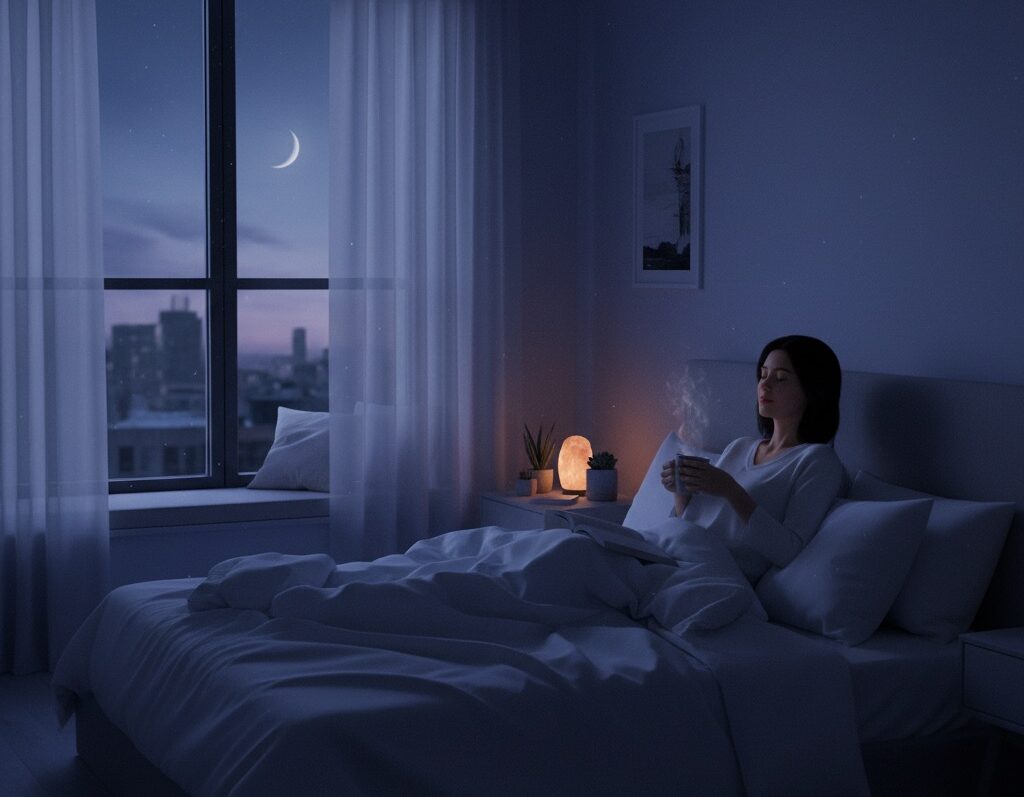
When the day never really ends
Our days don’t fade the way they used to. Long after the sun sets, our rooms stay bright — lit by screens, lamps, and notifications that keep our minds alert. The result is that the body never fully gets the message that night has arrived.
For centuries, humans lived by light. The rising sun triggered wakefulness, and dusk invited rest. Today, artificial light and screens have rewritten that rhythm. We scroll in bed, answer “one last” message, and then wonder why our sleep feels shallow.
But what if you could end your day the same way the planet does — with a digital sunset?
It’s not about rejecting technology. It’s about teaching your body that night still means slowing down.
What is a “digital sunset”?
A digital sunset is the intentional transition from bright, screen-based light to warm, natural evening light — a cue to your nervous system that the day is ending.
Think of it as your personal sunset ritual: when your devices fade out, soft lamps take over, and your mind begins to exhale. It’s the opposite of doomscrolling — a way to create calm through light, rhythm, and sensory awareness.
In this ritual, the goal isn’t silence or perfection. It’s signal.
You’re telling your body:
“The light is changing. The day is done. It’s safe to rest.”
That one message — repeated each night — can retrain your circadian rhythm and transform how your body approaches sleep.
How screens affect your sleep cycle
Our brains are wired to follow light. When the retina detects brightness, it sends signals to the suprachiasmatic nucleus (SCN) — the body’s internal clock. This clock regulates hormones, body temperature, and alertness.
Here’s the problem: blue light from phones, tablets, and LED lamps mimics daylight.
Even 30 minutes of evening screen time can suppress melatonin, the hormone that helps you fall asleep. When melatonin is delayed, your circadian rhythm shifts — your body thinks it’s still daytime.
That’s why late-night scrolling can leave you tired but wired: your brain wants rest, but your biology is stuck in “day mode.”
The effects go beyond sleep delay. Blue light exposure can increase cortisol levels, reduce deep sleep stages, and contribute to morning grogginess.
A digital sunset works by reversing that process — replacing stimulation with softness.
The benefits of a digital sunset routine
A consistent evening ritual built around light (not screens) does more than help you sleep — it reshapes your entire relationship with rest.
Here’s what many people notice after a week or two:
Easier transitions into sleep. Your brain learns when to wind down naturally.
Reduced mental noise. Without endless input, your thoughts settle instead of spiral.
Improved mood regulation. Evening calm reduces next-morning irritability and stress.
Steadier energy curve. Your circadian rhythm realigns with daylight, improving alertness during the day.
Better sleep quality. Your body enters deeper, more restorative stages of rest.
And perhaps the biggest benefit: you reclaim your evenings. Time slows down. The quiet hours between work and sleep become yours again.
How to build your digital sunset ritual
Creating your own digital sunset doesn’t mean going screen-free forever. It’s about designing a gradual shift that feels human — not forced.
Here’s a gentle roadmap:
1. Choose your “sunset hour.”
Pick a consistent time each evening to begin dimming down — ideally 60 to 90 minutes before bed.
This doesn’t have to be strict. It’s more like an evening boundary where brightness begins to fade and calm starts to build.
2. Reduce light in layers.
Start by turning off overhead lights and switching to warm, low-intensity lamps. Amber bulbs or candles work beautifully.
Avoid harsh LEDs — your eyes and brain read them as “midday.”
If you live in a bright urban area, consider blackout curtains or a soft eye mask to restore natural darkness.
3. Transition your screens.
Use built-in tools like Night Shift (Apple), Night Light (Windows), or f.lux to lower blue light after sunset.
Better yet, set your devices to grayscale mode after 9 p.m. — removing color makes screens less stimulating and more boring (which helps you stop checking them).
If possible, plug your phone in across the room or in another space. Physical distance helps your mind release it.
4. Replace stimulation with sensation.
When you put your devices aside, fill the gap with sensory activities — something your body enjoys but doesn’t overstimulate your brain:
reading a physical book
gentle stretching or self-massage
writing in a journal
preparing herbal tea
listening to calm instrumental music
Choose activities that engage your senses — warmth, texture, scent, and movement. They ground you in the present moment, signaling emotional safety.
5. Mark closure intentionally.
End your ritual with a cue your body will learn to associate with rest — turning off a lamp, lighting a candle, or whispering a quiet affirmation like “The day is complete.”
Over time, these signals become powerful triggers. Your brain begins to anticipate calm at the same hour, every night — a self-built circadian rhythm.
Why light matters more than discipline
Many people try to fix their sleep by controlling behavior: no caffeine, strict bedtime, no phone after 9. But the secret is simpler — it’s light.
Your body doesn’t care about willpower as much as signals.
If your environment stays bright, your brain stays alert. If it dims, it relaxes.
The beauty of a digital sunset is that it shifts responsibility from your mind to your surroundings. You don’t have to “force yourself to calm down.” You just create an environment that does the calming for you.
Soft light, warm color, slow tempo — they all whisper to your nervous system: You’re safe now. You can rest.

Tools and adjustments that help
You don’t need to live by candlelight to support your circadian rhythm — small, intentional adjustments can transform the way your body interprets light. The goal isn’t total screen avoidance but smarter, kinder light management.
Here are some gentle tools and changes that can make your digital sunset feel effortless rather than restrictive:
1. Use warm lighting after dark
Switch from cool white bulbs to amber or soft-yellow lighting in the evening. Light temperature matters — warm tones mimic firelight, while cool tones signal daylight.
Smart bulbs like Philips Hue, Nanoleaf, or Casper Glow let you program “sunset scenes” that automatically dim and shift color temperature as the night deepens.
If you don’t have smart lighting, even a simple lamp with a low-wattage bulb (below 2700K) works beautifully.
2. Filter your devices
Most screens now include built-in night mode or eye comfort settings — use them consistently.
If you work late, apps like f.lux (for computers) or Iris can gradually reduce blue light as the evening progresses.
For those sensitive to light, blue light–blocking glasses can help reduce stimulation, especially when using multiple screens. Look for lenses with amber or rose tint rather than clear “fashion” filters.
These small shifts don’t just protect melatonin — they also prevent eye fatigue and tension headaches that often follow late-night scrolling.
3. Replace digital light with sensory comfort
Even the warmest screen is still a screen. The key to sustainable evening calm is substitution, not restriction.
Once you dim the lights and close your devices, try replacing digital brightness with sensory brightness — subtle experiences that light up the body, not the brain:
A soft lamp instead of a glowing display
The crackle of a candle instead of endless notifications
Warm tea replacing the dopamine rush of one more scroll
Our brains crave stimulation at night not because we’re undisciplined — but because we’re tired and seeking comfort. Sensory light gives that comfort back, but in a gentler, more embodied way.
4. Introduce transitional cues
One reason we struggle to “switch off” is that digital use has no clear end. There’s no modern equivalent of sunset.
A transitional cue — something that marks the end of your digital day — restores that boundary.
Ideas include:
Setting your phone to “Do Not Disturb” mode at a set time
Playing a calming playlist that signals downtime
Lighting a candle when you close your laptop
Turning off overhead lights and leaving only warm lamps
These cues don’t just change your environment; they anchor your body in rhythm. Over time, your nervous system starts anticipating calm before it even begins.
5. Let technology assist you
Paradoxically, you can use tech to reduce tech. Smart home systems or apps can automate your digital sunset:
Apple Shortcuts or Google Home routines can dim lights, activate “Night Shift,” and lower phone brightness simultaneously.
Apps like Wind Down (iOS) or Sleep Mode (Android) can lock distracting apps and display calming visuals instead.
Automation removes decision fatigue. You don’t have to remember when to stop scrolling — your environment decides for you.
Beyond sleep: emotional and sensory calm
A digital sunset isn’t just about sleep quality; it’s about emotional regulation.
Screens keep your mind in constant reaction mode — scrolling, comparing, anticipating. When you step away from that stimulation, your nervous system finally gets a chance to process the day’s emotions.
1. Reclaiming mental stillness
Even five screen-free minutes before bed can make a difference. Those quiet moments help you reconnect with your body — its breath, warmth, and fatigue — instead of your notifications.
This stillness isn’t empty; it’s restorative. In the absence of light and noise, your thoughts become clearer, softer, more human.
2. Rediscovering natural darkness
Darkness often feels uncomfortable at first. We associate it with boredom or loneliness. But once you let your body experience it fully, darkness becomes grounding — it rebalances overstimulated senses.
Try spending just 10 minutes in low light before bed with no phone, no book, no input. Let your eyes adjust naturally. This quiet exposure trains your circadian rhythm and deepens melatonin production.
Within days, your sleep may begin to feel heavier — in a good way.
3. Strengthening emotional boundaries
A digital sunset creates a psychological pause between the external world and your inner life. It’s your way of saying:
“I’ve received enough for today. I can rest now.”
This pause protects your energy and reduces emotional carryover — the habit of taking online stress, work updates, or social comparison into bed. It becomes a nightly act of self-respect: choosing stillness over stimulation.
When modern life gets in the way
Of course, not every evening allows for perfect darkness. You might work night shifts, live in a city that never sleeps, or share space with others who keep different schedules.
If that’s you, think of your digital sunset as flexible — not tied to a clock, but to a feeling.
Even small adjustments matter:
Turn on Night Mode two hours before your own bedtime, no matter when that is.
Keep overhead lights off after work and rely on softer lamps.
End your last screen interaction with intention — a message, not a mindless scroll.
Your body doesn’t require silence or isolation — it just needs consistency. Give it the same light pattern every night, and it will adapt beautifully.
The sensory architecture of calm
To design a truly restful evening, think beyond light alone. Consider all the senses:
Sight: Dim lighting, soft colors, no bright reflections.
Sound: Ambient music, white or brown noise, or silence.
Touch: Cozy fabrics, warm blankets, slow breathing.
Smell: A consistent scent (lavender, chamomile, cedar) becomes a nightly calm cue.
Taste: Herbal tea or warm milk — something associated with comfort, not caffeine.
When multiple senses signal “nighttime,” your body doesn’t have to wonder what’s next. It knows instinctively: the day is done.
Reclaiming the night
Modern life stole our sunsets.
We live under artificial brightness that never fades — and in the process, we’ve lost the ceremony of evening. But the good news is that we can bring it back, one small ritual at a time.
A digital sunset is not about control; it’s about connection. It helps you honor the natural rhythm that cities, screens, and schedules often ignore.
Start small: dim one light, close one app, breathe for one minute in silence.
Let the darkness feel like a gift, not an absence.
Because when light fades gently — when you let your night arrive rather than fight it — sleep becomes what it was always meant to be: not a task, but a return.
Read also: