Introduction: why the air you breathe at night matters more than you think
We often associate good sleep with factors like mattress quality, bedtime routines, or screen time. But one of the most overlooked ingredients in a good night’s rest is something invisible yet essential: the air quality.
The air quality in your bedroom can significantly impact the way you fall asleep, how deeply you rest, and how refreshed you feel upon waking. Poor indoor air is linked to sleep disruptions, inflammation, and long-term health issues—especially when exposure happens night after night.
And here’s the kicker: indoor air is often more polluted than outdoor air, especially in tightly sealed homes where ventilation is limited. From dust mites to volatile organic compounds (VOCs), the bedroom can harbor more hidden irritants than you might expect.
In this article, we’ll explore how indoor air quality and sleep are connected, which pollutants to watch out for, and what practical steps you can take to breathe better and sleep deeper.
How indoor air affects sleep: the invisible impact
At night, when your body is in repair mode and your breathing slows, air quality becomes even more critical. Your body’s detox and recovery systems rely on oxygen-rich, clean air to perform cellular maintenance. But when the air contains microscopic irritants or lacks proper ventilation, it can interrupt your body’s natural rhythm—without you even realizing it.
Common ways poor air quality disrupts sleep:
Inflammation: Pollutants trigger low-grade inflammation, which affects overall recovery.
Allergic reactions: Dust, pet dander, and mold spores can irritate airways, causing micro-arousals.
Oxygen displacement: High CO₂ levels reduce oxygen availability, leading to lighter, less restorative sleep.
Disrupted temperature regulation: Humidity and pollutants affect your ability to cool down—vital for deep sleep.
According to a study by the University of Colorado and the University of Washington, higher levels of PM₂.₅ and CO₂ in bedrooms were associated with reduced sleep efficiency and less slow-wave sleep, the deepest stage of rest.
The science behind air pollution and sleep
You don’t need to live next to a factory to suffer the effects of air pollution. Everyday indoor activities and materials can release invisible particles into the air you breathe and reduce air quality.
Here’s what the research says:
PM₂.₅ (particulate matter): These ultrafine particles (smaller than 2.5 microns) can enter the bloodstream and the brain. Exposure is linked to lighter sleep and shorter total sleep time.
CO₂ (carbon dioxide): Without proper ventilation, CO₂ levels rise at night, especially in tightly closed rooms. High CO₂ concentrations (over 1000 ppm) are associated with reduced cognitive performance, headaches, and poor-quality sleep.
NO₂ (nitrogen dioxide): A byproduct of gas stoves and combustion processes, NO₂ can irritate the lungs and airways, increasing the risk of snoring and sleep apnea symptoms.
VOCs (volatile organic compounds): Found in air fresheners, furniture, and cleaning products, VOCs emit gases that may disrupt endocrine function and sleep regulation.
A 2023 meta-analysis published in Sleep Medicine Reviews concluded that prolonged exposure to indoor air pollutants is consistently associated with reduced sleep efficiency, increased wake time after sleep onset, and delayed sleep onset.
Where is the pollution coming from? Common indoor sources
Your bedroom might seem clean and calm—but many seemingly harmless objects and routines can release pollutants into the air.
Top sources of indoor pollution in bedrooms include:
Mattresses and pillows: Many contain polyurethane foams and flame retardants that off-gas VOCs over time.
Dust and pet dander: Accumulates in carpets, bedding, and soft furniture.
Cleaning products: Even “fresh-smelling” sprays or scented detergents can release formaldehyde and other chemicals.
Air fresheners and candles: Especially synthetic ones, often rich in VOCs.
Gas heaters or fireplaces: Without proper ventilation, these contribute to NO₂ and CO₂ buildup.
Humidity and mold: High humidity promotes mold growth, which releases airborne spores.
Window sealing: While great for insulation, it limits air exchange and increases CO₂ concentration overnight.
A study conducted by Dyson found that people spend nearly 90% of their time indoors, and bedrooms often have the highest levels of accumulated indoor air pollutants—mainly because we keep them closed, dark, and warm.
How does it feel? Signs your bedroom air may be harming your sleep
If you’re regularly waking up feeling tired, congested, or foggy—your air might be part of the problem. Poor air quality rarely announces itself clearly, but it often leaves subtle clues.
Here are common signs of low air quality bedroom air affecting your sleep:
Dry throat or coughing in the morning
Stuffed nose or sneezing upon waking
Itchy eyes or skin irritation at night
Headaches or brain fog after a full night’s sleep
Feeling unrested despite getting 7–8 hours
Poor temperature comfort — feeling too hot or stuffy
Even if you don’t have allergies or asthma, low-level exposure to pollutants can affect your sleep quality and energy levels—especially over time.
What does good air quality actually look like?
Clean indoor air has:
Low levels of PM₂.₅ (under 12 µg/m³)
CO₂ levels below 800 ppm (ideally even lower for sleep)
Proper humidity (between 40%–60%)
Minimal presence of VOCs or odors
Natural airflow or filtered circulation
Many of these factors can be tracked using affordable indoor air quality monitors or by using devices with built-in sensors. But even without tech, you can often feel the difference when you’ve created a more breathable sleep environment.

How to improve bedroom air quality for better sleep
The good news is that you don’t need to renovate your home to improve the air quality you sleep in. With a few intentional changes, you can significantly reduce pollutants, increase airflow, and create a bedroom environment that promotes cleaner breathing and deeper sleep.
Let’s break it down into actionable steps:
1. Improve ventilation — fresh air matters
The simplest and most affordable strategy is regular ventilation. Open your bedroom windows for at least 10–15 minutes every morning and evening (weather permitting). Fresh air reduces CO₂ buildup and brings in oxygen-rich outdoor air, especially helpful after a full night of breathing in a closed space.
If you live in a high-pollution city, check local air quality indexes before opening windows—or ventilate during early morning hours when outdoor pollution tends to be lowest.
Pro tip: Keep your bedroom door open if other rooms are ventilated or if your HVAC system circulates fresh air.
2. Use an air purifier with a HEPA filter
A high-quality air purifier with a true HEPA filter can remove 99.97% of airborne particles, including PM₂.₅, pollen, dust, and pet dander. Some models also come with activated carbon filters that reduce VOCs and odors.
Look for a unit that’s appropriately sized for your room. Small purifiers may not filter air effectively in larger spaces.
Top-rated options for bedrooms:
Coway AP-1512HH Mighty
Dyson Purifier Cool Formaldehyde
Levoit Core 300S
Mila Smart Air Purifier
Place the purifier near the bed, but not too close to your face. Let it run for at least a few hours before bedtime, and ideally overnight.
3. Monitor air quality (and respond to changes)
Indoor air quality monitors can help you identify hidden issues. Many track:
CO₂ levels (ideal: under 800 ppm)
Humidity
Particulate matter (PM₂.₅)
Temperature
VOC levels
Devices like Awair Element, uHoo, or Airthings View Plus sync with your phone and can alert you when levels are outside optimal ranges.
Use the data to guide actions—whether it’s opening a window, turning on your purifier, or lowering humidity with a dehumidifier.
4. Wash your bedding regularly and minimize dust
Your bed is a magnet for dust mites, dead skin, and pollutants. To reduce these irritants:
Wash sheets and pillowcases weekly in hot water
Use dust-mite-proof covers on pillows and mattresses
Replace pillows every 1–2 years
Vacuum carpets and rugs with a HEPA vacuum
Dust bedroom surfaces weekly with a damp cloth
Avoid clutter in the bedroom—especially bookshelves and textiles that collect dust.
5. Choose non-toxic cleaning and laundry products
Many traditional cleaners, air fresheners, and scented laundry detergents contain VOCs that linger in your bedroom air.
To reduce chemical exposure:
Use fragrance-free or plant-based cleaners
Avoid aerosol sprays
Skip fabric softeners and dryer sheets with artificial scents
Use vinegar or baking soda as natural alternatives
If you enjoy scents in the bedroom, opt for essential oils using diffusers with auto shut-off, and only use during the day to prevent respiratory irritation at night.
6. Keep humidity in the healthy range
Humidity that’s too high encourages mold, while air that’s too dry can irritate your nasal passages. Aim for a humidity level between 40% and 60%.
To control humidity:
Use a hygrometer to monitor levels
Run a dehumidifier if levels are consistently high
Add a humidifier in winter if the air is too dry (but clean it regularly)
Mold loves dark, warm, and damp areas—like behind beds or windowsills—so inspect these areas seasonally.
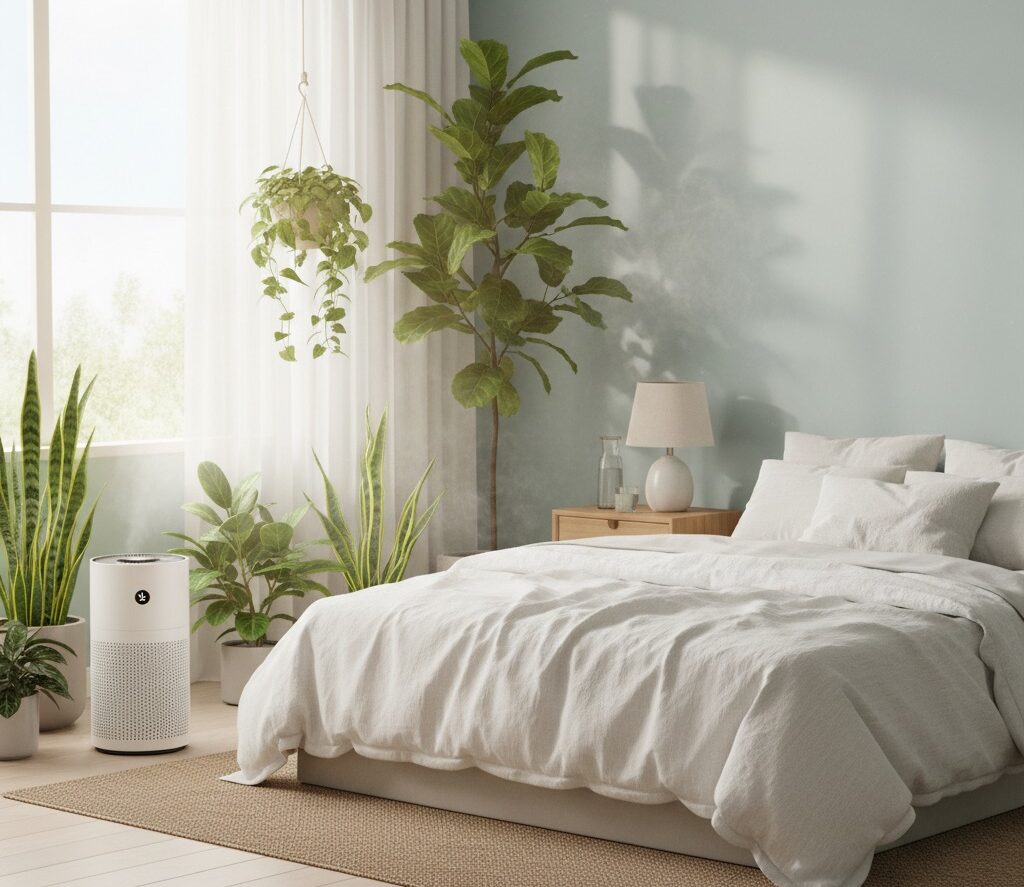
7. Be mindful with plants
Houseplants can improve air quality by absorbing toxins, but they also increase humidity and can harbor mold in the soil if overwatered.
Best practice:
Keep 1–2 small plants in the bedroom
Use well-draining soil and don’t overwater
Avoid plants if you have known allergies or mold sensitivity
Popular low-maintenance plants for air filtering: spider plant, peace lily, snake plant (but avoid if pets are in the room).
A practical bedtime routine for clean air sleep
Just like brushing your teeth or dimming the lights, making air care a part of your evening ritual can support better rest. Here’s a sample checklist you can try:
An hour before bed:
Turn on your air purifier
Lower the room temperature to 18–20°C (64–68°F)
Open windows briefly if outdoor air is clean
Turn off candles or diffusers
Close the bedroom door to limit pet dander
Just before sleep:
Check that humidity and CO₂ levels are in range
Spray pillowcases with a natural, non-synthetic mist (optional)
Take 3–5 deep breaths at the window (cleaner air can increase parasympathetic activity)
Small steps like these, when done consistently, help your brain associate the bedroom with calm, comfort, and recovery while improving air quality.
The tech side: advanced tools for future-focused sleep
As wellness tech evolves, we’re seeing a surge in devices that merge air quality with sleep optimization. Smart monitors now integrate with sleep trackers, thermostats, and even purifiers to create responsive environments.
Examples include:
Smart purifiers that adjust based on real-time pollution (Dyson, Mila)
Sleep sensors that detect movement and CO₂ to improve airflow
Environmental alerts when VOC or humidity levels spike
Smart home integration (automated routines via Alexa or Google Home)
For many, these tools offer peace of mind and data that help fine-tune routines. But even without tech, your senses are often the best guide.
When clean air is not enough: sleep and external pollution
Sometimes, your indoor environment is only part of the problem. If you live in an area with high outdoor pollution, wildfires, or seasonal smog, it’s even more important to filter and seal your space to improve air quality.
Tips for high-pollution environments:
Use air purifiers 24/7, not just at night
Keep windows closed during high AQI days
Use MERV-13 filters in your HVAC system
Track AQI with apps like AirVisual or Plume Labs
Use an air quality mask for outdoor walks or errands when needed
Your bedroom can still be your sanctuary, even when the air outside isn’t ideal.
Final thoughts: sleep better by breathing better
The link between air quality and sleep is no longer a wellness trend—it’s a scientifically supported relationship that affects how we feel, function, and age.
You don’t need a perfect environment to make progress. Just start small:
Open a window.
Clean your sheets.
Turn on the purifier.
Swap your detergent.
Your brain and body will thank you for the cleaner air and deeper rest.
Because in the long run, good sleep is about more than comfort—it’s about breathing easy, night after night.
Read also: Home sleep hacks: how to optimize your bedroom environment