
Falling asleep should be simple, but for many of us, it isn’t. Even when we’re physically tired, our minds keep spinning with unfinished thoughts, to-do lists, or scrolling through screens long after bedtime. The result? Restless nights and groggy mornings.
Meditation offers a gentle way to reset this pattern. It’s not about achieving silence or forcing relaxation — it’s about allowing your mind to slow down and return to the present moment. With a few minutes of evening meditation, your body begins to shift naturally into a state of calm, preparing you for deeper, more restorative sleep.
In this guide, we’ll explore six easy meditation techniques that you can try tonight — whether you’re completely new to meditation or simply looking to build a peaceful pre-sleep ritual.
1. Deep breathing meditation
The breath is the simplest and most powerful tool for calming the body. When you breathe slowly and deeply, you activate the parasympathetic nervous system — the part responsible for rest and recovery. This process reduces stress hormones, slows the heart rate, and gently signals to your body that it’s time to unwind.
To practice deep breathing meditation:
Sit or lie down comfortably.
Close your eyes and take a slow, deep breath through your nose.
Hold it for a moment, then exhale slowly through your mouth.
Continue for several minutes, letting your breath guide your attention.
If your mind wanders, that’s perfectly normal. Simply notice the thought and return to your breath — over and over. Even five minutes of this focused breathing can make a difference in how quickly you fall asleep.
You can also try the 4-7-8 method, a simple breathing pattern where you inhale for 4 counts, hold for 7, and exhale for 8. This rhythm is especially soothing before bed and helps slow racing thoughts.
2. Body scan relaxation
Tension often hides in our bodies — clenched jaws, tight shoulders, restless legs. A body scan meditation helps you reconnect with those physical sensations and consciously release them. It’s like giving your body permission to rest.
To begin, lie down comfortably in bed and close your eyes. Take a few deep breaths to settle in.
Now, bring your attention to your feet. Notice any sensations — warmth, tingling, or even discomfort. Imagine each exhale melting away any tension.
Slowly move your focus upward: to your calves, knees, thighs, stomach, and chest. Continue through your arms, neck, and face. Spend about 10–20 seconds on each area, allowing the muscles to soften.
There’s no rush — this is your time to slow down. You might even fall asleep before finishing the full scan, which is completely fine. The goal isn’t to complete a checklist, but to reconnect with your body in the moment.
The more you practice, the easier it becomes to recognize and release tension during the day as well — which can prevent restlessness at night.
3. Guided imagery meditation
Sometimes, what keeps us awake isn’t tension but mental noise. Our thoughts replay conversations, worries, and what-ifs, creating a loop that makes relaxation impossible. Guided imagery offers a gentle escape — it uses visualization to shift your mind away from overthinking and toward calm.
To try it, imagine yourself in a peaceful place. It could be a quiet beach, a forest trail, or a cozy cabin. Engage all your senses:
Feel the warmth of the sun on your skin.
Hear the rhythm of waves or leaves moving in the wind.
Smell the fresh air, salt, or pine.
Allow your imagination to become vivid and immersive. If your mind starts to drift, return to the details of your scene.
You can also use guided sleep meditations available on apps like Headspace, Insight Timer, or Calm. A soothing voice and gentle background music can help your brain shift gears from alertness to relaxation.
Over time, this kind of imagery teaches your mind to associate visualization with safety and stillness — key ingredients for better sleep.
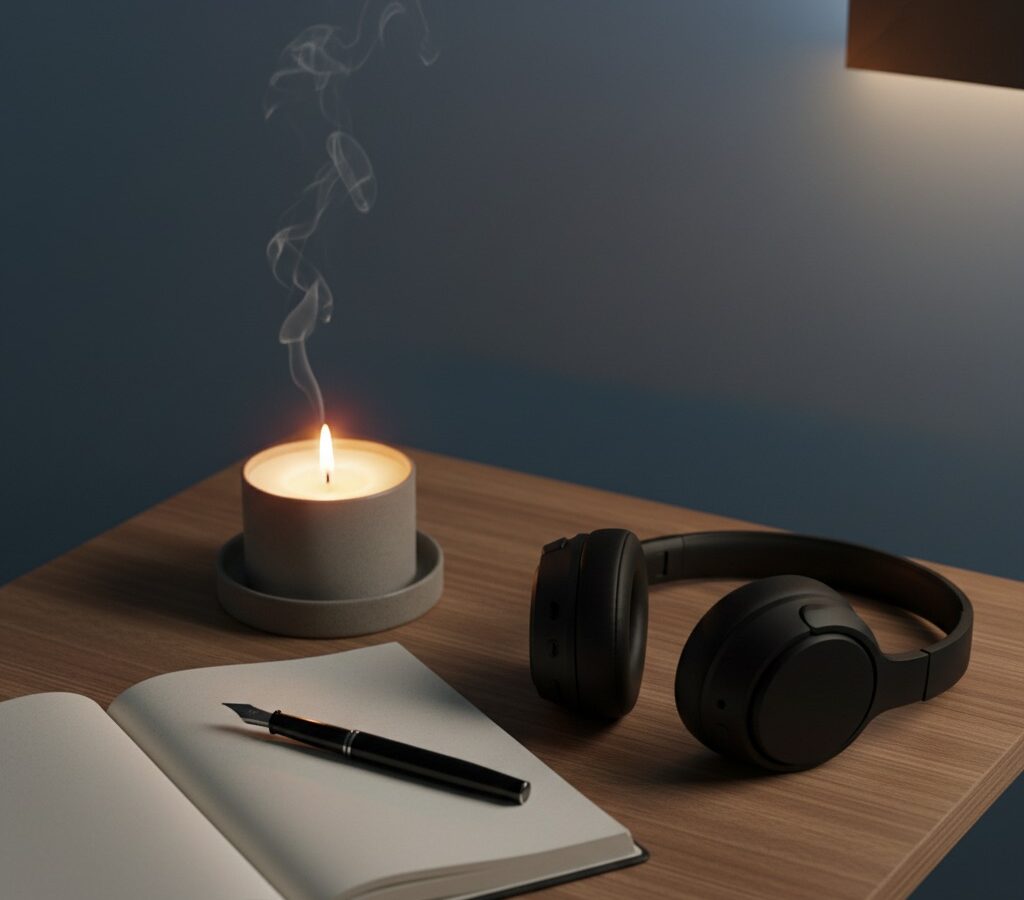
4. Mindful journaling before bed
Meditation isn’t always about closing your eyes. Sometimes, writing can be a meditative act in itself — especially if your thoughts tend to race at night. Mindful journaling allows you to acknowledge what’s on your mind, release it onto paper, and clear mental space for rest.
To try it, set aside 10–15 minutes before bed. Write down anything that’s circling in your head — worries, tasks for tomorrow, or emotions you haven’t processed. Don’t edit or overthink; simply let the words flow.
Then, shift your focus toward calm and gratitude. Write three things that went well today or moments you appreciated, even small ones. This practice redirects your attention away from stress and toward a sense of closure.
When combined with other relaxation rituals — like soft lighting and herbal tea — journaling becomes a gentle bridge between your busy day and a peaceful night.
Tip: Keep your journal by your bedside. Over time, your mind will associate writing with the act of releasing stress before sleep.
5. Loving-kindness meditation (Metta)
This ancient Buddhist practice focuses on cultivating compassion — first for yourself, then for others. It’s especially helpful if your sleeplessness is fueled by emotional tension, overthinking, or self-criticism. Loving-kindness meditation replaces that internal noise with warmth and ease.
Here’s how to begin:
Sit or lie comfortably. Take a few slow breaths.
Silently repeat phrases such as:
“May I be calm. May I rest peacefully.”
“May I feel safe and free from stress.”
After a few minutes, extend those wishes outward — to a friend, family member, or even someone difficult in your life.
This gentle repetition nurtures empathy and acceptance, helping you let go of unresolved emotions that often surface at night.
Many people find that practicing loving-kindness before bed softens harsh self-talk and leads to a deeper sense of peace — which, in turn, makes it easier to drift off naturally.
6. Sound meditation
Not all meditation happens in silence. Sound — whether through gentle music, nature recordings, or white noise — can be a powerful cue for your body to relax. Certain frequencies help lower brainwave activity, moving you from alertness (beta waves) into the slower alpha and theta states associated with drowsiness.
To practice sound meditation, create a calm environment: dim the lights, close your eyes, and choose an audio track that feels soothing rather than stimulating.
You might try:
Ambient music — slow, instrumental tracks with no lyrics.
Nature sounds — rain, ocean waves, rustling leaves.
Binaural beats — two tones played at slightly different frequencies, designed to promote relaxation.
Focus your attention on the sound’s rhythm and texture. If thoughts arise, let them pass like waves. The goal isn’t to block them but to gently return your awareness to the soundscape.
For some, this practice becomes part of a nightly ritual — turning on a white noise machine or playlist signals to the brain that it’s time to wind down.
Bringing it all together
You don’t need to master all six techniques at once. In fact, the most effective approach is often the simplest: choose one or two that feel natural, and make them part of your nightly rhythm.
For example:
You might start with five minutes of deep breathing, followed by a short body scan.
Or, you could journal for ten minutes, then listen to a guided imagery track as you lie in bed.
The goal isn’t perfection — it’s presence. Meditation teaches you to slow down, breathe, and reconnect with yourself, which naturally improves the quality of your rest.
Even on nights when sleep doesn’t come easily, these techniques offer something valuable: calm. And with consistency, that calmness becomes your body’s signal that it’s safe to rest — not just tonight, but every night.
Key takeaways
Meditation helps quiet the mind and prepare the body for rest.
Consistency is more important than duration — a few minutes daily can make a big difference.
Different techniques work for different people; experiment to find what feels most natural.
Combine meditation with other sleep-friendly habits like reducing screen time and creating a calming environment.
Good sleep isn’t about forcing yourself to switch off. It’s about creating space — space to breathe, to feel, and to let go. Meditation offers exactly that: a moment of stillness that gently bridges your day and your dreams.