There’s a new phrase quietly circulating in wellness circles, among therapists, somatic coaches, and even sleep practitioners: micro snacks. The term may sound unusual at first, but its meaning is surprisingly intuitive once you experience it. A “micro snack” is a tiny, deliberate release of tension — often through a short exhale, a subtle shoulder drop, a soft facial reset, or a small sigh that doesn’t quite qualify as a sigh. It’s the body’s mini-letting-go moment, almost too subtle to notice, yet powerful enough to shift your nervous system out of overactivation.
These micro releases are becoming a modern antidote to the constant low-grade tension that accumulates from digital life, rapid work transitions, and background stress. Researchers have long known that the nervous system regulates itself through micro-movements and breath patterns. What’s new is the cultural reframing: instead of waiting for a long break or a full evening wind-down ritual, people are using micro snacks throughout the day to prevent tension from building into overwhelm.
Much like micro-habits, micro snacks are tiny, repeatable, and sustainable — and that’s why they’re gaining traction. They fit into pockets of time no bigger than a breath. They work at your desk, on public transport, between sentences in a meeting, or even in the moments right before bed when your mind feels too full. And unlike structured relaxation techniques, they don’t require preparation, quiet spaces, or guided audio.
They rely entirely on something you already have: your own body’s ability to release.
The biology behind micro releases
Although the term “micro snacks” is new, the physiology behind it is familiar to scientists who study stress, breath, and somatic regulation. When the body is subtly tense — shoulders slightly lifted, jaw lightly clenched, breath shallow — the sympathetic nervous system stays active. Not in a dramatic fight-or-flight way, but in a slow, background-draining way that keeps cortisol elevated and muscles braced.
A micro snack acts as a pattern interrupt. It shifts the body from a tense, anticipatory state into a more neutral one by prompting:
a brief parasympathetic activation,
a drop in muscular micro-contraction,
a deeper follow-up inhale,
and a softening of facial and diaphragmatic tension.
Even a single small release can influence heart-rate variability — one of the most reliable indicators of nervous system flexibility. That’s part of why therapists often guide clients to perform small exhale-based releases instead of waiting for a long meditation session later in the day. The body reacts more readily to immediate input than delayed self-care.
Micro snacks also borrow from somatic therapy’s principle of completing micro-cycles. The body continuously accumulates small bracing responses throughout the day: a tight moment during a conversation, the startle when your phone buzzes, the slight clench when you read an urgent email. If these tiny contractions are never released, the system perceives them as unfinished. Over time, they compound into elevated nighttime anxiety, shallow breathing, and restlessness when you finally try to sleep.
A micro snack completes the cycle instantly. It’s a tiny full stop at the end of a physiological sentence.
Why this trend matters for mental wellbeing
Even though micro snacks take less than a second, they represent a bigger cultural and psychological shift. The old approach to stress management focused on long-form practices: yoga classes, meditation sessions, breathwork workshops, extended evening wind-downs. These practices remain valuable — and many are beautifully restorative — but they rely on one assumption: that we have the time and cognitive energy to commit to them.
Most people don’t. At least not daily.
Micro snacks offer something different: regulation during the day, not just recovery at the end of it. They’re scalable, non-disruptive, and accessible even when you’re overwhelmed. There’s no performance, no equipment, no expectation.
Here’s what makes them so mentally supportive:
They interrupt spirals of overthinking before they intensify.
They soften jaw, chest, and shoulder tension — areas strongly connected to stress loops.
They create a sense of micro-control during chaotic days.
They reconnect you to your body with minimal cognitive load.
They reduce the “pressure drop” that often hits in the evening, improving sleep readiness.
This is why somatic practitioners are adopting the trend so quickly. Micro snacks serve as low-effort regulation points that prevent your nervous system from slipping too far into sympathetic dominance.
How micro snacks support better sleep
Most people think sleep problems begin at night, but for many, the root is actually daytime dysregulation. If tension builds hour by hour, your system enters the evening in a semi-activated state — shoulders elevated, diaphragm tight, mind scanning for unfinished tasks.
Micro snacks reduce that buildup.
Instead of waiting until nighttime to unwind, they act like small release valves throughout the day. This leads to:
easier transitions toward evening calm,
fewer racing thoughts at bedtime,
deeper and slower natural breathing,
a lower threshold for relaxation,
and a smoother descent into sleep once you lie down.
Because micro snacks are so small, they don’t flood the system with oxygen or stimulation like some breathwork methods. They create just enough downward shift to support coherence — a state where the body and mind leave the “day mode” together, rather than taking hours to catch up.
This is especially helpful for people who often feel wired at night despite feeling tired. The mind is overstimulated, but the body is braced. Micro snacks gradually undo that mismatch.
The psychology of “permission to soften”
There’s another layer to this trend: emotional permission. Many high-performing individuals unconsciously brace their bodies all day — not because of danger, but because of pace. Work speed, digital overload, and constant micro-responsibility create a posture of subtle readiness.
Micro snacks introduce tiny moments of permission:
permission to soften,
permission to pause,
permission to inhabit your body again.
Over time, repeated micro releases reshape your relationship with tension. Instead of seeing relaxation as something you “earn” by finishing your tasks, your body receives gentle cues that softness is available now.
And the more often you soften during the day, the more natural relaxation feels at night.
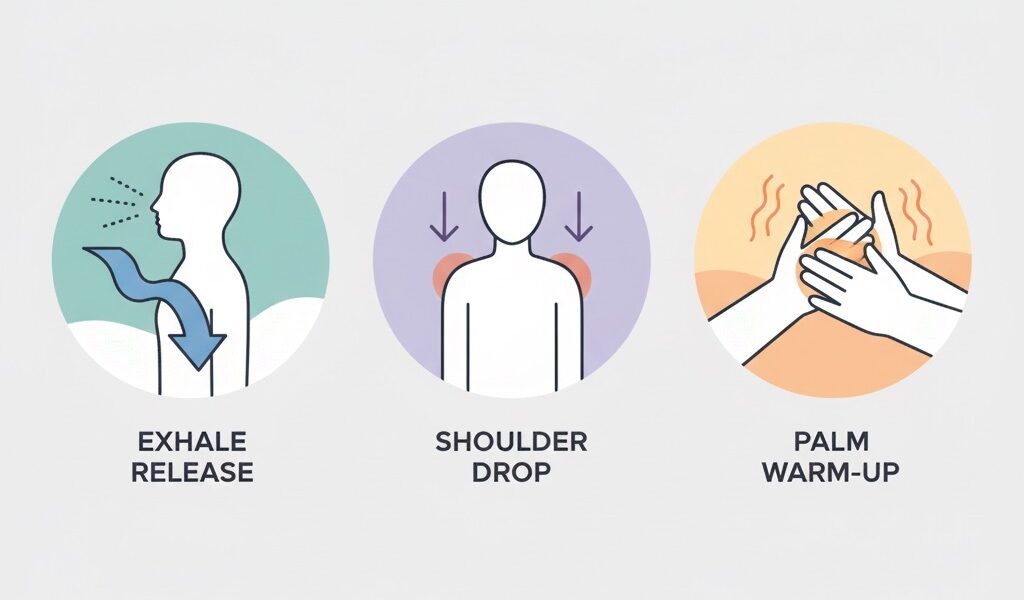
How micro-snacks regulate the nervous system
What makes micro-snacks surprisingly effective is that they don’t rely on willpower or a full reset of your routine. Instead, they work by gently nudging the nervous system toward a calmer baseline — the opposite of the slow build-up of tension that accumulates during a typical workday.
Short, intentional interruptions act as micro-recalibrations. They briefly pause the body’s stress momentum, giving the brain a moment to reorient. Even a few seconds of shifting attention, relaxing your posture, or exhaling longer than your inhale signals the parasympathetic system that it is safe to soften.
Many desk-based professionals experience “continuous activation”: a near-constant readiness to respond, decide, or monitor information. Micro-snacks help puncture that continuity. They create space in which the brain can release minor stress loops before they consolidate into full-scale tension or evening anxiety.
What’s interesting is that the effect is cumulative. A single micro-snacks may feel subtle, but repeating these pauses throughout the day leads to a noticeable evening difference: fewer racing thoughts, softer muscles, and a mind that doesn’t need an hour to unwind before bed.
What micro-snacks actually look like
Despite the playful name, micro-snacks are not gimmicks or forced “moments of mindfulness.” They’re small body-based gestures that ground you in the present moment. They work because they interrupt autopilot gently, without requiring effort or discipline.
A micro-snacks can take many shapes:
relaxing your shoulders the moment you notice they’ve climbed toward your ears
unclenching the jaw or dropping the tongue from the roof of the mouth
looking away from the screen and letting your eyes focus on something far away
placing one hand on your lower ribs and exhaling for four or five seconds
stretching your fingers or rotating your wrists after typing
standing for ten seconds to reset posture
softening the muscles around the eyes
releasing the belly instead of holding it tense
These gestures are simple, but their power lies in frequency and intention. They act as quiet signals to the brain: you don’t need to hold everything at once.
Most people underestimate how many micro-tensions they carry by default. Micro-snacks make those tensions visible — and dissolvable.
Why this trend matters for nighttime wellbeing
Micro-snacks belong in a sleep-wellbeing routine because nighttime calm starts during the day. Many people interpret sleep struggles as a nighttime-only issue, but the nervous system works on continuity, not compartments. When the body spends eight or ten hours in quiet tension, it doesn’t instantly shift into rest just because the lights turn off.
Small bodily releases throughout the day help prevent an accumulation of stress signals. This means the evening wind-down is smoother, and the transition to sleep feels more natural. When the body is less guarded, the mind doesn’t have to fight itself to relax.
People who practice micro-snacks regularly often describe:
fewer racing thoughts before bed
reduced shoulder and neck tension
less evening screen fatigue
easier emotional decompression
a more grounded sense of self by nighttime
They aren’t dramatic changes — but they build into a sleep-friendly internal environment.
How to integrate micro-snacks into an evening routine
Even though micro-snacks happen throughout the day, they work especially well when used intentionally during the last hour before sleep. This “pre-sleep transition window” is the moment when your system begins shifting into parasympathetic dominance.
Here’s how to weave them into your evening without turning it into another task:
Create a soft checkpoint.
For example, when you turn off the kitchen lights or step into your bedroom, let that be a cue for a 10–15 second micro-snack: a longer exhale, a brief shoulder release, or unclenching the jaw.
Pair micro-snacks with existing habits.
As you dim the lights, close the laptop, brush your teeth, or power down your phone, allow your body to soften one area. These tiny resets prepare the mind for slowing down.
Use them as transitions, not exercises.
The key is to avoid treating micro-snacks as another item on your to-do list. They are meant to be woven into your flow, carried out intuitively.
Focus on the sensory experience.
Feeling the shoulders drop, the breath slow, or the jaw release helps shift attention from thoughts to physical awareness — a core mechanism for reducing nighttime overthinking.
The science behind “micro decompression”
Micro-snacks work through a principle called interoceptive recalibration — the brain’s ability to adjust its interpretation of internal signals. Even small acts of releasing tension change the feedback loop between body and mind.
A short exhale slows heart rate variability, shoulder relaxation reduces sympathetic activation, and letting the belly soften encourages diaphragmatic breathing. These are small but meaningful nudges toward calm.
Research on micro-breaks in cognitive science suggests that brief physical resets:
improve emotional regulation,
reduce fatigue accumulation,
support stress recovery,
and enhance mental clarity.
None of this is dramatic in isolation, but the cumulative effects create a body that ends the day in a far more sleep-ready state.
Additionally, research from the Sleep Foundation explains that even brief relaxation cues — such as a slow breath or gentle stretch — can downshift the stress system and prepare the body for rest.
A realistic, grounded view
Micro-snacks aren’t a cure-all. They won’t erase chronic stress or replace deeper wellbeing routines. But they are a valuable addition to the modern lifestyle because they fit into everyday moments without requiring new tools, apps, or long sessions.
Their real benefit is accessibility. Most people don’t need complex instructions — they just need simple ways to stop holding tension they didn’t know they were carrying.
And when practiced consistently, these tiny pauses shift the tone of the entire day. They soften the internal pace, create breathing room between tasks, and gently coax the body toward equilibrium. Natural calm becomes easier to access, and nighttime rest feels less like a challenge and more like a continuation of a relaxed rhythm.
And as noted in the Harvard Health review on habit loops and automaticity, rituals work best when tied to existing behaviours, not added as new tasks.
Conclusion
The trend of micro-snacks may sound playful, but it reflects a deeper shift in wellbeing culture: a movement toward small, body-based resets that prioritize nervous-system balance. These tiny interruptions break up the stress inertia that builds throughout the day and smooth the path toward evening calm.
They aren’t dramatic, they don’t take time, and they don’t require perfect technique. What they really offer is permission — permission to pause, to breathe, to soften the unconscious tension that accumulates behind productivity.
In a world that rarely slows down, micro-snacks are tiny acts of grounding.
And sometimes, the smallest gestures reshape the entire night.
Read also:
Pre-sleep transitions: creating a “digital twilight” before bed