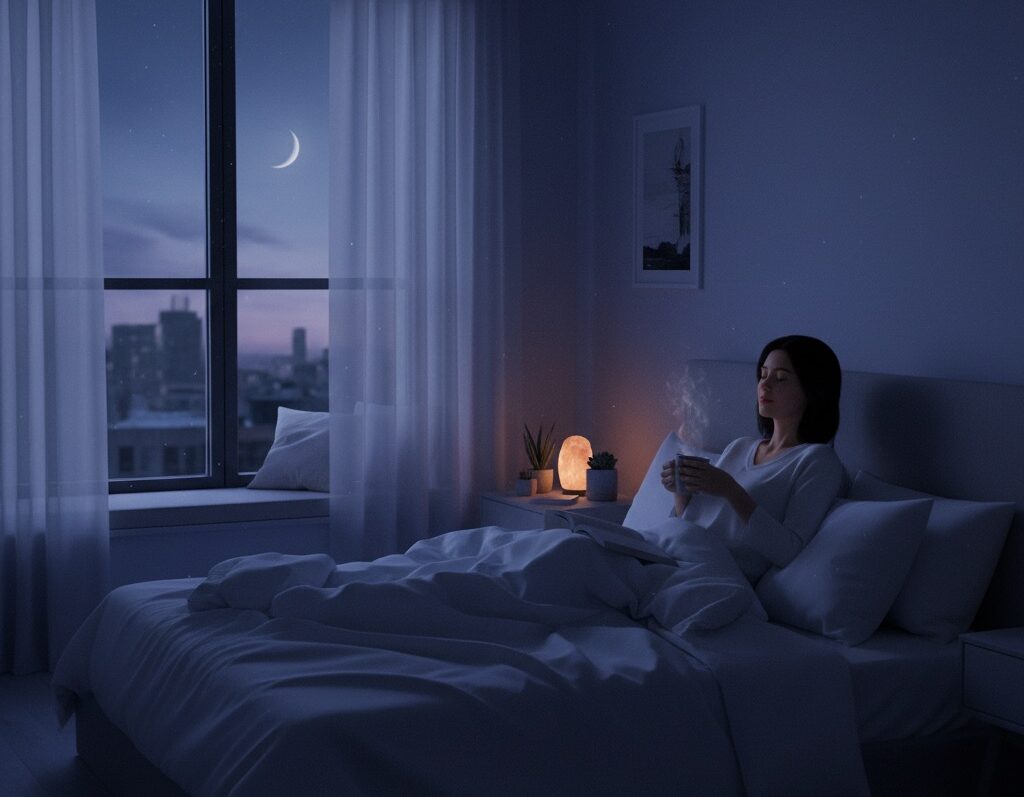
By the time we lie down in bed, our minds might be tired — but our senses are still active.
Sound, light, and touch remain fully online, feeding the brain signals that shape how quickly we fall asleep and how deeply we stay there. In fact, for many people, overstimulation in the hours before bed is one of the biggest (and most underestimated) disruptors of restful sleep.
That’s why the idea of a “nighttime sensory diet” is gaining traction in both wellness and neuroscience spaces. It’s not about deprivation — it’s about gentle regulation. Creating an environment where sensory input soothes rather than activates.
In this guide, we’ll explore what a sensory diet is, why it matters for sleep, and how you can build your own calming routine around sound, light, and touch — three of the most influential senses during the sleep transition.
Your nervous system doesn’t clock out
Even when you’re lying still in the dark, your nervous system continues to respond to sensory cues. A distant dog barking, the glow from your phone, or even the texture of your pajamas can trigger micro-responses in the brain and body — some calming, others agitating.
And if you’ve had a stimulating day (which includes most modern days), your system may not automatically know how to slow down. It’s stuck in a high-input mode. This is why people report getting sleepy while watching TV, then feeling wide awake the moment they turn off the lights.
The transition to sleep isn’t just about tiredness. It’s about sending your brain the right sensory messages: “It’s safe. It’s quiet. You can let go now.”
A sensory diet provides these messages through intentional input — or the removal of certain kinds of input — that encourages rest instead of alertness.
What is a sensory diet?
Originally coined by occupational therapists, a sensory diet is a set of activities or environmental modifications that help regulate sensory input for people with sensory processing differences. It’s often used for children or adults with autism, ADHD, or anxiety, but the principles are relevant to everyone — especially in the overstimulated world we live in.
A nighttime sensory diet means crafting a sequence of low-input, calming sensory experiences that signal safety, predictability, and comfort.
It’s not a rigid checklist — it’s more like a toolkit. You can adjust it depending on how your day has gone, what your body needs, or where you’re sleeping.
And you don’t need a diagnosis to benefit. You just need curiosity about how your environment might be overstimulating you — and the willingness to gently shift the signals.
How sensory input influences sleep
Let’s look at how sensory processing affects sleep from a biological perspective.
When you receive stimulating input (bright light, loud sounds, scratchy textures), your sympathetic nervous system — the “fight or flight” branch — remains activated. That means elevated heart rate, shallower breathing, and mental alertness.
When you receive soothing input (soft light, muffled sounds, gentle textures), your parasympathetic system — the “rest and digest” mode — is supported. This allows melatonin production, deeper breathing, and muscle relaxation.
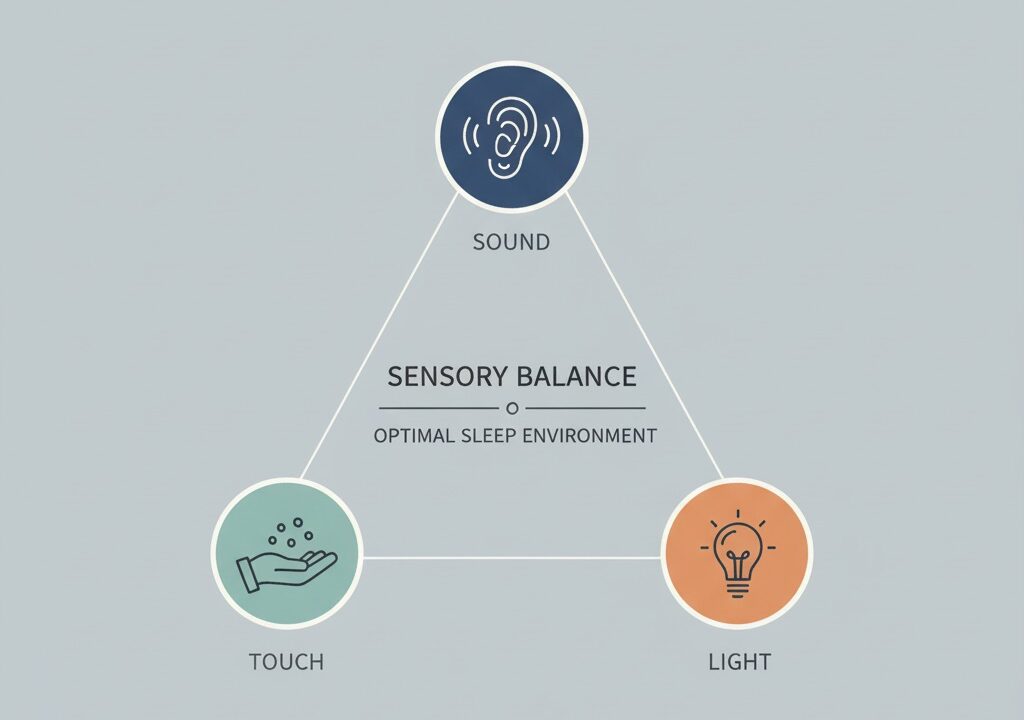
A sensory diet helps your system transition from stimulation to regulation. And the three most impactful senses at night are:
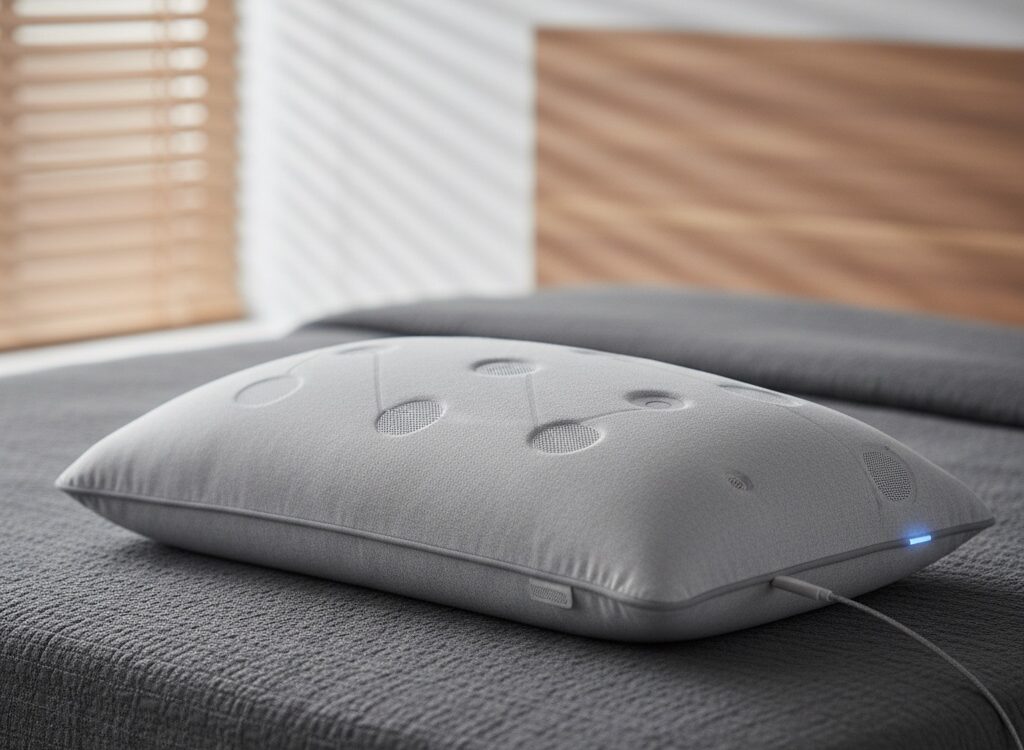
Sound — affects emotional tone, heart rate, and mental quiet
Light — regulates circadian rhythms and melatonin
Touch — influences nervous system grounding and body awareness
Let’s explore each one more closely.
Sound: choosing calm over silence
For some, silence is golden. For others, silence can feel eerie or amplify inner noise.
That’s why your sensory diet should treat sound as a variable tool. What matters isn’t just removing noise — it’s shaping it intentionally.
Options include:
White noise or pink noise: Constant, broadband sound that masks disruptive noises and encourages brainwave slowing. Learn more in our guide.
Nature sounds: Gentle rain, forest wind, ocean waves — these are rhythmic, familiar patterns that help shift your brain into relaxation.
Ambient music: Slow, low-frequency, instrumental sounds can synchronize with your heartbeat and support parasympathetic activity.
Guided audio: Some people respond well to a gentle voice guiding meditation, body scan, or even storytelling.
Sound is also about what you remove. Avoid:
Notifications or sudden alerts
Background TV (especially with speech)
Podcasts or music with lyrics (they engage language processing areas)
Choose sounds that feel predictable, low in variation, and emotionally neutral or warm. A 5-minute audio cue at the same time each night can become a powerful wind-down anchor. (See our wind-down ritual guide).
Light: dialing down the circadian impact
Light is not just “on or off.” It’s one of the most powerful circadian signals your brain receives — and it has a direct effect on sleep hormones like melatonin.
In the hour before bed, the goal is not darkness, but progressive dimming and a shift in light color temperature.
Consider these strategies:
Warm, dim lighting: Use amber or red bulbs or low-lumen salt lamps to mimic natural sunset tones.
Screen filtering: If you must use your phone or laptop, activate night mode or install blue light filters like f.lux.
Avoid overhead lighting: Stick to table lamps or floor lighting with soft shades. Overhead lights signal “day mode” to your brain.
Create a “digital twilight”: Gradually reduce screen exposure 30–60 minutes before bed. Read more in our article on pre-sleep transitions.
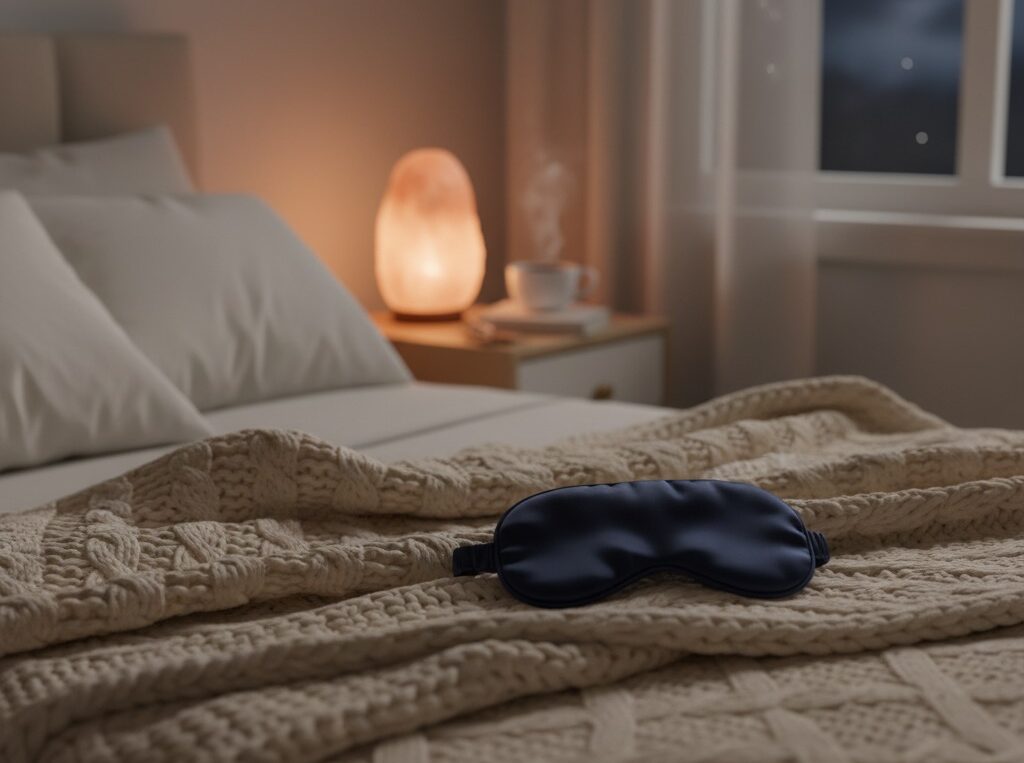
Sleep masks with a twist: Some modern masks block light and deliver mild acupressure or temperature regulation — creating tactile and visual calm in one.
Small changes, like turning off ceiling lights after 9 p.m., can recalibrate your system over time. Think sunset, not switch-off.
Touch: the forgotten sensory powerhouse
Touch is the most underused tool in sleep hygiene — and one of the most primal.
From the texture of your sheets to the clothes you wear to bed, tactile input plays a massive role in how safe, relaxed, and grounded your body feels.
Here’s how to optimize touch in your nighttime sensory diet:
Weighted blankets (for some): The gentle pressure stimulates deep touch receptors and may reduce cortisol and promote serotonin.
Temperature-regulating pajamas: Look for soft, breathable fabrics that match your body’s nighttime thermoregulation.
Bedside touch anchors: Some people benefit from touching something soft or grounding — like a textured stone, piece of fabric, or plush item — while winding down.
Skin-to-skin or warmth cues: A brief self-massage with warm oil, a hot water bottle near your feet, or warm socks can signal safety to the nervous system.
Avoid irritants: Rough seams, tags, or too-tight waistbands can activate low-level tension and micro-arousals during the night.
Touch is deeply personal. Some need compression, others need softness. What matters is consistency and comfort — creating a predictable tactile environment that your body associates with letting go.
How to build your personal nighttime sensory diet
There’s no one-size-fits-all formula. Your sensory preferences are shaped by your nervous system, experiences, and sleep history. That’s why the best nighttime sensory diets are personalized and flexible, not rigid routines.
Here’s a step-by-step way to build your own:
Step 1: Reflect on what soothes vs. stimulates
Before choosing tools, ask yourself:
What kind of sound makes me feel safe — silence, ambient noise, or nature sounds?
What kind of lighting feels most calming — warm, dim, candle-like?
What kinds of textures do I naturally reach for — soft, weighted, cool, breathable?
Write down or mentally note your answers. These become your sensory ingredients — and the basis of your evening wind-down.
Step 2: Pick one small input per sense
You don’t need an entire toolbox at once. Start with one intentional choice for each sense:
Sound: Ocean waves playlist, pink noise machine, or quiet ambient mix
Light: Himalayan salt lamp, orange bulb, or blackout curtain
Touch: Soft cotton pajamas, warm socks, or a weighted eye mask
These three elements form your core sensory ritual. Try them for one week without pressure — just observation.
Step 3: Create a 15-minute sensory window
Instead of waiting until you’re in bed to calm down, build a pre-sleep sensory buffer.
Example 15-minute “sensory plate”:
Dim your lights, turn on warm ambient lighting
Play soft, non-verbal audio (e.g. rain sounds or brown noise)
Change into soft sleepwear and apply a calming lotion
Sit in silence or journal for 2 minutes
Get into bed and use a weighted eye mask or blanket
This is not a performance. It’s simply a signal to your body: “It’s time to shift.”
Common mistakes and sensory stress traps
Even well-intended routines can backfire if they add friction. Here are common pitfalls to avoid:
1. Sensory overload disguised as relaxation
Some “relaxing” habits are secretly stimulating:
Watching TV with fast editing and loud audio
Using essential oils with strong or unfamiliar scents
Wearing trendy but tight or synthetic sleepwear
Playing music with lyrics that engage emotional centers
Ask: Is this truly calming, or just distracting me from my stress?
2. Too much novelty, too fast
Trying five new sleep tools in one night can overwhelm your nervous system. Introduce one sensory element at a time, and give your body time to adjust. Change feels like work — even if it’s good for you.
3. Skipping transitions
Going straight from doomscrolling to bed skips the downshift phase. Use your sensory diet as a bridge — a “twilight zone” between stimulation and sleep. (Explore more in this article on digital twilight).
4. Treating it like a checklist
If your wind-down feels like a to-do list, your system stays alert. The goal isn’t to complete — it’s to deepen awareness. Choose presence over productivity.
Sample sensory diet routines by sleep type
Here are tailored suggestions depending on your sleep struggles:
For overthinkers
Sound: pink noise or narrated body scan
Light: candlelight or amber lamp
Touch: smooth blanket + journaling pen
Anchor: 3-minute voice memo to externalize thoughts (see cognitive offloading article)
For light sleepers
Sound: white noise machine to mask background sounds
Light: blackout curtain + motion-sensitive night light
Touch: sleep mask + soft socks
Anchor: same sleep playlist each night (creates audio cue)
For sensory-sensitive people
Sound: near-silence or low fan hum
Light: warm-toned diffuser light, no screens
Touch: natural fabrics only, no seams or synthetic fibers
Anchor: gentle foot massage with unscented lotion
What science says about this
While the idea of a “sensory diet” may sound intuitive, it’s also backed by research in neuroscience and occupational therapy.
A 2021 review in Frontiers in Psychology highlights how tailored sensory input can regulate arousal and support transitions like bedtime, especially in those with heightened sensory awareness.
Harvard’s health experts emphasize the link between evening light exposure and melatonin suppression, suggesting warm, low light in the hours before sleep (Harvard Health).
The Sleep Foundation confirms that reducing excessive input before sleep — especially auditory and visual — leads to faster sleep onset and higher quality rest.
This means your sensory choices aren’t just soothing — they’re biologically impactful.
Final thoughts: giving your senses permission to rest
Sleep is not just a mental shift — it’s a multi-sensory letting go.
In a world that bombards us with input, creating a nightly sensory ritual is a radical act of self-trust. It says:
“You don’t have to keep reacting. You don’t have to keep bracing. It’s okay to rest now.”
Your senses need care, just like your thoughts.
So tonight, instead of scrolling or powering through, try this:
Dim the lights. Find your texture. Choose your sound.
Let your senses guide you back to yourself — and back to sleep.