We breathe more than 20,000 times a day. Most of those breaths go unnoticed. They are automatic, invisible, functional. But beneath that automation lies a language — a rhythmic system that speaks directly to your nervous system. And the most powerful part of that language isn’t the inhale. It’s the pause. And what happens after.
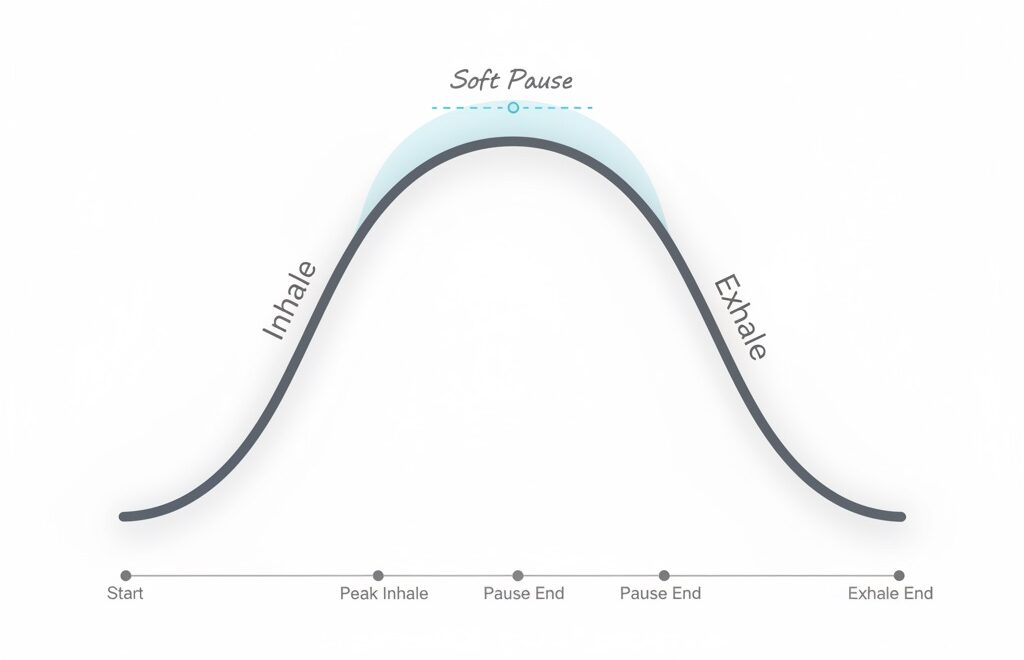
The pause exhale is a subtle but impactful breathing pattern — a gentle hold at the top of the inhale, followed by a slow, extended release. You may already do it intuitively: when something stressful resolves, when you finally rest, or when you exhale in relief. That natural pause-and-sigh is not accidental. It’s built into your body’s downregulation system — the shift from arousal to calm.
And it’s especially relevant in the hours before sleep.
The exhale and your nervous system
To understand why the pause exhale works, we need to look at the autonomic nervous system, which regulates involuntary functions like heart rate, digestion, and — yes — breathing. This system has two main branches:
The sympathetic nervous system (fight, flight, focus)
The parasympathetic nervous system (rest, digest, restore)
Inhalation tends to slightly activate the sympathetic branch — it quickens the heart and prepares for action. Exhalation, especially slow or extended, engages the parasympathetic branch, promoting a state of ease and recovery. This is why exhalation techniques are often at the center of calming breathwork: they send a clear, somatic signal that it’s safe to relax.
The pause before the exhale — a soft, natural moment of suspension — gives the system a beat to shift gears. It breaks the momentum of alertness. It says, in nervous system language: “Now we slow down.”
A 2018 review in ScienceDirect found that breathing techniques emphasizing the exhale — especially with longer exhalation times relative to the inhale — activate the vagus nerve and support parasympathetic dominance. This shift is associated with lowered blood pressure, reduced heart rate, and improved emotional regulation.
The physiology of the pause
What makes the pause exhale effective is not just that it slows the breath. It interrupts autonomic momentum. In fast-paced or anxious states, breathing tends to be shallow, rapid, and chest-centered. The body is in “anticipation mode,” preparing for the next moment before this one ends. When you introduce a brief pause before the exhale, you disrupt that pattern. You interrupt the nervous system’s predictive loop.
The result: more presence, more grounding, and — over time — a lowering of baseline arousal.
This is especially helpful before bed, when the brain is still processing the day’s inputs and the body may be caught in a low-grade sympathetic loop. As explored in our piece on body scanning for overthinking, the transition into sleep requires a shift in both mind and body — a move from mental momentum to physical stillness. The pause exhale gently facilitates that transition.
Why simplicity matters at night
Unlike structured breathing protocols — such as box breathing or 4-7-8 techniques — the pause exhale doesn’t rely on counting or exact ratios. It’s intuitive. Natural. Accessible when you’re too tired to follow instructions or too wired to engage complex techniques.
Here’s what it looks like in practice:
Inhale slowly through the nose
Pause gently at the top (1–2 seconds, no strain)
Exhale slowly through the mouth or nose
Let the body settle
Repeat as needed, focusing only on softening the exhale
This pattern doesn’t just soothe the nervous system — it provides a focus anchor for a restless mind. The pause exhale does the same. It replaces spinning thoughts with rhythm.
You don’t need to journal, analyze, or resolve anything. You simply breathe — and feel the system shift.
Exhale patterns and emotional regulation
Research from the NIH shows that intentional breath patterns can regulate affect by influencing the vagus nerve, which links the brainstem to the heart, lungs, and digestive system. The vagus nerve is sometimes called the “soul nerve” for its role in emotional and physiological integration. The exhale stimulates it gently, telling the body to release tension — both physical and emotional.
That’s why people often sigh after crying. Or pause before sharing something vulnerable. These breath patterns aren’t random — they are ancient reflexes, encoded in our biology.
By practicing the pause exhale, we repurpose those reflexes consciously — not to force calm, but to invite it.
Creating space for pause: integrating the exhale into your routine
The true power of the pause exhale lies in its portability. Unlike lengthy rituals or complicated techniques, it requires no timer, no setup, and no ideal conditions. You can do it while brushing your teeth, turning off lights, or lying in bed with the day still echoing in your head. What matters is how consistently you return to it — not how perfectly you perform it.
To make it part of your nighttime rhythm, begin with something you already do each evening. For instance:
As you dim the lights, pause, breathe in, and exhale slowly
While your tea steeps, close your eyes and follow three rounds of breath
After journaling, finish with a 2-minute breath session in bed
During your 5-minute wind-down, use the pause exhale as your closing moment
These small repetitions condition the body to associate the breath with rest. Over time, the pattern becomes a cue — a switch your body understands. It no longer asks, “Are we still working?” but instead knows: This is the pause. We are slowing down.
What if deep breathing feels stressful?
It’s common for people with anxiety, trauma, or hyperarousal to feel uncomfortable focusing on breath. Sometimes, the more you pay attention to it, the more strained or shallow it becomes. This is a natural feedback loop — attention increases control, and control can increase tension.
The solution? Make the breath gentler, not deeper.
Rather than trying to inhale fully or slow down forcefully, simply observe the natural breath and soften the exhale slightly. The pause at the top shouldn’t feel like holding your breath — just a moment of stillness. And the exhale should feel like a melting rather than a pushing out of air.
You can also pair the exhale with external soothing inputs:
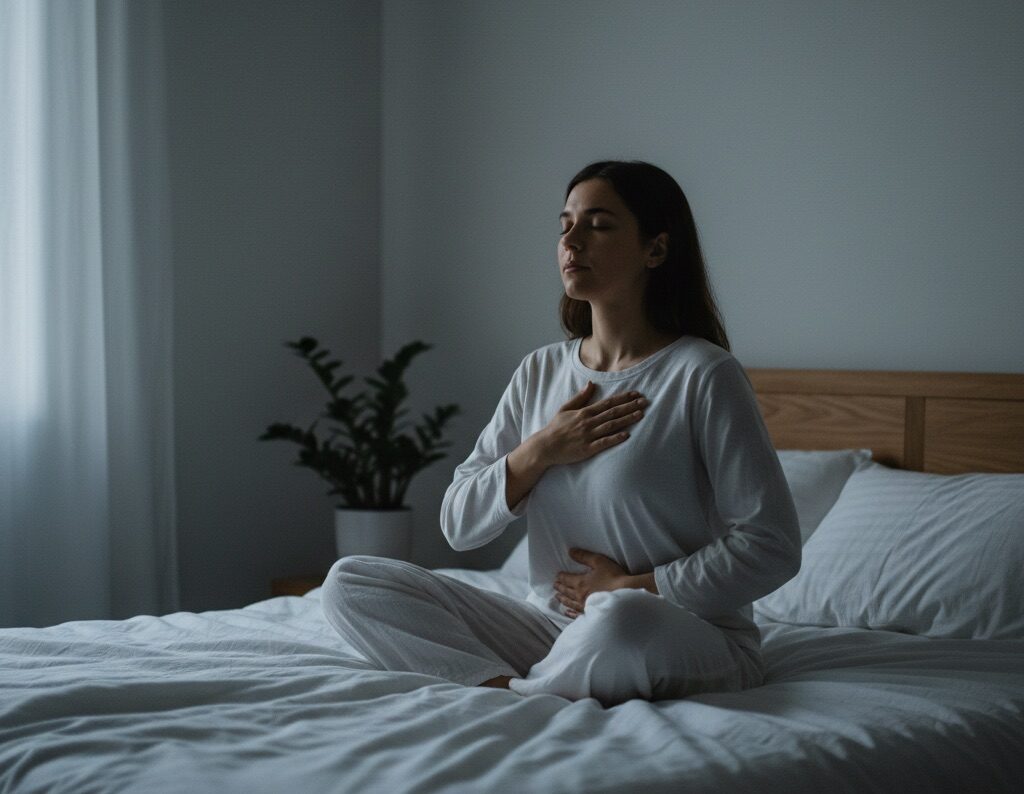
Place your hand on your chest or abdomen
Focus on a warm light, candle, or dim glow
Use calming scents like lavender or sandalwood
Pair with a gentle body scan to shift awareness
By grounding attention in both sensation and environment, you reduce the risk of internal hyperfocus and invite the nervous system to settle without pressure.
Pairing breath with sound and stillness
The body doesn’t operate in isolation. Sensory integration matters — and combining breath with sound, light, or touch strengthens the calming effect. The pause exhale becomes even more potent when paired with:
Ambient soundscapes: Use white noise or soft instrumental music to cue stillness
Weighted blankets: As you exhale, feel the pressure across the body as grounding input
Slow rocking or swaying: Gentle movement during breath sessions can enhance vagal tone
Ritual objects: Lighting the same candle or holding a soft object can signal safety to the nervous system
As we discussed in The one sensory cue rule, even one consistent sensory element paired with breath can deepen its impact.
Tracking change over time
You don’t need an app or wearable to notice the effects of the pause exhale — though some people benefit from guided breath tools when starting out. What matters more is how you feel after each session:
Is your mind quieter?
Are your thoughts slower or more spaced apart?
Do you feel less urgency in your body?
Is sleep coming more easily or with less resistance?
These are subtle shifts, not dramatic ones. But they add up.
You might begin to notice that moments of frustration resolve more quickly. That your evening mood stabilizes. That sleep onset feels more natural. That waking in the night no longer feels panicked — because your breath is already trained to return to rest.
Why it works: nervous system memory
What’s truly remarkable about the pause exhale is that it teaches your system how to return to safety. Not just once — but every time you repeat it. Over days and weeks, the nervous system begins to recognize the pattern. It starts anticipating calm, not just reacting to stress. The pause becomes more than just a breath technique. It becomes a memory of stillness.
This is why the method fits seamlessly into the Calm Sleeply philosophy: subtle, somatic, sustainable. You don’t need to push the body into sleep. You invite it. And breath is one of the gentlest invitations there is.
Final thoughts: breath as a bedtime ally
In a world filled with pressure to optimize and perfect, the pause exhale offers something quietly radical: a return to simplicity. Just breath. Just a pause. Just a release.
You don’t need to master it. You just need to come back to it — gently, again and again.
Because sometimes the most powerful way to rest isn’t a supplement or a tracker or a strict schedule. It’s one breath. One pause. One message to the body that says: You can let go now.