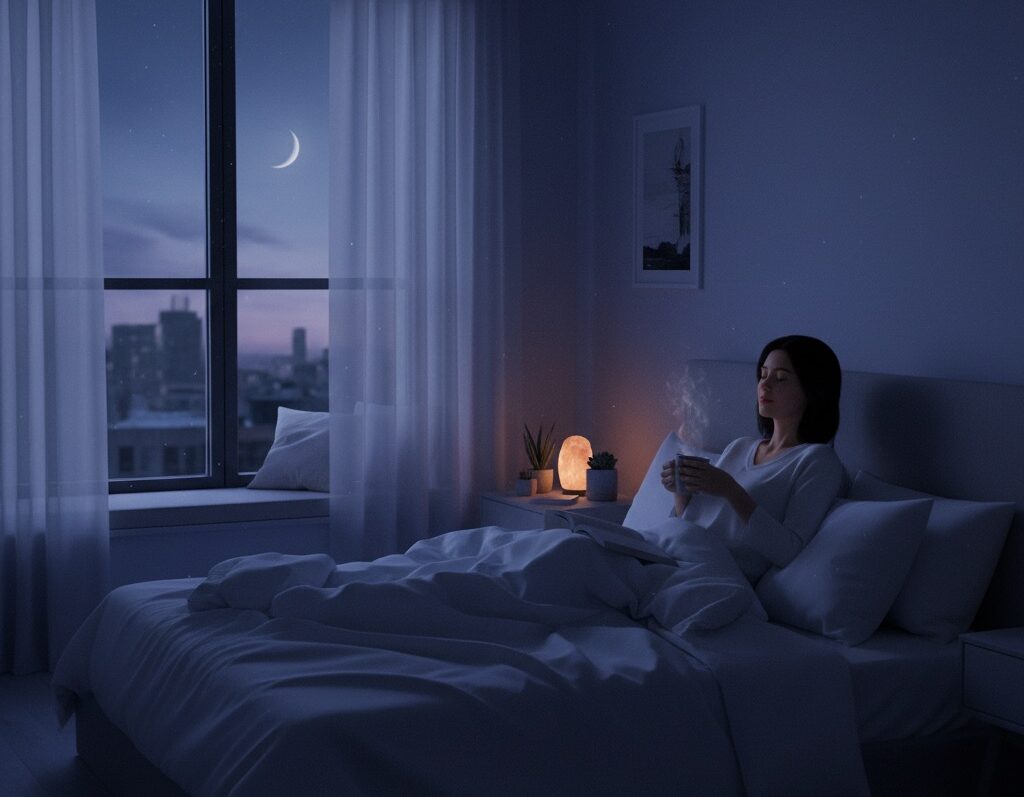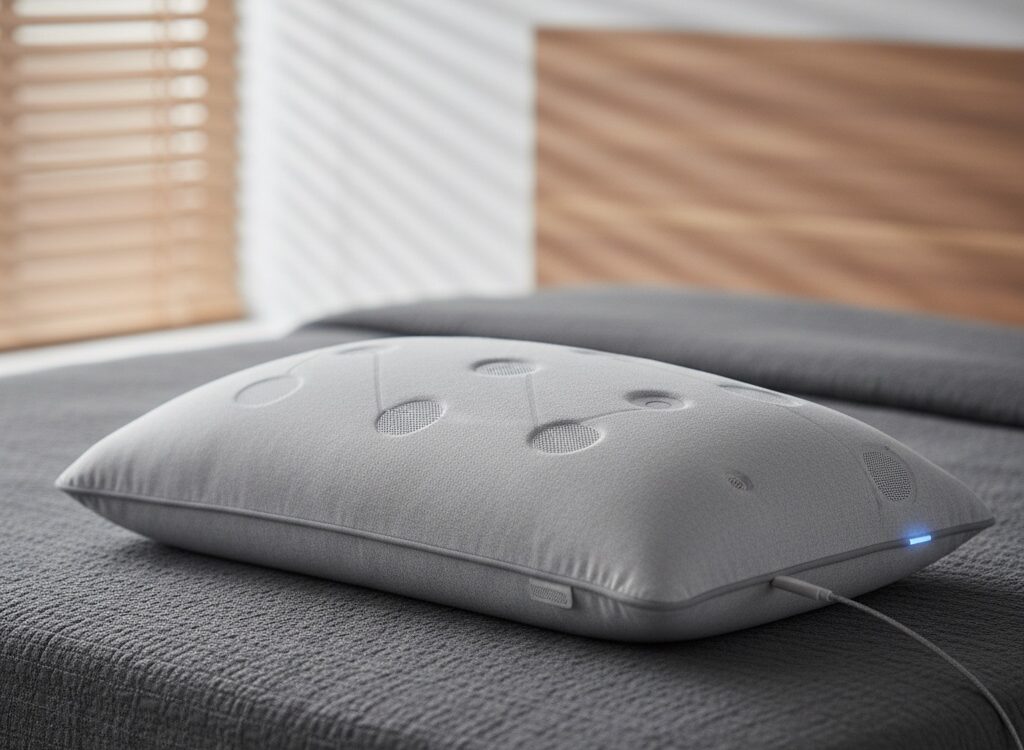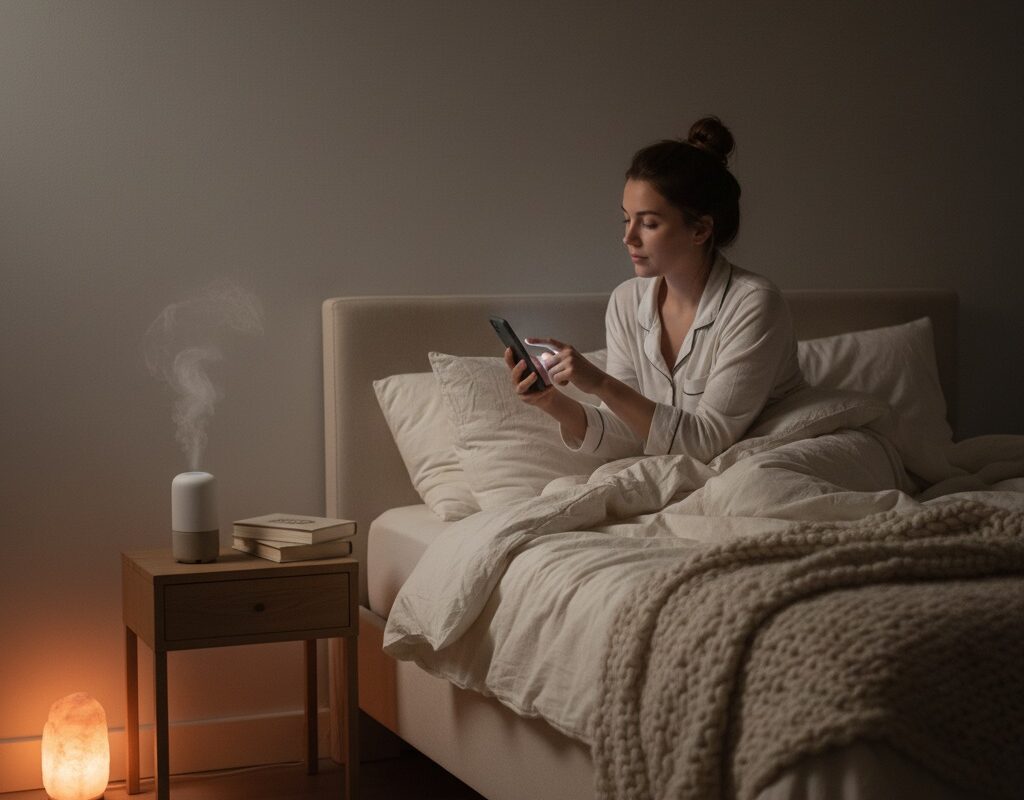
Have you ever reached the end of the day feeling exhausted — but your brain refuses to power down? You’re physically tired, but mentally wired. The room is dark, your body is still, and yet your thoughts keep humming, pinging, flashing. You’re replaying conversations, imagining future tasks, or simply buzzing with tension you can’t quite name.
This isn’t just overthinking. It’s often a sign of sensory overstimulation — a modern condition where your brain becomes overloaded by too much input from the world around you. From screens and scrolling to background noise and artificial lighting, our environments are rarely silent, still, or simple. And while we may stop the activity, the residue of stimulation lingers, making true rest difficult.
Understanding how overstimulation happens — and how it delays sleep — is the first step to reclaiming your nights.
What is sensory saturation?
Every second of the day, your brain filters incoming data from your senses: sights, sounds, smells, textures, and internal body signals. Normally, it handles this information with remarkable efficiency. But when the input becomes too frequent, too intense, or too fragmented, your system can become saturated.
This state is called sensory overload or sensory saturation. It’s not just a psychological feeling — it’s a measurable shift in how your nervous system operates. Sensory saturation often activates your sympathetic nervous system (your alert, fight-or-flight mode), even if you’re not feeling classically “stressed.”
Examples of low-level sensory stressors that add up during the day:
Constant phone notifications
Working under bright LED lights
Multitasking with music or TV in the background
Fast-paced visual input (social media, news)
Eating quickly, without awareness of taste or texture
Long commutes with traffic noise, crowded spaces, or screens
Artificial fragrances, crowded visuals, and cluttered environments
This flood of subtle sensory signals may not feel intense in the moment, but by the end of the day, your brain’s ability to downregulate — to shift from alertness to calm — can become impaired.
Why overstimulation lingers into bedtime
Your sensory system doesn’t operate in isolation. It’s deeply linked to cognition, mood, memory, and sleep regulation. That’s why sensory input continues to affect your mind long after the source disappears.
Here’s how overstimulation affects your sleep specifically:
Visual overstimulation: Blue light and rapid image processing (e.g., scrolling social media) suppress melatonin and keep your visual cortex alert.
Auditory overstimulation: Background noise, notifications, or loud TV shows prime your system for scanning, not rest. Even when “tuned out,” your brain remains semi-alert.
Somatic overstimulation: Sitting in rigid positions all day without movement can create muscular tension that translates into nervous system agitation.
Cognitive saturation: Multitasking fragments attention, increases cognitive load, and reduces your brain’s ability to consolidate experiences before sleep.
Even when you lie in bed, overstimulation shows up as:
Racing thoughts
Jaw clenching or tightness in shoulders
Irritability without clear cause
Delayed sleep onset or shallow sleep
Increased nighttime awakenings
This is why overstimulation is often misinterpreted as “insomnia” or “anxiety.” It may not be your mind resisting sleep — it might simply be your system still digesting the day’s overload.
The overstimulation-sleep disruption cycle
The challenge of sensory saturation is that it’s often invisible and cumulative. A single intense sensory moment — like a loud concert — is easier to notice and recover from. But when small irritants accumulate over time, they create a baseline of tension that doesn’t fully reset.
This leads to a feedback loop:
Daytime overstimulation (screens, stress, sound)
Impaired nighttime wind-down
Poor sleep quality
Increased sensory sensitivity the next day
Lower threshold for overload
The less you sleep, the more fragile your sensory system becomes. And the more overloaded you get during the day, the harder it is to reach a state of deep, parasympathetic rest at night.
This pattern is particularly common in highly sensitive individuals, neurodivergent people, or anyone recovering from burnout or emotional exhaustion. But in truth, modern environments make almost everyone vulnerable to this cycle — especially without intentional sensory regulation.
The paradox of “doing nothing”
Ironically, just “doing nothing” isn’t always enough. You may switch off the lights, leave your phone behind, and lie still — but still feel overstimulated. That’s because calm isn’t the absence of movement — it’s the presence of regulated input.
As we explored in Pre-sleep transitions: creating a “digital twilight” before bed, it’s not just about avoiding stimulation, but shifting to grounding, slow, and nourishing input. The nervous system doesn’t just shut down — it needs to transition.
In this light, overstimulation isn’t something to battle, but something to process and redirect.

How to discharge sensory overload before sleep
To unwind an overstimulated brain, we need to support the nervous system in recalibrating. That doesn’t mean full silence or complete darkness — it means shifting from reactive input to grounding, rhythmic, slow sensory experiences. This process is sometimes called “bottom-up calming” — using the body and senses to soothe the mind.
Here are science-informed, body-based strategies to help:
1. Curate sensory inputs intentionally
Rather than remove all stimulation, choose calming sensory cues that signal safety and rest.
Sound: Switch to pink noise or soft ambient music 30 minutes before bed. For some, silence feels harsh — a gentle soundscape creates a container of calm. You can learn more about sound choices in White noise vs. pink noise devices — what to choose for your sleep type.
Light: Use red-toned or amber lighting. These hues support melatonin production and reduce alertness.
Touch: Weighted blankets, soft fabrics, or warm compresses can bring your system down from “high-alert” mode.
Smell: Scents like lavender, neroli, and chamomile have been shown to reduce sympathetic activation. A consistent scent at night can become a sleep cue over time.
Movement: Gentle stretching, rocking, or slow walking around the room can help your body feel safe again in physical space.
2. Limit micro-inputs during the final hour
A common source of overstimulation isn’t intense activity — it’s micro-interactions. These small, frequent hits of information — a scroll, a ping, a message, a news flash — keep the brain in a predictive loop.
During the final hour before bed:
Turn off all non-essential notifications.
Avoid switching between tasks or tabs — even simple toggling can overload your working memory.
Choose one sensory stream: either music, or reading, or scent — not all at once.
Give your eyes a break from horizontal scrolling.
Swap multitasking for mono-attention: a single, absorbing but calming activity (e.g., drawing, hand massage, reading fiction).
This practice mirrors the concept of a “digital twilight”, where sensory input becomes more rhythmic and linear, preparing your brain to enter slower wave states.
3. Learn to listen to subtle signs
Your body often gives signals of sensory saturation before your mind interprets them.
Signs include:
Trouble finishing thoughts
Irritability over small things
Difficulty deciding on small tasks (e.g., what music to play)
Avoidance of stillness
Random muscle twitches or shallow breathing
Feeling “wired but tired”
When you notice these signs in the evening, respond early with intentional downshifting: dim lights, slow breath, and movement.
One technique from The 5-minute wind-down involves sitting in stillness while tracking the body’s contact with the ground — feet, hips, spine. Even two minutes of this sensory anchoring can begin to recalibrate your system.
4. Externalize cognitive clutter
Sensory overload and mental overload often go hand in hand. That’s why practices like cognitive offloading (writing things down) and evening journaling are helpful.
But not all journaling calms the mind. As we discussed in What not to journal: when evening reflection turns into mental spirals, it’s important to avoid open-ended problem solving right before sleep.
Instead:
Use short, structured prompts (“Three things I enjoyed today”, “One thing I’ll let go of”)
Keep your writing to one page
Use paper, not screens
End with a breath cue (e.g., the pause exhale we explored in The pause exhale: a single breath pattern that downshifts the nervous system)
This helps the mind feel complete, not open-ended — a necessary condition for sleep onset.
5. Redesign your nighttime sensory diet
The concept of a sensory diet refers to the idea that your nervous system, like your body, needs the right types of input at the right time. In the evening, this means choosing inputs that are:
Predictable
Gentle
Rhythmic
Reassuring
Spatially grounded (not abstract or fragmented)
Example of a healthy sensory wind-down routine:
| Time | Action | Sensory Channel |
|---|---|---|
| 8:30 p.m. | Dim lights, light candle | Visual, olfactory |
| 8:45 p.m. | Warm shower with eucalyptus scent | Tactile, thermal, olfactory |
| 9:00 p.m. | Soft instrumental music, journaling | Auditory, cognitive |
| 9:15 p.m. | Legs-up-the-wall pose or slow stretching | Proprioceptive |
| 9:30 p.m. | Bedtime — no device use | Silence, darkness |
The key is not to be strict, but to create an environment your nervous system can recognize as safe and slow.
Final reflections: calm is not silence — it’s coherence
Sensory overstimulation is not just a modern inconvenience — it’s a profound challenge for the sleep-deprived, emotionally exhausted, and digitally entangled mind. But the solution doesn’t lie in total disconnection or escape. It lies in curating your sensory space with as much care as you curate your nutrition or movement.
Your brain doesn’t want silence — it wants coherence. A predictable rhythm. A familiar cue. A simple signal that “it’s time to let go.”
When you begin to treat overstimulation not as a flaw of your brain, but as a feedback signal, everything changes. You stop blaming yourself for being “too sensitive” — and start creating an inner world that’s aligned with your outer choices.
This is the art of nighttime regulation. Not perfection, not productivity — just sensory peace.