
The modern sleep deficit
In a world where productivity often overshadows rest, sleep has become a currency many of us spend too freely. We stay up late to finish work, watch “just one more” episode, or scroll until our eyes blur. The result is a widespread condition experts call sleep debt — a cumulative deficit that builds up when we consistently sleep less than our bodies need.
According to the Sleep Foundation, most adults require between seven and nine hours of sleep each night. Yet studies show that many people average closer to six or fewer during the workweek. This consistent shortfall doesn’t go unnoticed by the body. Fatigue, poor focus, irritability, and sluggish reaction times are immediate signs. Over time, the consequences extend far deeper — influencing metabolism, mood, cardiovascular health, and even longevity.
Faced with this exhaustion, many turn to a familiar fix: the weekend recovery sleep. Saturday mornings stretch into late brunches, and Sunday naps become sacred rituals. The logic feels sound — if we’ve lost sleep during the week, we should be able to pay it back when we finally have time. But can you really “catch up” on rest the same way you repay a loan?
What is sleep debt and how does it accumulate
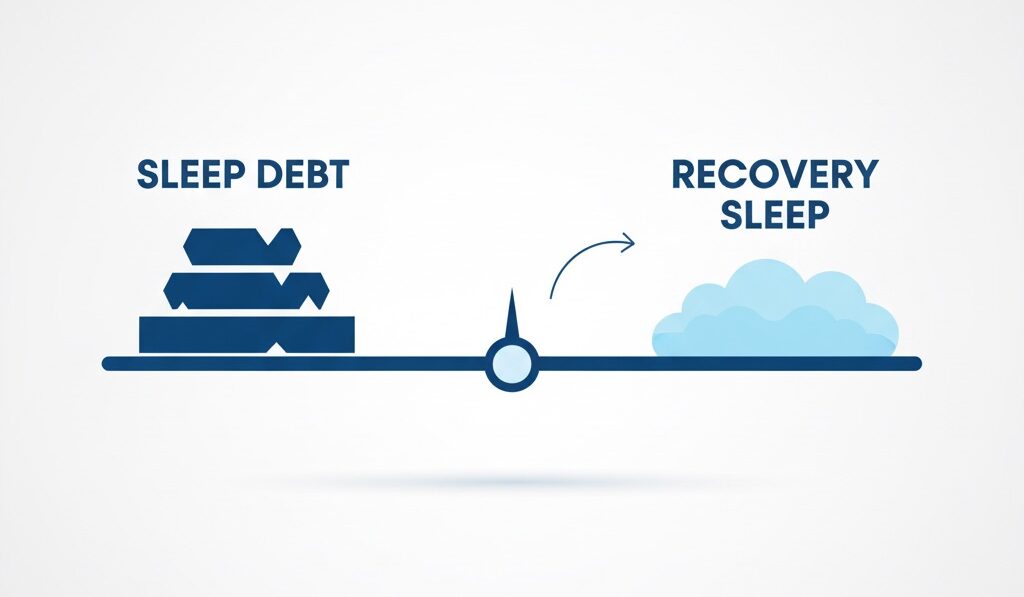
Sleep debt functions much like financial debt — only the currency is your body’s energy and restoration. Each night of inadequate sleep adds to your balance. Missing an hour here or there might not feel serious, but over time, it compounds.
Your brain and body track these deficits carefully. Sleep isn’t just downtime; it’s a highly active process where critical repairs and consolidations take place. Deep sleep helps restore the body, repairing tissues and bolstering the immune system. REM sleep supports emotional balance and cognitive function, helping you process memories and regulate mood. When these stages are cut short, the brain struggles to perform its nightly “maintenance.”
Sleep researchers often describe debt accumulation in two forms:
Short-term sleep debt, which can be recovered in a few days.
Chronic sleep debt, which develops after weeks or months of insufficient rest and is much harder to reverse.
In the short term, a few nights of extra rest can restore alertness and focus. But for deeper biological systems — such as hormone regulation and metabolic health — the repair process can take much longer. Chronic deprivation rewires your body’s baseline expectations, making fatigue feel normal even when it’s not.
What science says about catching up on weekends
The good news is that some recovery is possible. The bad news? It’s limited.
A 2019 study from the University of Colorado Boulder found that participants who tried to “catch up” on weekends did regain some alertness but still showed impaired glucose metabolism and disrupted circadian rhythms compared to those with consistent sleep schedules. In other words, while your body appreciates the extra rest, it doesn’t erase the deeper biological effects of chronic deprivation.
Another study published in Current Biology observed similar patterns: weekend sleepers improved short-term performance but quickly reverted to fatigue once the workweek resumed. The conclusion was clear — weekend recovery is a temporary fix, not a sustainable solution.
So why doesn’t it work?
Our bodies thrive on rhythm. The circadian system — your internal 24-hour clock — relies on consistency. Regular sleep and wake times help coordinate hormone release, digestion, and temperature regulation. When you sleep in for hours on weekends, you effectively shift your internal clock, similar to flying across time zones. This “social jet lag” leaves many feeling groggy on Monday mornings, despite the extra hours in bed.
The illusion of recovery can also be misleading. You might feel refreshed after sleeping in, but your brain’s deeper restorative systems may still be lagging. Sleep isn’t purely quantitative; quality and timing matter just as much as duration.
The hidden costs of weekday deprivation
Sleep deprivation doesn’t just make you tired — it quietly alters how your body and mind function. Even small, repeated losses compound into measurable deficits. For instance, research from the University of Pennsylvania showed that people sleeping six hours per night for two weeks performed as poorly on cognitive tests as those who stayed awake for 48 hours straight.
The challenge with chronic sleep debt is that your perception adapts. You may think you’ve adjusted to sleeping less, but your brain’s efficiency continues to decline. It’s a bit like driving with a dirty windshield — your focus narrows without you realizing how much clarity you’ve lost.
One of the most damaging effects is disruption of the circadian rhythm. The body’s internal clock doesn’t just regulate when you feel sleepy — it also affects hunger, hormone release, and body temperature. Erratic sleep patterns throw off this rhythm, contributing to what scientists call social jet lag — the misalignment between your biological and social schedules.
Even when you try to sleep longer on weekends, your body may struggle to transition into the deep and REM stages that restore energy. The result is a frustrating cycle: you spend more time in bed, but don’t necessarily feel better.
Why “banking” sleep doesn’t work long-term
Some people try a different strategy — sleeping extra hours in advance, as if “banking” rest before a busy week. While the intention is logical, the science doesn’t support it. Studies show that oversleeping one night doesn’t protect against the effects of future sleep deprivation. In fact, it can confuse your internal clock, making it harder to fall asleep when you need to.
The body prefers regularity over excess. Think of it like nutrition: eating a huge meal today doesn’t make up for missing meals all week. Similarly, one long night of rest doesn’t reverse the biological and cognitive strain of ongoing sleep loss.
This is why experts emphasize consistency as the foundation of healthy sleep. The real goal isn’t to “pay off” sleep debt — it’s to stop accumulating it in the first place.
How to recover from sleep debt the right way
If you’ve been running on too little sleep for weeks or months, the idea of “catching up” might feel impossible. But the truth is, while you can’t completely erase chronic deprivation, you can gradually restore your energy, cognitive sharpness, and emotional balance. The key is consistency, not compensation.
Instead of thinking about recovery sleep as a one-time fix, imagine it as a retraining process for your body clock. The goal is to create steady, repeatable patterns that signal safety and predictability to your brain.
Here are several science-backed strategies to help you recover the right way.
1. Commit to a consistent sleep schedule
Your body craves rhythm. Going to bed and waking up at the same time every day — including weekends — is one of the most powerful things you can do to rebuild balance.
Try to set your sleep window around your natural energy patterns. If you usually wake at 7 a.m., aim to wind down by 10:30 p.m. and be asleep by 11 p.m. Within a week, your circadian rhythm will start realigning, making it easier to fall asleep and wake up naturally.
A helpful trick is to use light exposure strategically:
Get sunlight within 30 minutes of waking up to signal to your body that the day has begun.
Dim lights and screens one hour before bed to encourage melatonin release.
This consistency helps reverse the “social jet lag” caused by irregular weekend sleep.
2. Add gentle naps — but use them wisely
Short naps can help you recover from partial sleep loss without disrupting your nighttime sleep. The optimal nap length is 20–30 minutes — long enough to restore alertness but short enough to avoid grogginess.
If you’re extremely sleep-deprived, you can take a 90-minute nap (one full sleep cycle), but do this earlier in the day. Avoid late-afternoon naps, which can shift your bedtime later.
NASA research shows that even a 26-minute nap can improve cognitive performance by 34% and alertness by 54%. So instead of sleeping in late on Sunday, consider a mindful nap — it’s a more controlled way to restore energy without confusing your circadian clock.
Read also: 6 reasons why you can’t nap even when you’re tired and 7 ways to fix it
3. Prioritize sleep hygiene
Sleep hygiene refers to the environmental and behavioral habits that support good rest. When recovering from debt, your sleep hygiene becomes your foundation.
Focus on these essentials:
Keep your bedroom cool (18–20 °C) and dark.
Avoid blue light from screens at least 60 minutes before bed.
Limit caffeine after midday.
Reserve your bed for sleep and intimacy only — no work or scrolling.
Use calming cues like aromatherapy, soft music, or white noise.
Think of your room as a signal: “this space is for rest.” Over time, your brain learns to associate it with winding down, helping you fall asleep faster and stay asleep longer.
Read also:
- Air quality, indoor pollution and sleep: what to watch and how to improve your bedroom air
- Home sleep hacks: how to optimize your bedroom environment
4. Focus on sleep quality, not just duration
Many people recovering from sleep debt think, “If I just sleep longer, I’ll feel better.” But duration alone isn’t enough. Deep and REM stages — not total hours — determine how restorative your sleep is.
To improve quality:
Create a wind-down ritual (stretching, reading, or journaling).
Eat your last meal 2–3 hours before bed.
Avoid alcohol, which can fragment sleep cycles.
Practice deep breathing or progressive relaxation to lower your heart rate.
If your nights still feel restless, try a weighted blanket or gentle soundscapes — these help reduce micro-awakenings and promote deeper rest.
5. Avoid over-sleeping as a recovery strategy
It’s tempting to spend ten or more hours in bed after a draining week, but that often backfires. Oversleeping can make you feel more lethargic and disrupt your next night’s rhythm.
Instead, extend your sleep window gradually. Add 30–45 extra minutes to your usual bedtime or wake-up time for several days in a row. This slow recovery is far more effective than binge-sleeping.
You can also focus on “sleep opportunity” — giving yourself enough quiet, dark hours in bed to allow natural rest to happen without pressure. The goal isn’t to force sleep, but to create the conditions where it can unfold.
6. Use weekends for gentle recalibration, not compensation
Weekends should be about restoration, not repair. Instead of staying up late and sleeping till noon, try using your days off to nurture your sleep rhythm.
Ideas for weekend recovery:
Stick within one hour of your usual wake time.
Take a walk outside in the morning light.
Spend time unplugged and reduce stimulation before bed.
Prepare for Monday with calm evening habits, not late-night productivity.
Think of weekends as a reset button, not a bandage. This helps prevent the recurring “sleep rollercoaster” that makes Mondays so difficult.
7. Support your body with good nutrition and movement
Sleep recovery isn’t only about what happens in bed. Your daytime habits heavily influence how deeply you rest.
Eat foods that support relaxation and hormonal balance — magnesium-rich leafy greens, bananas, oats, and chamomile tea are excellent. Avoid heavy dinners or sugar spikes before bedtime.
Regular physical activity also plays a major role. Even light exercise like walking or yoga reduces cortisol (the stress hormone) and promotes better slow-wave sleep. Just avoid high-intensity workouts within two hours of bedtime.
8. Let go of guilt and pressure
One of the overlooked barriers to sleep recovery is mental tension. Many people lie in bed worrying about not getting enough rest, which paradoxically keeps them awake.
The truth is, the body is remarkably adaptable. Once you start sleeping more consistently, it will gradually repair itself — even if progress feels slow. Practice patience.
You might try an evening “release ritual”:
Write down lingering thoughts or to-dos in a notebook.
Tell yourself, “These can wait until tomorrow.”
Pair it with slow breathing or a short meditation.
This signals to your mind that rest is a priority, not a luxury.
The new definition of recovery
Catching up on lost sleep isn’t about sleeping in — it’s about rebuilding trust with your body. When you treat rest as essential, not optional, your physiology responds in kind: hormones balance, focus improves, and emotional resilience returns.
Experts agree that after a few weeks of consistent, quality rest, most mild to moderate sleep debt can be substantially reduced. Chronic deprivation takes longer — sometimes months — but recovery is always possible.
The lesson? Instead of waiting for weekends to rescue you, start designing your days around sleep — not the other way around.
Key takeaways
Sleep debt is cumulative and can’t be erased in one weekend.
Consistent schedules, short naps, and good sleep hygiene work better than binge-sleeping.
Recovery means long-term rhythm restoration, not quick fixes.
Your goal isn’t just more hours in bed — it’s better sleep.