When your dreams feel too real
Most of us have woken from a nightmare with our heart racing, breath shallow, and body tense — even though we know it was “just a dream.”
But for some people, those nights aren’t occasional; they’re frequent. Recurring nightmares or anxiety dreams can turn sleep into something to dread rather than anticipate.
What many don’t realize is that nightmares are not random. They often echo emotional tension, unresolved memories, or stress carried from the day. When the brain enters deep sleep, these fragments resurface in symbolic ways. It’s your mind’s attempt to process emotions that didn’t find resolution while awake.
And here’s the hopeful part — that same mind that creates distressing imagery can also rewrite it.
This is where Imagery Rehearsal Therapy (IRT) comes in — a technique used in modern sleep psychology to retrain the brain through visualization. It helps people reshape their mental responses to dreams, reducing nightmare frequency and rebuilding a sense of calm before sleep.
What is imagery rehearsal therapy (IRT)?
Imagery Rehearsal Therapy is a cognitive-behavioral technique originally developed to treat post-traumatic and chronic nightmares. Unlike medication, it doesn’t suppress dreams — it changes the emotional script your brain follows during sleep.
Here’s how it works in simple terms:
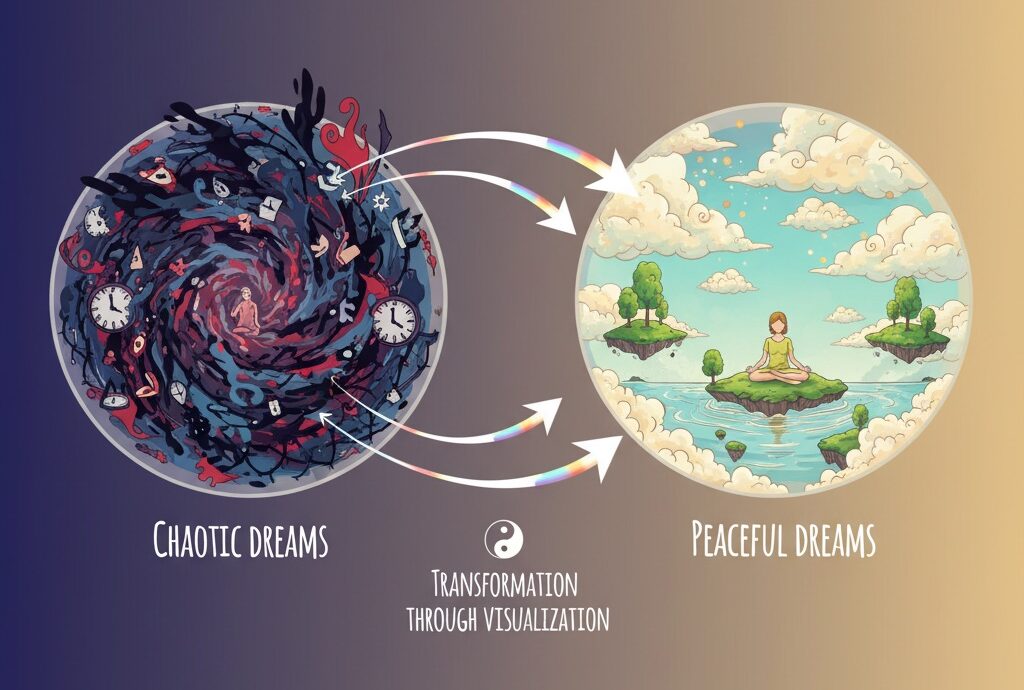
You recall a recurring nightmare while awake, reimagine it with a new, non-threatening or positive ending, and then mentally “rehearse” that new version before going to bed. Over time, the brain learns to replace distressing imagery with neutral or calm associations.
The idea may sound simple, but it’s deeply rooted in neuroscience. The same brain regions that light up when you visualize — like the amygdala and hippocampus — are active during REM sleep. When you repeatedly imagine a peaceful scenario, you strengthen new neural pathways, signaling the brain that the dream is safe to reframe.
In other words, you’re teaching your subconscious how to dream differently.
Originally, IRT was studied for trauma-related nightmares among veterans and PTSD patients, but it has since proven helpful for:
general nightmare disorder
insomnia linked to nighttime anxiety
stress-induced vivid dreams
emotional restlessness that keeps the mind alert before sleep
By combining imagination with repetition, IRT turns visualization into a gentle form of mental conditioning.
The mind–body connection during sleep
Sleep and imagination are more intertwined than most people think. Visualization — the act of creating vivid mental images — activates nearly the same neural circuits as real sensory experience. That’s why just imagining a stressful situation can make your heart beat faster, or picturing a calm beach can make your shoulders drop.
Nightmares are a perfect example of this link: your body reacts to dream imagery as if it’s real danger. But this connection can work both ways. When you consciously imagine calm, your nervous system responds accordingly.
Studies show that guided imagery lowers sympathetic nervous system activity (your fight-or-flight response) and increases parasympathetic activity — the state associated with rest, digestion, and deep recovery.
This is what makes imagery rehearsal so powerful: it’s not just psychological, it’s physiological.
By practicing safety through visualization, you retrain your brain to see nighttime as a place of restoration, not threat.
Step-by-step: how imagery rehearsal works
While therapists may guide you through IRT, the basic practice can be done at home with mindfulness and patience. The key is consistency and emotional safety — it’s a gentle, creative process, not an analysis of trauma.
Here’s how it works:
1. Recall.
Write down the nightmare you want to address. Include the key details, especially the part where the distress peaks. Don’t overanalyze — just capture what you remember.
2. Rewrite.
Now, consciously change the story. The goal isn’t to make it unrealistic or “perfect,” but to remove fear. For example:
If you’re being chased, imagine stopping and calmly walking away.
If someone threatens you, picture them shrinking, smiling, or simply disappearing.
If you feel trapped, imagine finding a door filled with warm light.
The new version should end on a sense of resolution or calm — something your brain can believe.
3. Rehearse.
Before bed, close your eyes and visualize this new dream slowly and vividly. Engage all senses: what do you see, feel, hear, smell? Let your body respond as if it’s real.
4. Repeat.
Do this nightly for at least a week, even if you don’t have nightmares in between. Consistency trains the brain to adopt new imagery patterns automatically.
With time, most people notice fewer distressing dreams and greater emotional distance from those that remain. The mind learns that it’s capable of rewriting fear into safety — and that belief carries into waking life as well.
How IRT helps insomnia and nighttime anxiety
People with insomnia often describe a familiar cycle: the body is tired, but the mind won’t stop. Visualization techniques like IRT interrupt that loop by replacing worry with narrative control.
When you engage in imagery rehearsal, your mind becomes focused on creation, not rumination. You give the restless brain a story to work with — one that’s calm, rhythmic, and emotionally grounded.
Here’s what changes physiologically:
Reduced pre-sleep arousal: visualizing calm images lowers heart rate and muscle tension.
Shorter sleep onset: the brain transitions faster into REM when emotional circuits are soothed.
Lower cortisol levels: less stress hormone means fewer awakenings and lighter dreams.
Improved dream tone: neutral or positive imagery reshapes how your subconscious processes emotion.
In essence, IRT creates a psychological bridge between wakefulness and rest — one built on control and safety instead of fear.
It’s not about denying nightmares; it’s about reshaping your relationship with them.
When imagery becomes self-care
Imagery rehearsal is more than a technique — it’s an act of gentle self-training. It invites you to meet your own mind with curiosity, not resistance. You’re no longer a passive dreamer; you’re a co-creator of your rest.
For many, this practice also carries emotional benefits beyond sleep:
a sense of empowerment after feeling helpless in dreams
improved emotional regulation during the day
deeper understanding of recurring fears and symbols
And perhaps most importantly — it reinstates trust in sleep itself.
When nightmares or insomnia take over, the bed becomes a place of tension. Visualization reclaims that space, transforming it from a battlefield into a sanctuary.
How to practice imagery rehearsal at home
Imagery rehearsal works best when it’s approached as a gentle bedtime ritual, not a task. You don’t need special equipment or therapy background — just consistency and patience.
Below is a calm, step-by-step guide to practicing visualization safely at home:
1. Prepare your environment
Before beginning, make your space peaceful. Dim the lights, put your phone away, and give yourself five minutes of quiet. This step signals to your nervous system that the day is closing.
If you like, you can enhance calm through:
soft background sounds (rain, waves, brown noise)
aromatherapy (lavender or chamomile)
a cozy blanket or light stretch to relax your body
Your goal is to shift from the external world into an inner one — from reaction to reflection.
2. Recall gently, not vividly
If the nightmare feels intense, start slowly. Write or think about just the main theme rather than every detail. The aim is not to relive fear but to acknowledge it.
Once you’ve captured the outline, stop. Take a few deep breaths and remind yourself that you’re safe now. The purpose of imagery rehearsal isn’t confrontation — it’s transformation.
3. Rewrite with kindness
Now comes the creative part. Close your eyes and imagine changing one key element of the nightmare:
The setting softens.
The ending shifts from danger to safety.
A threatening figure becomes neutral or kind.
You gain control — you walk away, you fly, you find light.
This doesn’t have to feel realistic; it just needs to feel comforting. Your brain doesn’t distinguish between a “true” and an “imagined” image — it only records the emotional tone you attach to it.
If you can’t find a new ending, simply imagine turning off the dream like a movie. Picture a blank screen or a gentle fade to light.
4. Rehearse regularly
Practice your new version every evening before sleep. Picture it slowly, using all your senses: the colors, sounds, movements, temperature, and emotions.
Let the story play out like a short film in your mind.
For the first few nights, you might still dream of the original version — that’s normal. With repetition, your subconscious begins to choose the new imagery naturally.
Consistency builds familiarity. Familiarity builds safety.
5. Pair with breathing and grounding
You can amplify imagery rehearsal by adding a few grounding techniques:
Deep breathing: inhale for four counts, exhale for six — longer exhales calm the body.
Body awareness: feel the weight of your body against the bed; release tension from head to toe.
Word anchor: repeat a gentle phrase during visualization, such as “safe,” “calm,” or “I’m home.”
Combining imagery with slow breathing engages both the emotional and physical systems of calm, making the transition to sleep smoother.
Common mistakes and how to avoid them
Like any mindfulness practice, IRT can feel awkward at first. Here are common challenges and gentle ways to navigate them:
Trying too hard to control the dream.
Remember, the goal isn’t to force a perfect dream — it’s to soften its emotional impact. If control feels stressful, just imagine peace instead of precision.Ruminating instead of rewriting.
If your mind keeps replaying the nightmare instead of changing it, take a break. Focus on your breathing or shift to a neutral visualization (like floating clouds or a calm lake).Expecting instant results.
IRT works gradually. You’re retraining deeply rooted emotional responses. Notice small improvements: lighter dreams, easier mornings, less tension before bed.Practicing when highly stressed.
If the day feels overwhelming, do a short relaxation exercise first — guided meditation, gentle stretching, or writing your thoughts down before you visualize.
Treat this like emotional physiotherapy — gentle repetition, not strain.
When to seek professional guidance
While imagery rehearsal is safe for most people, some may find their dreams linked to unresolved trauma or ongoing anxiety. If nightmares are frequent, vivid, or cause fear of sleep, it’s wise to consult a:
sleep therapist or psychologist trained in cognitive behavioral methods, or
licensed trauma specialist who can integrate imagery safely within therapy.
Professionals can help you adapt the practice to your needs, explore underlying emotions, and prevent re-triggering distressing content.
For many people, IRT becomes even more powerful when combined with therapy, as it turns nightly fear into a space for growth and release.
Visualization beyond nightmares
Once you feel comfortable, you can use visualization not just to reduce nightmares — but to promote better sleep overall.
Some examples include:
Peaceful imagery: imagine a calm scene like a forest, ocean, or cozy cabin. Focus on sensory detail until your mind drifts naturally into rest.
Positive rehearsal: picture yourself falling asleep easily, breathing calmly, and waking up refreshed.
Healing visualization: imagine your body absorbing rest, restoring energy, and softening tension with each breath.
These practices teach your brain to associate night with peace, not performance — a valuable shift for anyone struggling with insomnia or mental fatigue.
The science of imagination and sleep
Why does visualization work so well? Because the brain doesn’t fully separate imagination from experience.
Functional MRI studies show that imagining a calm scenario activates the same areas as physically being in one — the visual cortex, limbic system, and insula. This overlap helps reprogram emotional responses to imagined threats, both in dreams and waking life.
During REM sleep, the brain replays emotional content for processing. By feeding it peaceful imagery before bed, you change the material it works with. Essentially, you’re giving your subconscious a new language of calm.
With time, that new language becomes your default nighttime dialogue — not fear, but safety.
Reconnecting with sleep as a safe place
For many people who struggle with nightmares or insomnia, sleep becomes something to manage, not enjoy. Imagery rehearsal helps rewrite that emotional contract.
When you close your eyes, you’re not surrendering to chaos — you’re entering a space you’ve prepared, a landscape of your own design. Whether it’s a meadow, a soft-lit room, or a floating sea, this imagery becomes a refuge you can return to nightly.
That’s the deeper purpose of IRT: not just eliminating nightmares, but restoring trust in rest itself.
You can’t always control what your mind creates at night, but you can teach it how to feel safe again.
Imagery rehearsal is the practice of kindness toward your dreaming self — a way of saying, “You don’t need to run tonight. You can rest.”
By rehearsing calm while awake, you invite your subconscious to follow your lead.
Night by night, story by story, your sleep becomes softer, steadier, and more your own.
Read also: