
You go to bed early, sleep for eight full hours, and wake up… feeling exhausted. Your mind feels foggy, your limbs heavy, and even simple thoughts take effort. You might assume it’s poor sleep quality or too little rest, but there’s another, lesser-known phenomenon at play: sleep inertia.
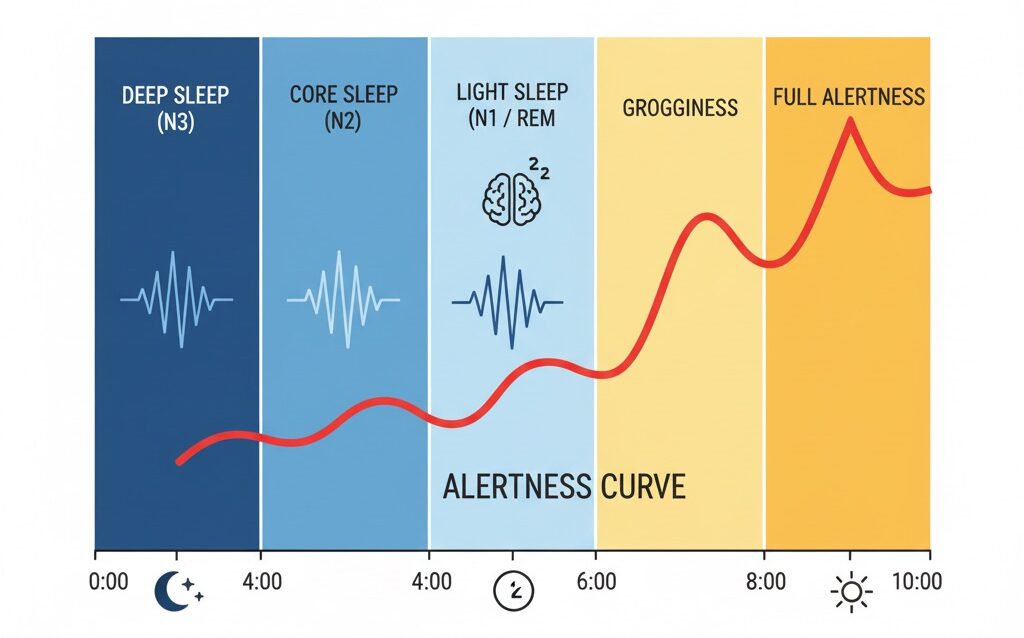
Sleep inertia is that thick layer of grogginess that lingers right after waking — when your body is technically awake, but your brain hasn’t fully caught up. Scientists have studied it for decades, and it’s now understood as a normal neurobiological transition between sleep and alertness, not necessarily a sign of bad sleep.
In other words, if you feel slow in the morning, your brain might simply still be completing the process of waking up.
What is sleep inertia?
According to the Sleep Foundation, sleep inertia is a temporary period of reduced alertness, slower reaction time, and cognitive impairment that occurs immediately after waking. Most people experience it daily to some degree — it’s part of how the body transitions out of deep rest.
During sleep, the brain cycles through various stages — light sleep, deep sleep, and REM (rapid eye movement). When you wake up, the part of your brain responsible for decision-making, focus, and memory — the prefrontal cortex — needs more time to reactivate.
At the same time, regions that regulate emotion and basic alertness may already be active, creating a mismatch: the body wants to move, but the mind still feels like it’s underwater.
This internal lag explains why, even after a full night’s sleep, you might not feel sharp right away.
What happens in the brain during sleep inertia
Studies published in the National Library of Medicine have shown that sleep inertia involves a slow reactivation of cortical networks — especially in areas that handle reasoning and short-term memory.
Brain imaging suggests that:
Deep sleep (slow-wave sleep) leaves the brain in a low metabolic state; waking from it requires time to restore normal neural activity.
Adenosine, a compound that builds up during wakefulness and promotes sleep pressure, may still be present right after waking, adding to the feeling of heaviness.
Cerebral blood flow shifts gradually, meaning oxygen and glucose delivery to cognitive areas remains reduced for 15–30 minutes after awakening.
This makes sleep inertia a neurochemical balancing act rather than a sign of fatigue. The brain is simply rebooting.
The stages of waking up
Waking up is not a switch — it’s a process. The brain transitions through identifiable stages:
Stage 1: Physical activation
Your heart rate and breathing rise slightly. Muscles regain tone. You might stretch, blink, or yawn as your sensory systems restart.Stage 2: Cognitive reactivation
The frontal cortex begins processing information again. This is when you become aware of time, plans, or tasks — but still feel dull or detached.Stage 3: Full integration
Hormones like cortisol and adrenaline stabilize alertness. The fog lifts, and thought clarity returns.
This gradual ramp-up can take anywhere from 15 minutes to 2 hours, depending on sleep stage timing and circadian rhythm alignment.
Waking during deep sleep, for instance, can dramatically extend this groggy phase — a concept closely linked to the 90-minute sleep cycle trick. If your alarm cuts into deep sleep, you’re far more likely to experience severe sleep inertia.
When grogginess hits hardest
Sleep inertia tends to be strongest under certain conditions:
Waking during slow-wave sleep — the deepest, most restorative stage.
Interrupted sleep — when multiple awakenings fragment your natural cycles.
Irregular sleep schedules — especially abrupt changes in bedtime or wake time.
Sleep deprivation or oversleeping — both can intensify morning disorientation.
Dark or cold environments that delay light-triggered cortisol release.
A 2021 meta-analysis in Sleep Medicine Reviews found that people who wake from deep sleep stages can experience up to 60 minutes of impaired alertness, particularly when sleep loss or circadian misalignment is involved.
This is why you might feel worse after sleeping longer on weekends — extended rest often pushes your wake time into a different phase of your circadian rhythm, causing “social jet lag.”
How long does sleep inertia last?
For most people, the fog lifts within 15 to 30 minutes, but it can last up to 90 minutes in certain circumstances — such as waking abruptly from deep sleep or being sleep-deprived.
Researchers from the National Institutes of Health describe sleep inertia as a gradual recovery curve:
Reaction time and decision-making improve first.
Mood and motivation follow.
Full cognitive sharpness takes the longest to return.
This is why many people feel emotionally flat or irritable right after waking — the brain’s emotional regulation centers reactivate faster than logical ones, creating temporary imbalance.
Interestingly, even caffeine — which many rely on to break through the fog — works better after about 20 minutes of wakefulness. Consuming it too early may interfere with your body’s natural cortisol rhythm. (See our article Caffeine cut-off times: what science says about your last cup for details on timing and metabolism.)
Everyday triggers that worsen sleep inertia
Beyond sleep stages, several lifestyle factors can make the morning fog worse.
1. Sudden, jarring alarms
Being shocked awake activates the stress response — a spike in adrenaline that raises heart rate and tension. Over time, this conditions the brain to associate waking with anxiety.
If possible, try gradual light alarms or smart devices that simulate dawn. Exposure to natural light upon waking helps suppress melatonin and increases alertness, as noted by Harvard Medical School’s guide on circadian rhythms.
2. Inconsistent bedtimes
Your body’s internal clock relies on regularity. Shifting sleep or wake times by even 1–2 hours can confuse your circadian rhythm and prolong inertia.
Maintaining consistent wake-up times — even on weekends — strengthens your natural alertness cues and minimizes grogginess.
3. Overreliance on snooze buttons
Each snooze interval forces you back into fragmented mini-sleep cycles, often deepening confusion rather than helping. Repeated partial awakenings can trigger multiple bouts of inertia in a single morning.
4. Poor pre-sleep transitions
Evening exposure to blue light or last-minute mental stimulation delays melatonin production, pushing your sleep phase later. If you often feel heavy in the morning, improving your pre-sleep habits can help. Our article Pre-sleep transitions: creating a “digital twilight” before bed explores how light and digital detox practices prepare your brain for smoother waking cycles.
How to reduce morning grogginess
While sleep inertia is a normal biological process, there are ways to shorten its duration and make mornings feel smoother. These strategies don’t eliminate inertia entirely — they simply help your body transition more gracefully from sleep to wakefulness.
1. Wake up between, not during, deep sleep
The single most effective way to reduce sleep inertia is timing. If your alarm interrupts deep sleep (slow-wave sleep), you’ll feel disoriented no matter how many hours you’ve slept.
The body follows roughly 90-minute sleep cycles, alternating between light, deep, and REM stages. Aligning your wake-up time with the end of a cycle helps you rise during a lighter stage of sleep, when the brain is already closer to wakefulness.
Our article The 90-minute sleep cycle trick: waking up between, not during, REM explains this approach in detail — including how to use sleep tracking apps or natural cues to find your ideal rhythm.
If you wake naturally just before your alarm, consider getting up rather than going back to sleep. That spontaneous awakening often signals the end of a cycle — your body’s way of saying, “I’m ready.”
2. Use light strategically
Light is the brain’s most powerful wake-up signal. The moment morning light hits your eyes, it tells the suprachiasmatic nucleus — your internal clock — that it’s time to release cortisol and stop melatonin production. This chemical shift promotes alertness within minutes.
If natural sunlight is limited, try a dawn-simulating alarm or a full-spectrum light box. Gradual illumination mimics sunrise and can make waking less jarring. A study from Harvard Medical School found that exposure to bright light shortly after waking helps synchronize circadian rhythms and reduce the length of sleep inertia.
Conversely, avoid blue light at night, which pushes your rhythm later and makes mornings feel heavier. The “digital twilight” routine we discussed in
Pre-sleep transitions: creating a digital twilight before bed is a simple yet powerful way to reset your light environment for both ends of the day.
3. Give your brain a gentle cognitive start
It may sound counterintuitive, but a small dose of cognitive engagement helps dissolve grogginess faster. Simple mental tasks — like journaling, reading, or making a short plan for your morning — activate the frontal cortex, the same region that’s slow to restart after deep sleep.
This doesn’t mean opening work emails right away. Instead, choose soft focus activities:
write one sentence about how you feel,
list three things you’re grateful for,
or mentally map your first hour.
By giving your brain a low-stakes task, you encourage neural reactivation and make the transition smoother.
4. Hydrate before caffeine
Caffeine can certainly help combat sleep inertia, but the timing matters. After 6–8 hours of sleep, your body is mildly dehydrated — and that dehydration contributes to fatigue.
Drink a glass of water first, then wait about 20–30 minutes before your first cup of coffee or tea. This gives your cortisol rhythm time to rise naturally and ensures caffeine works in sync with your body, not against it.
You can read more in our article Caffeine cut-off times: what science says about your last cup, which explains how caffeine’s half-life and timing affect sleep and wake cycles.
If you prefer a slower wake-up, try herbal or green tea — their gentler caffeine content provides alertness without spiking stress hormones.
5. Move your body — even briefly
Movement increases circulation, oxygen delivery, and dopamine — all of which accelerate mental clarity. You don’t need a workout; even two minutes of stretching or slow walking is enough to send “wake-up” signals to your brain.
A few ideas:
Roll your shoulders and open your chest.
Stand tall and take three deep breaths.
Stretch your calves and hips to encourage blood flow.
Gentle activity also warms the muscles and joints that stiffen overnight. As the Sleep Foundation notes in its overview of sleep inertia, physical motion helps counter the low blood pressure and reduced motor activity that accompany early wakefulness.
6. Temperature cues and airflow
Temperature shifts can also influence alertness. Cool air on the face, or a quick splash of water, stimulates nerve endings and increases oxygen intake.
However, warmth has its place too. Gradually increasing room temperature before you wake — or letting sunlight warm the space — can help the body’s core temperature rise naturally, aligning with your circadian rhythm.
This process mirrors what happens in healthy sleep environments: your body cools down to sleep and warms up to wake. Managing that rhythm, even slightly, can shorten inertia and ease the transition.
7. Don’t judge the fog — it’s part of being human
Many people interpret morning grogginess as a failure: “I slept eight hours, so why do I still feel tired?” But neuroscience suggests the opposite. Sleep inertia is a feature, not a flaw — the brain’s built-in method for slowly recalibrating after deep rest.
During this time, your body is still balancing hormones, pressure, and oxygen levels. Instead of fighting it, the best strategy is to allow a buffer period between waking and demanding tasks. Ten quiet minutes can completely change how your morning feels.
In workplaces and aviation studies, NASA and other agencies even build sleep inertia into scheduling models — acknowledging it as an unavoidable, predictable stage of human physiology.
8. The importance of consistency
If there’s one pattern in all sleep research, it’s this: your body loves rhythm. Consistent wake times anchor your circadian system, making mornings easier over time.
When you wake at the same time each day:
cortisol release aligns predictably,
melatonin drops at the right pace,
and brain reactivation becomes faster and smoother.
In contrast, inconsistent wake-up times create “mini jet lag” effects, forcing your brain to recalibrate every morning. The payoff for regularity isn’t instant — it takes about one to two weeks for your internal clock to adapt — but it’s one of the simplest ways to minimize inertia long term.
A gentle wake-up routine example
Here’s what a morning designed to ease sleep inertia might look like:
Light alarm at 6:30 a.m. — gentle brightness replaces sound shock.
Slow breathing and light stretch.
Drink a glass of water before coffee.
Open blinds for sunlight exposure.
Five quiet minutes of journaling or reflection.
Warm shower or face rinse to boost circulation.
This sequence respects how your brain wakes — gradually, predictably, and kindly.
Reframing mornings
The goal isn’t to eliminate grogginess but to understand and cooperate with it. The fog you feel is simply the mind’s way of transitioning between worlds — from the dream state to conscious focus. When you accept that it’s temporary and manageable, mornings stop feeling like a battle.
Sleep inertia may be the most human reminder that waking up is not instant. It’s a process of realignment — body, brain, and rhythm finding each other again.
So tomorrow, when you wake and feel the weight of that early fog, don’t rush to label it failure. Instead, give yourself light, breath, water, and a few quiet minutes.
Because the science of clear mornings begins not with fighting the fog, but with honoring the wake-up.