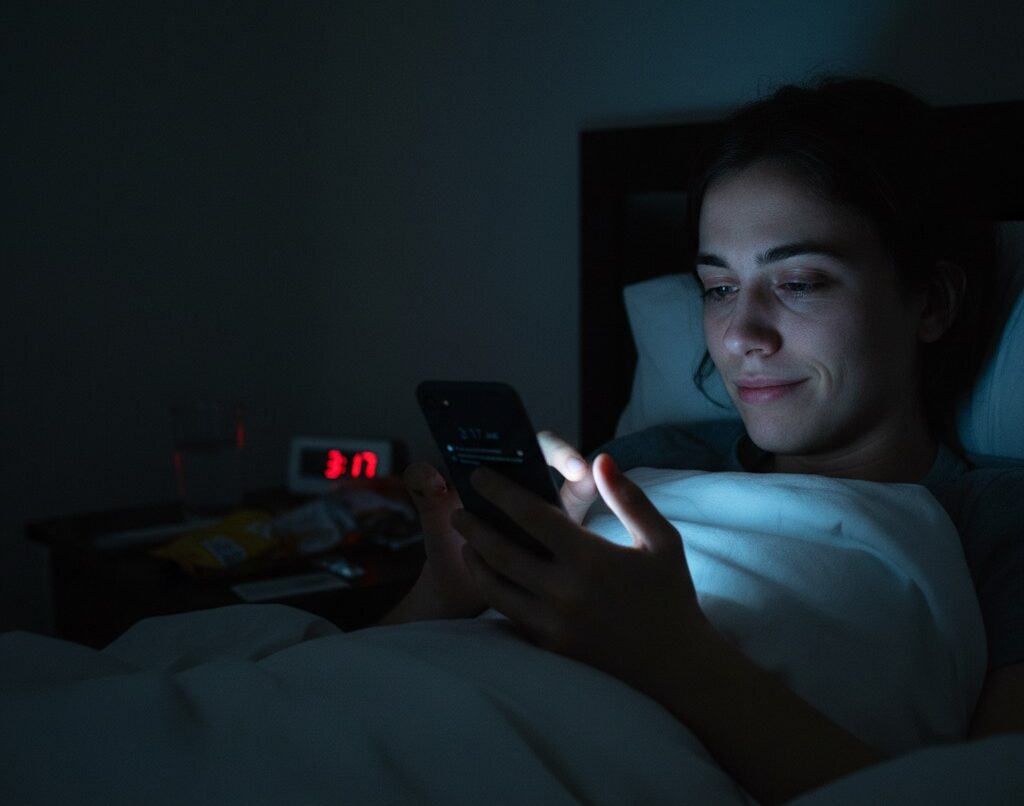
You’re tired. Your eyes are heavy. The day has been long. And yet — you scroll through one more video, open one more tab, watch one more episode. You know you’ll regret it in the morning, but somehow, going to bed feels harder than staying awake.
This is sleep procrastination — the strange, almost universal habit of delaying sleep even when we know it’s time. For some, it’s about not wanting the day to end. For others, it’s a quiet rebellion against structure, work, or responsibility. Whatever the cause, the result is often the same: fewer hours of sleep, more grogginess, and a growing sense of disconnection from your natural rhythm.
But the answer isn’t more discipline. It’s not about forcing yourself to bed with rigid rules. The path out of sleep procrastination starts with understanding what it gives you, and gently learning how to meet those same needs — without sacrificing rest.
What is sleep procrastination?
Sleep procrastination refers to the voluntary delay of going to bed, despite knowing that doing so will lead to negative consequences. The behavior isn’t caused by insomnia or external demands — it’s a choice, often made subconsciously, to stay up longer than necessary.
A more specific version of this is revenge bedtime procrastination, a term that gained popularity in recent years, especially during the pandemic. This concept refers to the act of “stealing back” personal time late at night after a day that felt overly scheduled, controlled, or emotionally draining.
It’s common among people who:
Feel they don’t have enough autonomy or rest during the day
Work long hours or manage high responsibilities
Use the evening as the only time to “unplug” or do something enjoyable
Experience high cognitive load during work hours and can’t mentally unwind earlier
As Psychology Today explains, it’s less about sleep — and more about freedom. We resist sleep because it signals the end of our time, not just our day.
Why we delay sleep: more than just willpower
It’s easy to frame sleep procrastination as a failure of discipline. But the truth is more nuanced. Research from the NIH suggests that the behavior is often driven by decision fatigue — the cumulative exhaustion of making choices throughout the day.
By the time evening arrives, your cognitive resources are low. You may know that sleep is the logical choice, but your brain is primed to seek pleasure, novelty, and passive rewards — like entertainment or scrolling. This isn’t laziness. It’s a neurological shift: as willpower drops, reward-seeking behavior increases.
In other cases, bedtime becomes associated with unpleasant experiences: overthinking, loneliness, restlessness, or anxiety. Staying up offers temporary avoidance. Your brain perceives activity — even mindless — as safer than stillness.
There’s also the question of sensory stimulation. Exposure to bright screens, quick-paced content, and information overload artificially increases arousal. Even if your body is tired, your nervous system is still in “on” mode. Without a proper wind-down, the signal to rest never arrives.
We explored this in our article on pre-sleep transitions, where creating a soft bridge between activity and rest helps reduce resistance to bedtime.
The cost of “just one more hour”
While occasional late nights are manageable, chronic bedtime delay can lead to social jet lag, sleep deprivation, and long-term emotional dysregulation.
Even a 30–60-minute delay each night adds up quickly. You may fall into a cycle of:
Feeling groggy in the morning
Needing caffeine to function
Crashing mid-afternoon
Getting a second wind late evening
And starting the cycle again
This rhythm mismatch doesn’t just affect energy — it impacts memory, immune function, emotional regulation, and even metabolism.
The Sleep Foundation notes in its overview of bedtime procrastination that many people underestimate the effects of delayed sleep because they fall asleep quickly once in bed. But sleep quality isn’t only about how you sleep — it’s also about when.
Your circadian rhythm — the body’s internal clock — depends on consistency. When bedtime is pushed later repeatedly, your body loses the cues that help it wind down naturally.
Why traditional advice doesn’t always work
If you’ve tried to “just go to bed earlier,” you’ve likely noticed that logic doesn’t help much. The problem with most sleep advice is that it treats procrastination like a time management issue. But sleep procrastination is a self-regulation issue, not a scheduling one.
Forcing yourself to bed while your brain still craves stimulation or freedom can feel like punishment. It creates internal resistance, which often backfires.
Instead, the more sustainable approach is to honor the underlying need that sleep procrastination is trying to meet. That might be:
Time to decompress
Space for personal agency
Creative or emotional processing
A moment of quiet without demands
The goal isn’t to eliminate these needs — it’s to shift when and how they’re met.
We’ll explore this idea more deeply in the second half, with practical, calming ways to rewire your evenings and gently return to rest.

Step one: identify what you’re staying up for
Before you try to “fix” sleep procrastination, pause and ask:
What am I trying to protect by staying up?
Is it quiet? Freedom? Time to decompress? A sense of ownership over your day?
Naming the need behind the habit is a powerful first step. It moves the issue from guilt (“Why can’t I just go to bed?”) to insight (“What am I truly craving?”).
For many people, this pattern stems from a deficit of agency. The day may have been filled with work, demands, or obligations. Bedtime feels like surrendering control again — especially if your sleep routine feels rigid or transactional (“sleep fast, wake early”).
So instead of forcing sleep, rebuild your night to include what you’re currently stealing time for — in a more intentional, contained way.
Replace guilt with gentle cues
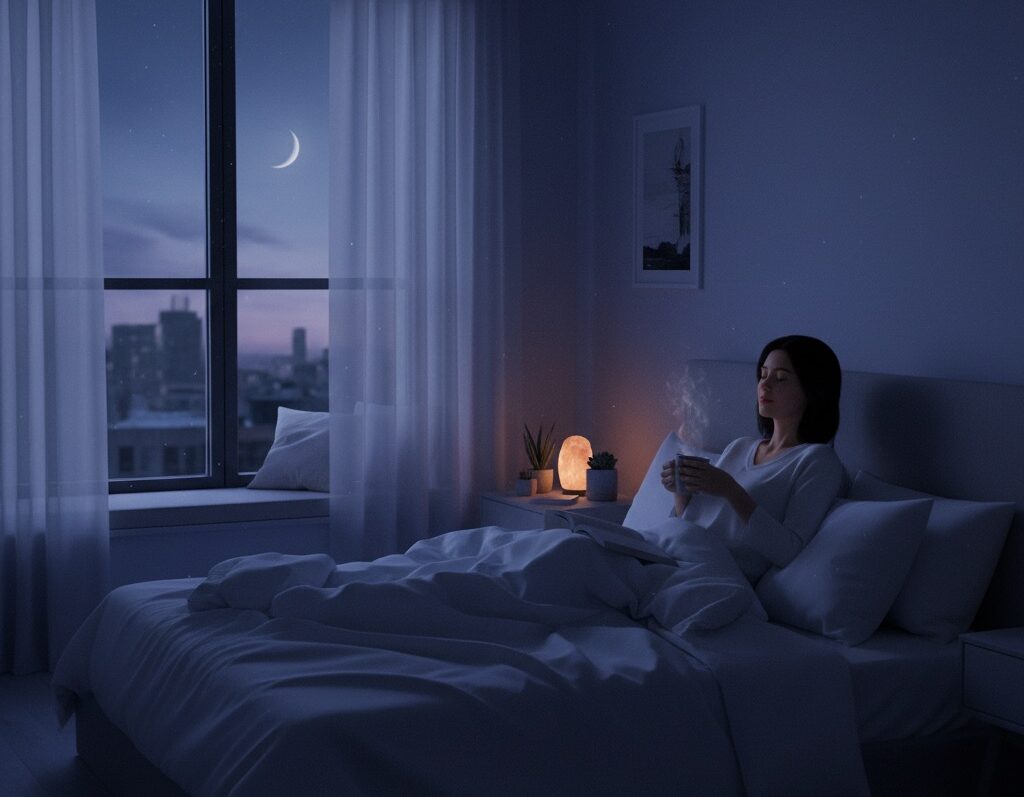
One of the most effective ways to shift sleep procrastination is to create an inviting closure to your day. Not a chore or another thing to get “right,” but a space that genuinely appeals to your nervous system.
Try layering your wind-down in three gentle cues:
1. One sensory anchor
Create a signal that your evening is softening. It could be:
A warm cup of herbal tea
Dimming the lights or using a Himalayan salt lamp
A calming scent (like lavender or vetiver)
Putting on soft, dedicated sleepwear
These cues act like a soft exhale for your environment — triggering the body to relax, even before you mentally commit to bed.
We explore this more in our article on the “one sensory cue” rule, which applies equally well to ending the day.
2. One reflection prompt
Instead of numbing out with your phone, spend two minutes connecting inward. Try questions like:
What do I want to leave behind from today?
What do I want to bring with me into tomorrow?
What’s one thing I handled well today?
These gentle prompts regulate mood and restore a sense of closure. You can explore more in our post on evening reflection prompts.
3. One non-digital activity
Even five minutes of analog activity can break the procrastination loop. Examples:
Reading a book
Stretching
Doing a short 5-minute wind-down ritual
Coloring or journaling
The key is to shift the nervous system out of scrolling mode and into slow mode — which allows sleep to arrive more naturally.
Create a “soft bedtime” — not a hard stop
Rigid bedtimes can backfire for sleep procrastinators. If “10:00 p.m. or else” feels like a deadline, your brain may rebel. Instead, create a soft bedtime window — a 30–45 minute range where you invite rest, not demand it.
For example:
Start dimming lights around 9:30
Begin wind-down rituals at 9:45
Be in bed between 10:00–10:30, without pressure to sleep immediately
This flexibility helps reduce the resistance that fuels procrastination. It gives you permission to rest — without a fixed finish line.
In time, your body will begin to cue its own bedtime more clearly. You’re building rhythm, not imposing one.
Remove the friction between “awake” and “asleep”
Sometimes, we delay sleep not because we dislike sleep — but because the transition into sleep feels abrupt, uncomfortable, or lonely.
Here are a few small changes that can soften that transition:
Make your bed inviting — fresh sheets, dim lighting, cool temperature
Avoid ending your day with a task or decision — wind down with ritual, not logistics
Leave space for slow entry into rest — allow yourself to lie in bed without the pressure to fall asleep fast
If you wake during the night and feel tempted to scroll or “reset,” try returning to body-based tools like breath and heartbeat synchronization or body scanning. They offer structure without stimulation.
What to do if the urge to stay up is strong
Some nights, no matter what you plan, the pull to stay awake is powerful. In those moments:
Name it, don’t fight it — “I’m resisting bedtime because I need ___.”
Offer a “last thing” ritual — e.g., “I’ll watch one short video, then do 3 stretches and go to bed.”
Be kind, not critical — Acknowledge that rest is harder some days. Reconnection is the goal, not perfection.
Sometimes, just knowing why you’re delaying sleep reduces the urgency to do so. Awareness is an intervention.
Final thoughts: restoring trust in rest
Sleep procrastination isn’t a flaw. It’s a signal — that something in your day or your nervous system is unresolved, unmet, or unbalanced.
By tuning into what you’re postponing sleep for, you can gently give yourself more of that — earlier, more mindfully, and with less cost to your rest.
This isn’t about perfect routines or strict self-discipline. It’s about learning how to release the day — not by avoiding it, but by closing it with care.
Your nights can hold comfort, reflection, and quiet agency.
And from there, sleep becomes an invitation — not a demand.