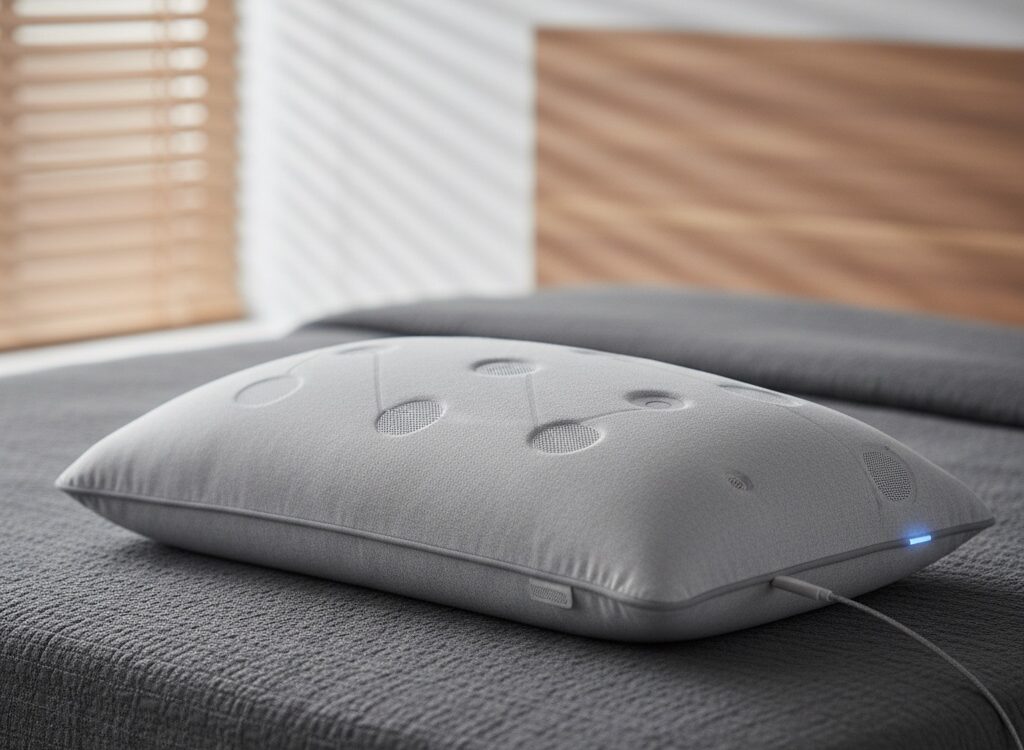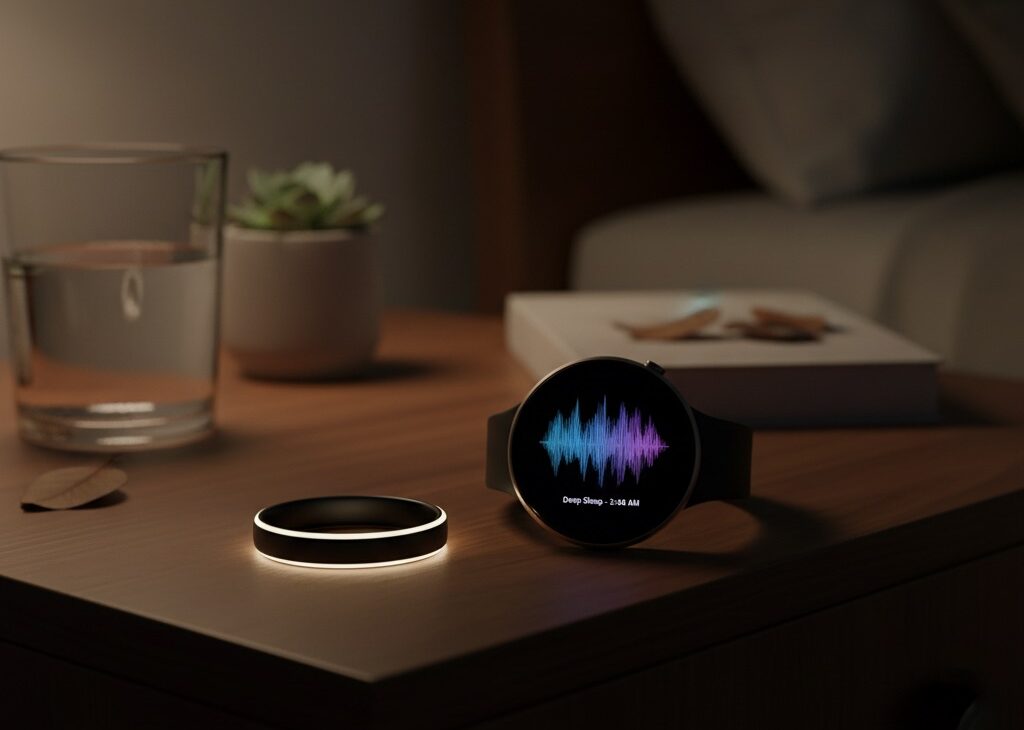
You wake up after what felt like a decent night’s sleep. No tossing. No endless rumination. You stretch, get out of bed — and then glance at your sleep tracker. “Poor sleep,” it says. “Restlessness detected. Below average recovery.” Suddenly, your body’s calm morning is replaced by confusion, even frustration. Did I actually sleep poorly and just didn’t notice? Should I cancel my workout? Why do I feel fine if the data says I’m not?
If this sounds familiar, you’re not alone. As wearables become more advanced — and more integrated into our daily routines — many people are noticing a growing gap between how they feel and what their sleep data reports. That gap isn’t imaginary. And it might be more harmful than helpful if misunderstood.
Let’s explore how sleep trackers work, where their blind spots lie, and how to develop a healthier, more nuanced relationship with your nighttime numbers.
What sleep trackers actually measure
Most consumer-grade sleep trackers — including smartwatches, rings, and phone-based apps — don’t actually “watch” you sleep. Instead, they infer sleep states based on a mix of movement (actigraphy), heart rate variability (HRV), respiratory rate, and skin temperature.
These devices then feed that data into proprietary algorithms, which estimate:
When you fall asleep and wake up
How long you spend in different sleep stages (light, deep, REM)
How often you move during the night
Your resting heart rate and recovery patterns
It’s an impressive use of biometric tech — but it’s also an estimation. Even the best consumer devices don’t use EEG (brainwave monitoring), which is the gold standard in clinical sleep studies. Without EEG, they can’t truly measure whether you’re in REM or deep sleep — they can only guess based on patterns.
As a result, sleep trackers tend to overestimate light sleep, underestimate REM, and sometimes misinterpret still wakefulness as sleep. This means the data you receive may look detailed — but it doesn’t always reflect your subjective experience or your actual sleep architecture.
Accuracy vs. precision: why detail isn’t always truth
There’s a difference between being precise and being accurate. Sleep trackers are often highly precise — they give you consistent data night after night, down to the minute. But are they accurate?
In many cases, not entirely.
One study published in the Journal of Clinical Sleep Medicine found that popular consumer devices had variable accuracy in detecting sleep stages, and sometimes showed false awakenings — periods when the user was actually asleep but marked as restless or awake. (source: NIH)
This matters because we tend to trust numbers. When your device shows “74% sleep efficiency” or “3 awakenings,” your brain treats it as objective truth. But these numbers are built on a model — not a brain scan.
The problem isn’t the tech. It’s that many users don’t know how limited the tech actually is.
The rise of orthosomnia
There’s even a term now for the anxiety created by sleep trackers: orthosomnia. It refers to the obsessive pursuit of “perfect sleep” as dictated by data — even when it disrupts the natural process of sleep itself.
People with orthosomnia tend to:
Fixate on improving their sleep scores
Feel stress or guilt after “bad” readings
Change their schedules excessively in response to data
Sleep worse due to anxiety over metrics
In our article Sleep anxiety and orthosomnia: when sleep tracking backfires, we explored how the act of monitoring can sometimes interfere with relaxation. When sleep becomes something to perform or optimize, it stops being something the body can simply fall into.
As Dr. Sabra Abbott of Northwestern University notes, “Patients are becoming overly focused on achieving perfect sleep data, and it’s paradoxically making their sleep worse.”
When to trust your tracker (and when to ignore it)
Despite their limitations, sleep trackers can still be useful tools — especially for noticing trends over time. The key is knowing when to listen and when to tune out.
Trust the tracker when:
You’re noticing consistent changes over multiple nights (e.g., declining HRV, increased awakenings)
You want to correlate behavior with outcome (e.g., caffeine intake → shorter REM)
You’re recovering from illness or managing stress, and need objective rest indicators
You use it for habit feedback, not sleep performance
Ignore the tracker when:
You feel rested but get a low score
The data is based on a single night
You slept in a new environment or wore the device differently
The score creates anxiety that outweighs its insight
It helps to think of your tracker as a reflective companion, not an authority figure. The real goal isn’t hitting a number — it’s feeling well-rested, emotionally balanced, and cognitively sharp.
As we explored in AI-driven sleep coaching apps — can algorithms improve rest quality?, technology works best when it supports internal awareness, not replaces it.
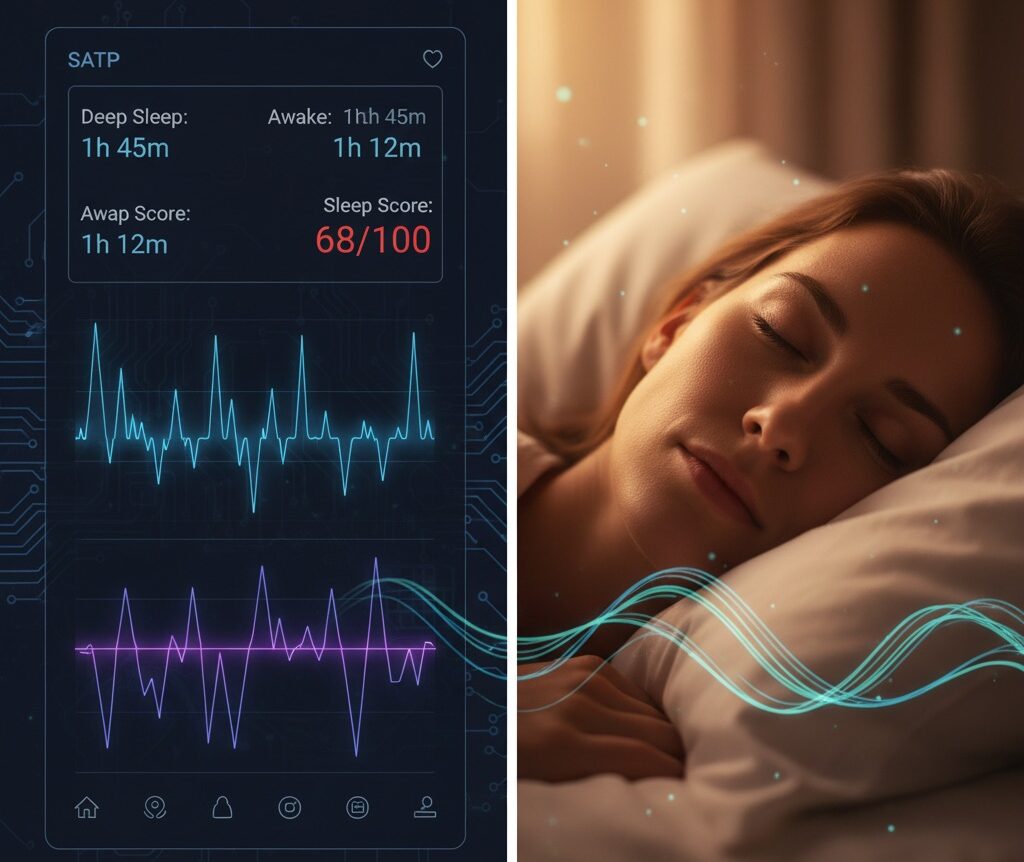
The power of perception: why feeling rested matters more than numbers
Sleep is not only a physiological state — it’s a subjective experience. How you feel upon waking often tells you more about your sleep quality than any external device. This isn’t just feel-good advice; research supports it.
In a study published in Behavioral Sleep Medicine, researchers found that people who believed they had slept well — even if they didn’t — performed better on cognitive tasks the next day than those who believed they had slept poorly. This effect, called the placebo sleep effect, suggests that your belief about your sleep has real physiological consequences.
This creates an important implication: if your tracker tells you that your sleep was terrible, but you wake up refreshed and clear-headed, trust your experience.
This doesn’t mean data is meaningless. But it highlights that interpretation matters as much as the input. Numbers without context can easily mislead — and in the case of sleep, even make things worse.
Cognitive offloading vs. cognitive overloading
Sleep trackers are designed to provide insight. But they can backfire when they become tools for rumination instead of reflection.
Rather than supporting healthy routines, nightly data checks can trigger:
Overthinking (“Why was REM so low again?”)
Self-monitoring stress (“Did I move too much during sleep?”)
Behavioral rigidity (“I can’t sleep past 10 a.m. or my score drops”)
Sleep procrastination caused by fear of “ruining” sleep metrics
If this sounds familiar, you’re not alone. Many users report that their sleep tracking started as a curiosity, then quietly evolved into a source of nighttime anxiety.
To counter this, adopt a cognitive offloading approach — don’t rely on memory or feeling alone, but don’t obsess over real-time numbers either. Use trackers as weekly reflection tools, not nightly verdicts.
How to use your tracker without letting it control you
Here are five mindful ways to maintain a healthy relationship with your sleep data:
1. Zoom out — think in weeks, not nights
Sleep is variable. A single night doesn’t define your health. Look at trends:
Are your sleep/wake times mostly consistent?
Is total sleep duration stable across the week?
Are disruptions related to stress, meals, or screens?
Weekly patterns are more meaningful than nightly snapshots.
2. Combine objective and subjective data
Use a simple morning check-in:
How rested do I feel (1–10)?
Was I physically calm overnight?
Was my mind active or quiet?
If your perception often contradicts your tracker, log both and look for patterns. This builds data literacy — and self-trust.
3. Ditch the score-based self-worth
You’re not your sleep efficiency rating. You’re not your recovery score.
Avoid phrases like “I failed at sleeping” or “My tracker says I’m broken.” These reinforce performance anxiety, which actively hinders sleep. Sleep is a biological rhythm, not a contest.
4. Set data-free hours
Try a weekly no-tracking night or a “no app before breakfast” rule. This helps restore internal feedback loops — like tuning into your breath, body heaviness, or mental clarity upon waking.
These intuitive cues are surprisingly accurate. In Sleep inertia decoded, we showed how grogginess doesn’t always mean poor sleep — sometimes it just means waking from deep stages. Understanding your natural rhythm helps make sense of this.
5. Let your body lead
Use light cues, hunger, energy levels, and mood as parallel signals to your tracker. For example:
If your tracker says “restless,” but you feel calm — trust calm.
If your data says “perfect,” but you’re exhausted — investigate lifestyle factors: caffeine, emotions, air quality.
Technology is a guide, not gospel.
When to seek professional insight
If your tracker is repeatedly flagging poor sleep (e.g., frequent awakenings, low total sleep time, abnormal HRV), it might be time to:
Track alongside a sleep diary
Discuss results with a sleep specialist
Consider a polysomnography (PSG) test if symptoms persist
Some wearables offer raw data exports that sleep professionals can review for deeper insight. But remember: most commercial devices are not diagnostic tools. If you’re dealing with insomnia, sleep apnea, or persistent fatigue, use your device as a log — not a substitute for care.
Final thoughts: rest is not a performance
Sleep is deeply personal. No two people — or nights — are the same. Wearables offer incredible insight, but they also reflect a deeper cultural habit: treating rest as something to track, measure, and optimize.
There’s nothing wrong with that — as long as self-awareness grows alongside the data. The best approach is not abandoning technology, but humanizing your interaction with it. Let your tracker be a mirror, not a magnifying glass.
When used wisely, sleep data can teach you how your body responds to stress, movement, meals, and evening routines. But the ultimate measure of a good night’s sleep isn’t in your REM bar — it’s in how calmly and clearly you move through your day.
Summary: what to remember
| Concern | Response |
|---|---|
| Sleep score was low but I feel fine | Trust your body first — check for trends, not one-offs |
| I wake up anxious from bad readings | Set boundaries around when and how you check data |
| Tracker always says I sleep lightly | Understand limitations of actigraphy-based staging |
| I’m afraid to sleep without tracking | Take a break — explore intuitive rest once a week |
| Data motivates healthy habits | Great — focus on behaviors, not perfection |