You can’t see them. You can’t smell most of them. Yet they quietly linger in your home, especially in your bedroom — the place meant to restore your body and mind. Volatile Organic Compounds, or VOCs, are invisible gases released from many everyday materials, from furniture to wall paint. These compounds can build up indoors, turning your sleep sanctuary into a subtle source of pollution.
As our homes become more energy efficient and tightly sealed, air circulation decreases — meaning that VOCs have nowhere to escape. The result? Irritation, restlessness, and sometimes even disrupted sleep cycles. Understanding what VOCs are and how they affect your body is the first step toward reclaiming your air — and your rest.
Understanding VOCs in your bedroom
VOCs are a broad group of carbon-based chemicals that easily evaporate at room temperature. You’ll find them almost everywhere: in new furniture, freshly painted walls, cleaning sprays, scented candles, and even some bedding materials. They’re what give that “new product” smell — a scent that feels clean but is often far from it.
In bedrooms, VOC levels can actually be higher than in other rooms. Because the space is smaller and less ventilated, these compounds can accumulate overnight as windows stay closed and air recirculates. Materials like pressed wood, vinyl flooring, and synthetic foams are major culprits. Over time, these substances continuously release gases in a process called off-gassing.
And because you spend roughly a third of your life in bed, the exposure is long and consistent. Your bedroom air might feel fresh, but it could quietly influence how deeply you sleep.
How VOCs impact sleep and health
At first glance, VOC exposure might seem harmless — maybe a faint smell of new paint or furniture polish. But scientific research increasingly links chronic exposure to multiple health issues, including respiratory irritation, headaches, hormonal imbalance, and even cognitive fatigue.
When it comes to sleep, the effects can be surprisingly direct. VOCs irritate your airways, making breathing shallower or irregular during rest. They can also activate low-grade inflammation in the body, which in turn affects melatonin regulation — the hormone responsible for managing your sleep-wake cycle.
A study by the Harvard T.H. Chan School of Public Health found that people sleeping in high-VOC environments experienced more nighttime awakenings and lower sleep efficiency compared to those in cleaner spaces. Another study from the Sleep Foundation notes that poor indoor air quality can contribute to insomnia-like symptoms and next-day fatigue.
Symptoms often include:
waking up with a dry throat or headache
difficulty falling into deep, continuous sleep
a “stale” feeling in the morning, even after 8 hours in bed
These might sound familiar — and they’re often misattributed to stress or poor routines when the real cause lies in your environment.
Identifying the hidden sources in your sleep space
So where do VOCs come from? The answer is: almost everywhere.
1. Furniture and mattresses — Most modern furniture is made with synthetic glues, resins, or particleboard that release formaldehyde and other VOCs. Foam mattresses can off-gas for months after purchase.
2. Paints and finishes — Even “eco” or “odorless” paints can contain trace VOCs that slowly leak into the air.
3. Candles and air fresheners — While they create a relaxing ambiance, many scented products release VOCs such as benzene or toluene, especially when burned.
4. Cleaning products — Disinfectants, sprays, and even laundry detergents can emit compounds that persist long after use.
5. Flooring and textiles — Vinyl floors, carpets, and treated fabrics may continue off-gassing for years.
One of the most common misconceptions is that “green” or “natural” automatically means VOC-free. Unfortunately, labels like organic or non-toxic aren’t always regulated. True low-VOC or no-VOC certifications (like GREENGUARD Gold or OEKO-TEX Standard 100) are more reliable indicators.
By identifying the potential sources in your own bedroom, you can start making targeted, sustainable improvements — step by step, without the overwhelm.
How to reduce VOCs in your bedroom
The good news is that you don’t have to overhaul your entire home to improve your air quality. Small, steady adjustments can make a significant difference — and many of them are simple, affordable, and practical.
1. Let your bedroom breathe
Ventilation is the most effective first step. Even opening a window for 15–20 minutes twice a day helps circulate fresh air and reduce VOC concentration. If you live in a city with pollution concerns, consider doing this early in the morning or late at night, when outdoor air quality tends to be cleaner.
You can also use fans to improve cross-ventilation or install trickle vents on windows to maintain airflow while keeping the room insulated. The goal is balance: consistent fresh air without losing warmth or comfort.
2. Choose low-VOC materials
Whenever you buy new furniture, mattresses, or paint, look for certifications such as:
GREENGUARD Gold — ensures low chemical emissions.
OEKO-TEX Standard 100 — guarantees textiles are free from harmful substances.
EPA Safer Choice — for cleaning products with safer ingredients.
If replacing everything at once isn’t realistic, focus on the big emitters first — mattress, wall paint, and flooring. New paint can release VOCs for several months, so try to air out freshly painted rooms for at least a week before sleeping in them.
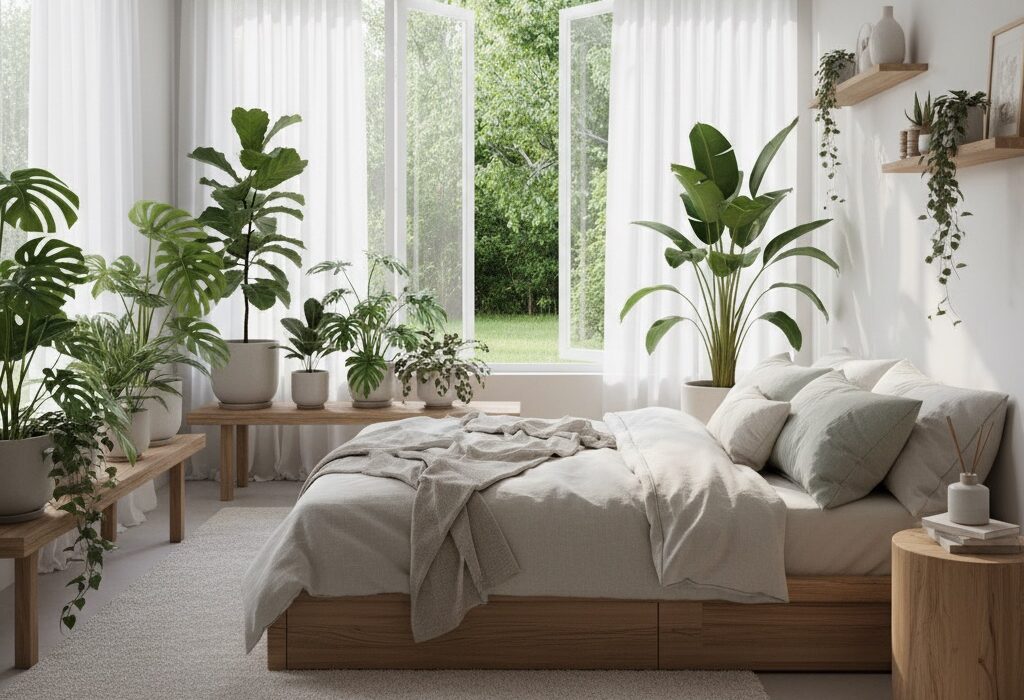
3. Bring in purifying plants (carefully)
Plants like peace lily, snake plant, and bamboo palm are often mentioned as natural air purifiers. While they don’t completely remove VOCs, they can help create a fresher, more oxygen-rich environment — and psychologically, greenery helps you feel calmer and more connected to nature.
Just remember: plants need care and fresh soil. Overwatering can lead to mold growth, which might worsen indoor air quality. So moderation and maintenance matter.
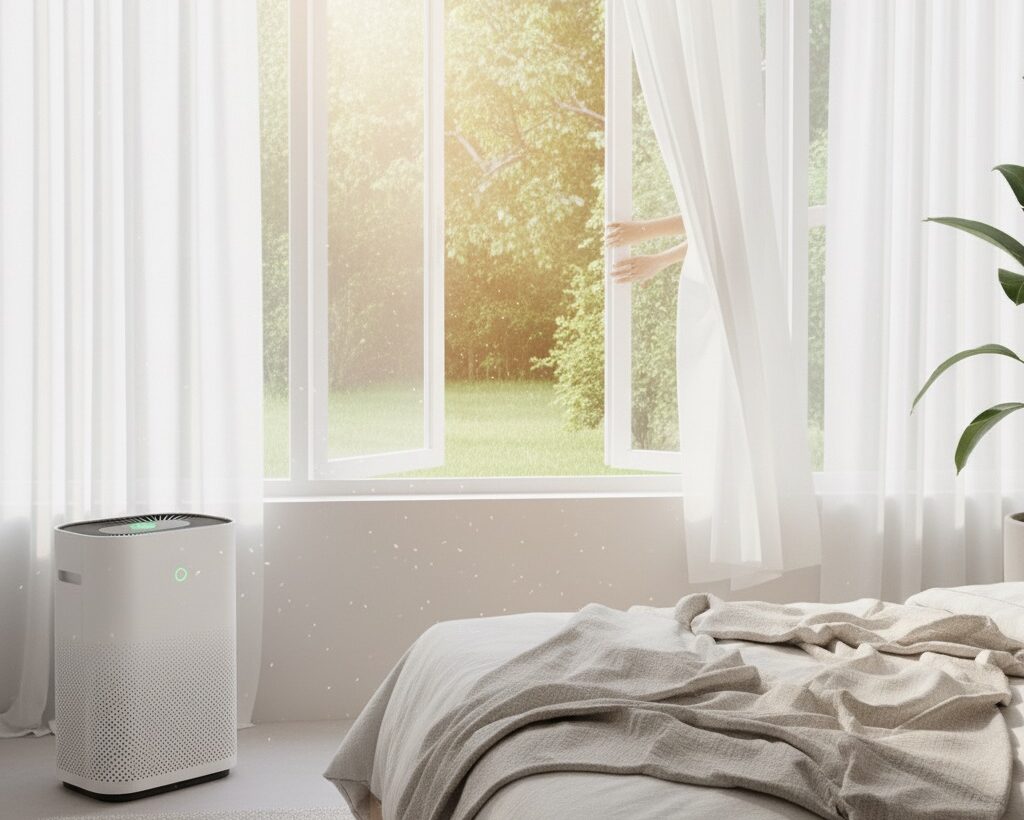
4. Use an air purifier with activated carbon
If your bedroom has poor ventilation or new furniture, a good air purifier can make a visible difference. Choose a model that includes activated carbon (for gas absorption) and HEPA filtration (for dust and allergens). Together, they trap both particles and volatile gases.
Run the purifier for a few hours before bedtime and set it to low noise mode overnight. Many users report not just cleaner air, but easier breathing and deeper rest within a few weeks.
5. Be mindful of scents and candles
Scented products can be comforting but also deceiving. Synthetic fragrances often release phthalates and formaldehyde. If you enjoy scent during your bedtime routine, try essential oils in a cold-air diffuser instead of burning candles. Oils like lavender, chamomile, or cedarwood can relax the nervous system without adding chemicals to the air.
Also, avoid aerosol sprays. Instead, use fabric mists or linen sprays made from water-based, naturally derived ingredients.
Creating a low-VOC sleep sanctuary
A clean air environment is about more than chemistry — it’s about how you feel when you enter your bedroom. The sensory calmness of soft fabrics, gentle light, and breathable air signals your brain that it’s time to rest.
When you reduce VOC exposure, you’re not just removing toxins; you’re also creating a mindful space that supports your body’s rhythm. You’ll likely notice subtle but meaningful changes: fewer headaches, clearer breathing, easier sleep onset. Over time, those small differences add up to genuine restfulness.
Here’s how to put it all together:
Keep windows open for a few minutes every morning.
Add an air purifier if the room feels stale.
Use natural linen and cotton bedding.
Avoid vinyl, synthetic foam, and “new car” smells.
Refresh plants and clean filters regularly.
Even gradual progress counts. The goal isn’t perfection — it’s consistency.
When to seek professional testing
If you’ve tried improving ventilation and still experience morning headaches or irritation, it might be worth checking your indoor air quality professionally.
Certified specialists can test for formaldehyde, benzene, toluene, and xylene, the most common VOCs found in homes. You can also buy at-home VOC testing kits, though they’re less precise.
If the results show high levels, focus on source removal (such as replacing furniture or repainting with low-VOC paint) before adding more filtration devices.
Why it matters
Sleep isn’t just a nightly routine — it’s a form of recovery and repair. And air is the invisible environment that either supports or undermines that process.
When you think about “better sleep,” it’s easy to focus on routines, lighting, or technology. But air quality is the foundation — the one factor that’s constantly surrounding you, influencing how your body restores itself.
Improving your indoor air is an act of self-care that extends beyond the bedroom. It’s an investment in your lungs, your brain, and your emotional clarity. With cleaner air, every breath you take while sleeping becomes a step toward deeper restoration.
Your bedroom should feel like a sanctuary — not a chemistry lab. The quiet hum of a purifier, the open window, the clean fabrics, and the subtle scent of lavender can transform your space from invisible stressor to healing environment.
You don’t need to make radical changes overnight. Start small, stay consistent, and let your body tell you the difference. Within weeks, you’ll begin to sense it: lighter air, calmer nights, and mornings that feel like genuine renewal.
Because the air you breathe while you sleep is part of the rest you’re seeking.
Read also: