
Modern evenings often unfold in a blur of screens — a quick message here, a scroll through updates there, a few last emails, maybe a streaming episode playing in the background. None of these actions feel dramatic on their own, but together they create a kind of cognitive brightness that lingers long after devices are switched off. The mind stays stimulated, thoughts remain fast, and sleep feels further away than it should.
Part of this is biological. Your brain interprets digital activity the way it interprets small, purposeful tasks: as cues that it needs to stay alert. And because screens deliver high-contrast light, rapid information flow, and bursts of emotional engagement, the brain doesn’t receive the subtle signals it relies on to begin the descent into sleep.
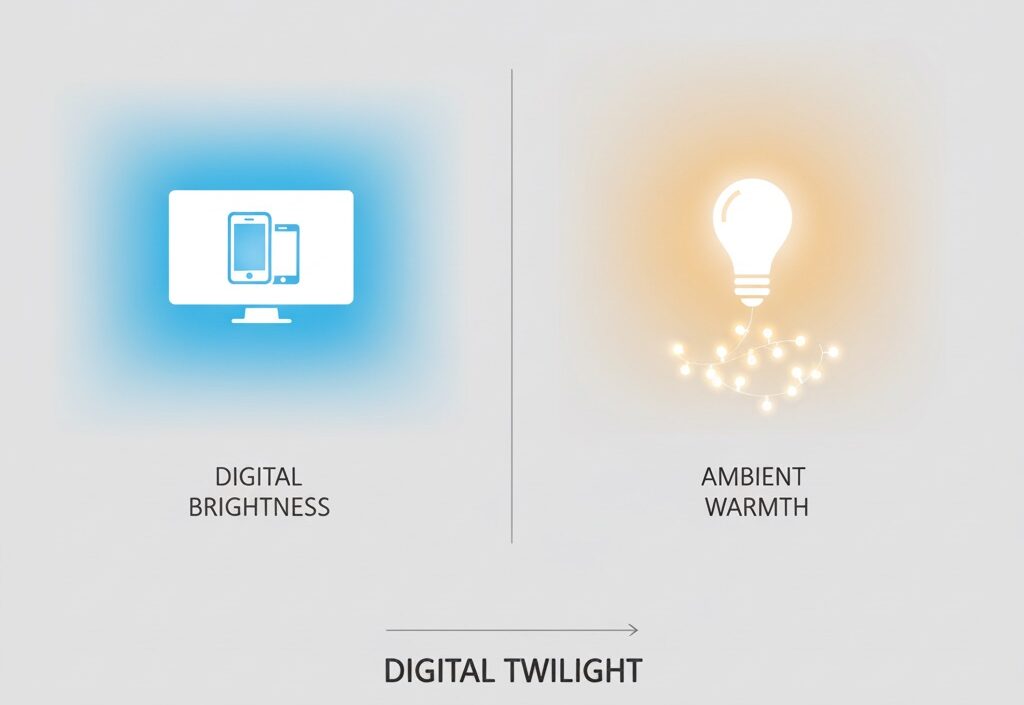
That’s where the idea of a digital twilight comes in — a soft, intentional shift between the bright stimulation of screens and the sensory quiet your mind needs to rest. It’s not a rigid rule or a digital detox mandate; it’s a transitional space, something like sunset for your nervous system.
Just as the sky dims gradually, your evening can, too.
What a “digital twilight” really is
A digital twilight isn’t simply “putting screens away.” It’s a transition zone — a window of time when you deliberately move from high stimulation to softer sensory inputs. Instead of shutting off a device and immediately expecting your brain to relax, you invite a gradual slowdown. This is how the body naturally shifts from day to night: slowly, rhythmically, in layers.
In practice, digital twilight usually lasts between 20 and 60 minutes, depending on your evening. For some people, it’s the period after dinner when lights dim and tasks slow. For others, it’s the gentle pause between closing the laptop and starting a wind-down ritual. What matters is not the length but the intention: you’re signaling to your brain that the high-speed cognitive processing of the day is done.
This concept bridges psychology and circadian biology. Screens aren’t inherently “bad”; they’re simply bright cues in a system built to use darkness as a signal for rest. A digital twilight is a way to support that system — not by eliminating technology, but by cushioning your transition away from it.
How evening screen exposure disrupts internal rhythms
To understand why digital twilight works, it helps to see what screens do to the brain in the hours before bed.
The most obvious factor is light.
High-intensity blue-spectrum light from screens tells the brain that it’s still daytime. It suppresses melatonin — the hormone that contributes to sleep onset — and keeps the circadian rhythm in a state of mild delay. According to the Sleep Foundation’s overview of blue light and sleep, even moderate screen use in the hour before bed can reduce melatonin levels and increase sleep latency.
But light is only half the story. The content of digital activity matters just as much.
Messaging apps trigger micro-bursts of emotional engagement.
Social media provides novelty and comparison.
News feeds evoke anticipation, worry, or curiosity.
Streaming platforms tell compelling, emotionally stimulating stories.
Work emails activate planning, decision-making, and self-monitoring.
None of these states resemble rest. Mentally, the brain remains in “day mode,” processing input, solving problems, monitoring information — all of which increase cognitive arousal.
Harvard Health notes that this blend of bright light and high stimulation creates a neurological mismatch: the body tries to shift toward rest while the mind receives signals to stay alert.
The result is a familiar pattern: lying in bed tired but mentally active, unable to disconnect.
A digital twilight helps solve this mismatch by giving your brain a gentler bridge between the external world and the sensory quiet it needs to enter sleep.
Creating your digital twilight: the transition from stimulation to softness
A well-designed digital twilight doesn’t force you to shut everything down abruptly. Instead, it layers small, calming cues so the brain can glide from brightness to calm. Think of it as shifting the entire sensory landscape of your evening: light becomes warmer, movement slows, tasks soften, and your mind reorients toward comfort instead of stimulation.
One of the simplest ways to begin is by dimming environmental light. As the evening moves toward its quieter phase, lowering lamp brightness or switching to warm-toned bulbs signals the brain to reduce cognitive activity. Warm light supports the natural circadian drop in alertness and makes the transition away from screens feel less abrupt.
Another helpful layer is changing your posture or environment. Moving away from the desk, closing the laptop deliberately, or placing your phone across the room isn’t about discipline — it’s about giving your nervous system physical cues of “completion.” Even this subtle shift begins to separate the tasks of the day from the sensory safety of the night.
This approach is similar in philosophy to the gentle wind-down techniques discussed in:
How to do a digital detox evening for better sleep and mental clarity
However, digital twilight is less strict and more adaptable. It doesn’t require eliminating screens entirely; it simply introduces a buffer in which stimulation gradually dims.
Light changes, sensory cues, and environmental shifts
As your digital twilight unfolds, the sensory environment around you becomes a kind of silent collaborator. The brain relies heavily on these subtle cues to regulate alertness.
Soft lighting, gentle textures, and quiet soundscapes help shift the nervous system into lower arousal states — a natural complement to your diminishing screen exposure.
Light is the most powerful signal. Warm-toned lamps, amber nightlights, or candles create a physiological softness that contrasts with the crisp illumination of devices. This visual shift helps silence the brain’s alert pathways and encourages the release of melatonin.
Sound is another subtle but meaningful layer. Lowering ambient noise or switching from stimulating audio to something slower and calmer can help regulate the pace of the mind. Many people find that soft instrumental music, ambient soundscapes, or even light household hums create a sense of gentle containment.
Touch and temperature also play their part. Wrapping yourself in a soft blanket, changing into comfortable clothing, or adjusting the room’s temperature slightly cooler primes the body for rest. These cues speak directly to the nervous system, allowing the body to soften without effort.
If environmental details interest you, you may also appreciate:
Home sleep hacks: how to optimize your bedroom environment
Together, these shifts create an evening landscape that is warm, dim, and psychologically safe — a contrast to the stimulating clarity of screens.
What to do instead of scrolling: gentle activities that soothe the brain
One of the challenges of creating digital twilight is figuring out what to replace the habitual scroll with. The goal isn’t to “stay productive” after screens, but to engage in activities that feel soft, grounding, and sensory. These are the kinds of practices the nervous system responds to readily after a day of cognitive effort.
Reading a physical book or listening to a slow-paced audiobook offers narrative engagement without overwhelming brightness. Light stretching, especially the kind that follows breath rather than performance goals, helps your body decompress from hours of posture patterns. If you prefer something quieter, journaling briefly or preparing your space for the next day can create a sense of closure without overthinking.
Even something as simple as brewing herbal tea or straightening your bedside table invites a slower rhythm. What matters is not what you do, but how gently you do it. The shift away from speed — the deceleration — is what makes the difference.
If you prefer calming the mind through breath, this technique may be supportive:
Deep breathing for better sleep: a simple nighttime technique
These kinds of activities don’t demand attention; they settle it.
How digital twilight reduces sleep anxiety and nighttime overthinking
For many people, the hardest part of going to bed isn’t physical rest — it’s mental quiet. Thoughts accelerate once the external world fades. Worries, reminders, and unresolved conversations tend to surface exactly when the mind is supposed to soften. This is one of the reasons sleep anxiety has become so common; the moment we disconnect from tasks, the brain begins processing everything it didn’t have time to handle during the day.
A digital twilight offers a buffer that prevents this cognitive surge. By creating a structured transition between stimulation and rest, it gives your mind an opportunity to shift gears gradually rather than abruptly. The brain is sensitive to pace; when stimulation suddenly stops, mental activity often spikes. But when stimulation gradually decreases, the nervous system remains more stable.
A softer descent also helps with emotional regulation. Without the fast-paced, high-contrast world of screens, your brain can finally slow its tempo. This allows emotional experiences from the day to move through the system more naturally, without the intensity that often appears when we go straight from screen-brightness to total darkness.
Digital twilight also reduces a type of nighttime vigilance — that subtle feeling of waiting for something: a notification, a message, a task cue. When screens remain nearby until the very last moment, the mind stays in a low-grade state of expectation. But when you create a clear boundary, the nervous system stops scanning for updates.
This gentle separation makes the bedtime experience feel safer, quieter, and slower, which is exactly the environment in which sleep can unfold.
Making digital twilight sustainable (without perfectionism)
One of the reasons people struggle with nighttime screen habits is the belief that they must go “all or nothing.” Completely eliminating screens for two hours before bed sounds ideal in theory, but it often clashes with real life — evening responsibilities, late communication, or simple moments of wanting connection or entertainment.
A digital twilight works because it’s flexible. It doesn’t require eliminating technology; it simply replaces abrupt transitions with softer ones. And that makes the ritual sustainable.
A realistic approach begins with choosing a minimum transition window — even ten or fifteen minutes can make a difference. During this time, you simply shift from screen-based stimuli to sensory cues that are quieter and more grounded. For some people, that means dimming lights and finishing a last digital task with intention; for others, it means moving to another room or placing their phone face-down on a side table.
This flexibility matters because consistency is more valuable than intensity. A short, steady digital twilight practiced nightly has more impact than an occasional long detox. When your brain receives the same cues repeatedly, it learns them. It anticipates the shift. And over time, the transition into sleep becomes easier.
It’s also helpful to approach this practice with curiosity rather than pressure. Perfectionism at night can easily become a form of sleep performance anxiety. What you want instead is a gentle ritual: an invitation, not a demand.
Every evening becomes a chance to notice what helps your mind settle — and what doesn’t. With that awareness, digital twilight evolves from a “habit” into something that feels protective and even comforting.
The brain’s natural preference for gradual transitions
There is a reason twilight has been a powerful symbol in human culture for centuries: it reflects the way natural systems shift between states. The brain follows similar rhythms. It resists sudden changes but relaxes during gradual ones.
Digital twilight taps into this innate preference. Instead of forcing your mind into rest, you guide it downward through a series of sensory cues:
light shifts from bright to warm
sound shifts from sharp to soft
posture shifts from active to restful
thoughts shift from rapid to drifting
What you’re creating is a controlled descent. In neurophysiological terms, this helps stabilize the balance between the sympathetic and parasympathetic systems. The stimulatory pathways ease down gradually, allowing the calming pathways to rise without resistance.
This makes sleep onset smoother and reduces the likelihood of lying awake while the mind continues rehearsing the day.
Why digital twilight matters more in a hyperconnected world
Digital twilight is not a concept that would have been necessary twenty years ago. Evenings used to unfold with more natural transitions — lights dimmed early, tasks slowed, and sensory stimulation dropped gradually as night approached.
Modern life has disrupted this pattern.
The contrast between bright screens and dark bedrooms is sharper than ever. The cognitive flow from rapid digital information to stillness is more abrupt. And notifications create a constant sense of partial attention.
Because of this, many people no longer experience a true wind-down period. Instead, they move from stimulation to sleep abruptly — a transition the brain was never designed to handle.
A digital twilight restores something we’ve lost: the slow fade.
It gives the brain a dusk of its own.
And this is important not only for sleep quality, but also for emotional well-being. Even a short transitional period before bed helps the mind digest the day’s experiences without the pressure of immediate sleep. It makes evenings feel gentler, more breathable, and more human.
A simple, realistic digital twilight for everyday life
A digital twilight doesn’t require candles, elaborate routines, or a strict schedule. It’s the quality of the transition that matters. Here’s a gentle, adaptable pattern that fits most evenings:
Begin by lowering the brightness around you — lamps, overhead lights, screens if they’re still on. This visual softening tells your brain that stimulation is decreasing. Then, deliberately mark the end of your last digital task. It could be closing your laptop with intention, plugging your phone into its charger across the room, or simply turning it face-down so the screen doesn’t pull your attention.
After that, shift into something sensory. Not something productive or demanding — something that helps the mind follow the body into calm. This might be changing into comfortable clothing, stretching slightly, rinsing your face with warm water, or tidying your bedside area for two quiet minutes.
These actions may appear simple, but they speak directly to the nervous system. They are physical signals of closure, continuity, and safety. And when performed slowly, they build a rhythm of deceleration — the opposite of digital acceleration.
From here, you can enter whatever wind-down ritual feels supportive: reading a chapter of a book, drinking herbal tea, or following a slow breathing pattern. One widely accessible method is described in:
Deep breathing for better sleep: a simple nighttime technique
A few quiet breaths deepen the sensory descent that digital twilight initiates.
These moments may take only a few minutes, but together they create a surprisingly powerful buffer between day and night.
The deeper meaning of digital twilight
Although digital twilight is rooted in sleep hygiene and neurophysiology, it also speaks to something more personal: the desire for gentler evenings. In a world where attention is constantly pulled in multiple directions, offering yourself a small, protected window of slowness can feel profoundly restorative.
This ritual honors the mind’s need for boundaries and the body’s need for calm. It reminds you that rest is not a switch but a gradual shift — a process of softening the senses and letting the day dissolve rather than end abruptly.
The beauty of digital twilight is that it doesn’t depend on discipline. It grows naturally when evenings become intentional rather than reactive. With time, these small transitions can reshape not just how you sleep, but how you feel about the hours before sleep — spaces that deserve softness, presence, and quiet.
Conclusion: creating your own evening sunset
A digital twilight is more than a habit; it’s a way of reclaiming the pace of your own mind. By dimming stimulation instead of cutting it off sharply, you allow the brain to follow a natural path toward rest. Screens fade, thoughts slow, and the nervous system begins its descent long before you turn off the light.
In a world that rarely gives you permission to pause, digital twilight becomes a boundary that protects your final moments of the day. It softens the atmosphere around you, anchors your attention in the body, and invites sleep to arrive gently — not as an effort, but as a natural continuation of quiet.