Your bedroom should be a place of calm, safety, and restoration — but for many people, it’s filled with small things that quietly disrupt sleep. From harsh lighting to stuffy air, even the tiniest factors can impact how easily you fall (and stay) asleep.
The good news? You don’t need a total bedroom makeover. Just a few simple home sleep hacks can help you create a peaceful, sleep-supportive space — and start sleeping deeper, longer, and better.
Why your bedroom environment matters more than you think
We often focus on bedtime routines, but your physical sleep environment can quietly sabotage or support even the best habits.
Light, sound, air, bedding, and even clutter all send signals to your brain. The more your bedroom space says “safe and restful,” the easier it is to fall asleep. Also mentioned in Harvard Health.
Light: your body’s natural sleep signal
Light tips:
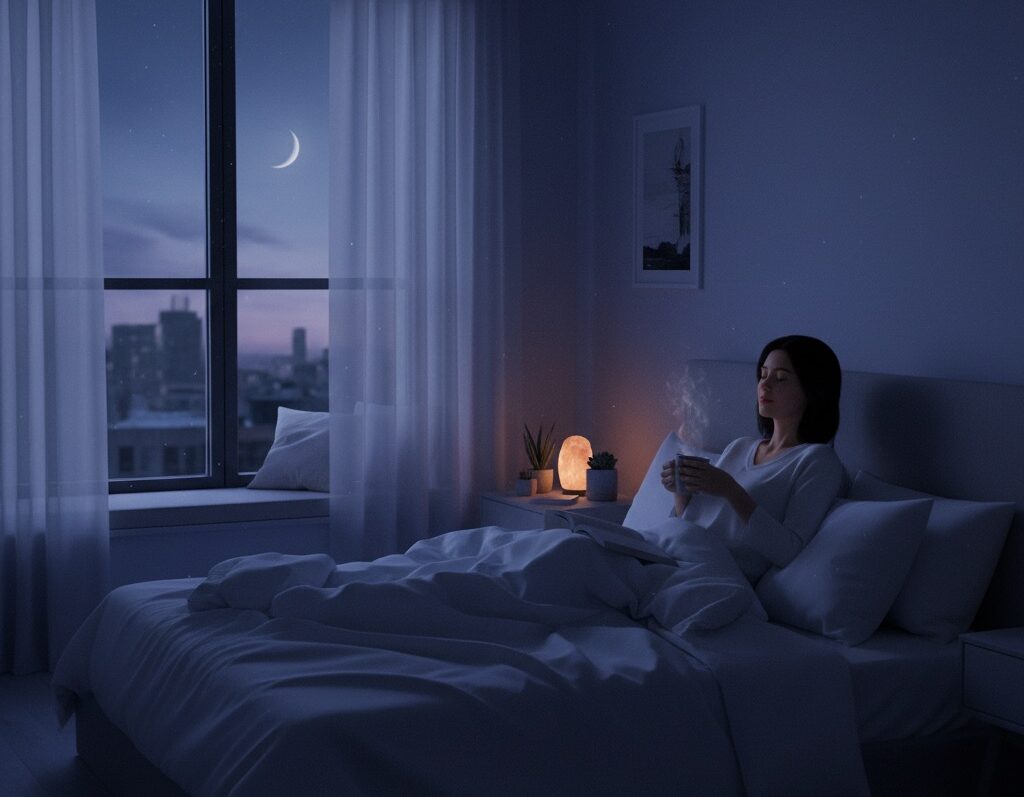
Use warm, dim lighting in the evening (e.g. soft lamps, salt lights)
Install blackout curtains or wear a sleep mask to block morning light
Try sunrise alarm clocks to wake more naturally
Tip: Blue light disrupts melatonin. Switch off bright overheads and use amber bulbs at night.
Temperature: cool it down
Your body needs to cool down slightly to fall asleep. A warm room, heavy blankets, or poor ventilation can make your sleep shallow and restless. Try this:
Set room temp to 60–67°F (15–19°C)
Use breathable bedding (cotton, bamboo, linen)
Open a window for airflow (or use a quiet fan)
Take a warm shower before bed to help your body cool afterward
Sound: create calm or mask noise
Even if you think you’re used to outside noise, your brain still registers disruptions. Sudden sounds (traffic, roommates, pets) can interfere with deep sleep.
Sound tips:
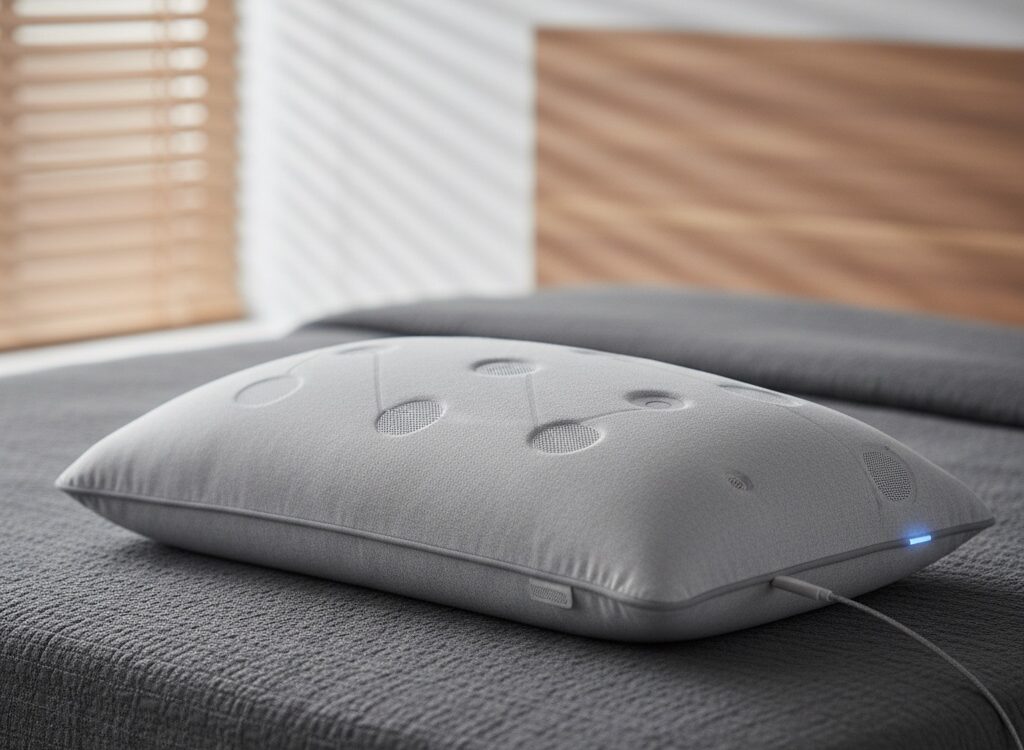
Try white noise machines or nature sounds
Use earplugs if your space is noisy
Keep electronics muted — even notification buzzes can disturb your rest
Calm ambient sound supports the brain’s natural sleep cycles.
Scents: trigger relaxation through smell
Scent is strongly tied to memory and emotion. Using calming aromas in your space can condition your brain to associate certain smells with rest.
Relaxing scents to try:
Lavender — reduces heart rate and promotes calm
Chamomile — gentle and soothing
Sandalwood or cedar — grounding and warm
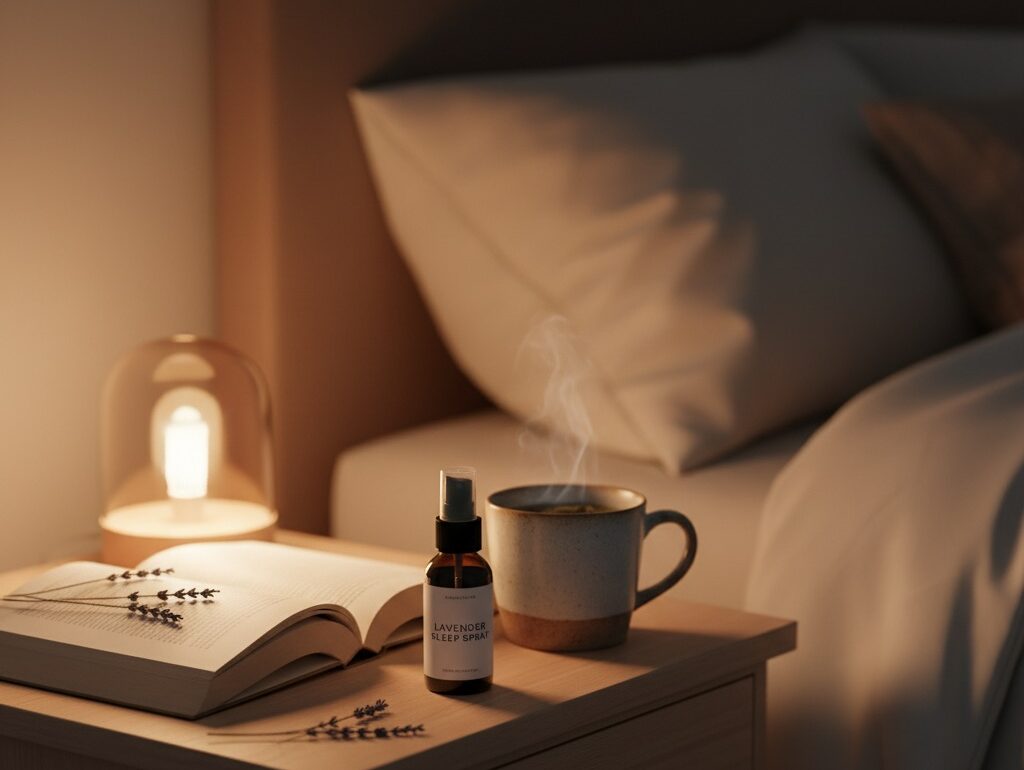
Try essential oil diffusers, pillow sprays, or dried sachets near your bed.
Bedding: soft, clean, breathable
Your bed should feel like a retreat. Scratchy sheets, too many pillows, or heavy covers can leave your body subtly tense.
Simple upgrades:
Wash bedding regularly in gentle detergent
Choose natural fibers over synthetics
Use only the pillows and blankets you need — less clutter, better airflow
Try a weighted blanket if you like pressure (but not if you overheat easily)
Clutter: clear space, clear mind
Even if you ignore it, visual clutter increases mental noise. A messy room can quietly activate stress and overstimulation.
Clear the space:
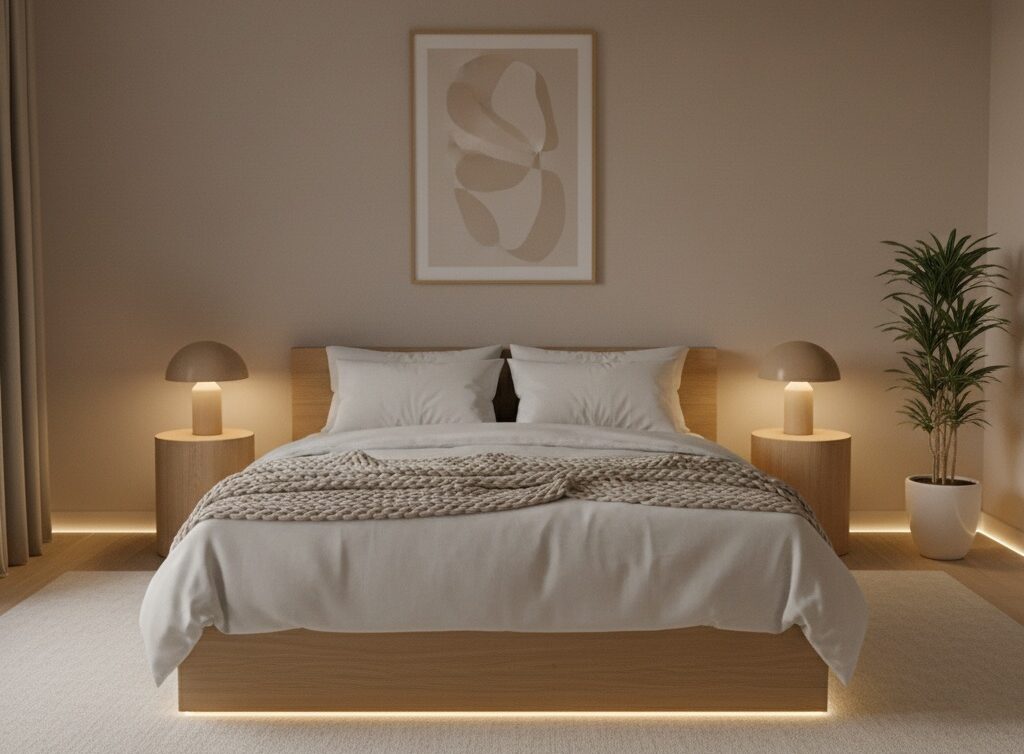
Keep bedside surfaces simple (lamp, book, tea)
Store items in baskets or drawers
Limit under-bed storage — the less “stuff” you see, the calmer you feel
Bonus hacks for better sleep space
Use a bedtime scent anchor (like a lavender pillow spray used nightly)
Keep a small evening journal on your nightstand
Try low-wattage smart bulbs with night mode
Place your phone across the room — or outside the bedroom entirely
Keep houseplants for air quality (snake plant, peace lily)
- Try cold and hot therapy and deep breathing for sleep.
What to avoid in your bedroom
Bright overhead lighting after sunset
TVs, tablets, or scrolling in bed
Loud or blinking electronics
Overheating (too many layers, no air flow)
Piles of laundry or mess that adds background stress
Your bedroom isn’t just where you sleep — it’s the foundation of your rest and recovery.
Small steps, big difference.
You don’t need a perfect setup. Just improving one element — lighting, temperature, or sound — can have a real impact on how well you sleep.
Try changing one thing tonight. A lamp, a scent, a bit of decluttering. Notice how it feels — and build from there.
Better sleep doesn’t have to be complicated. It starts right where you are.