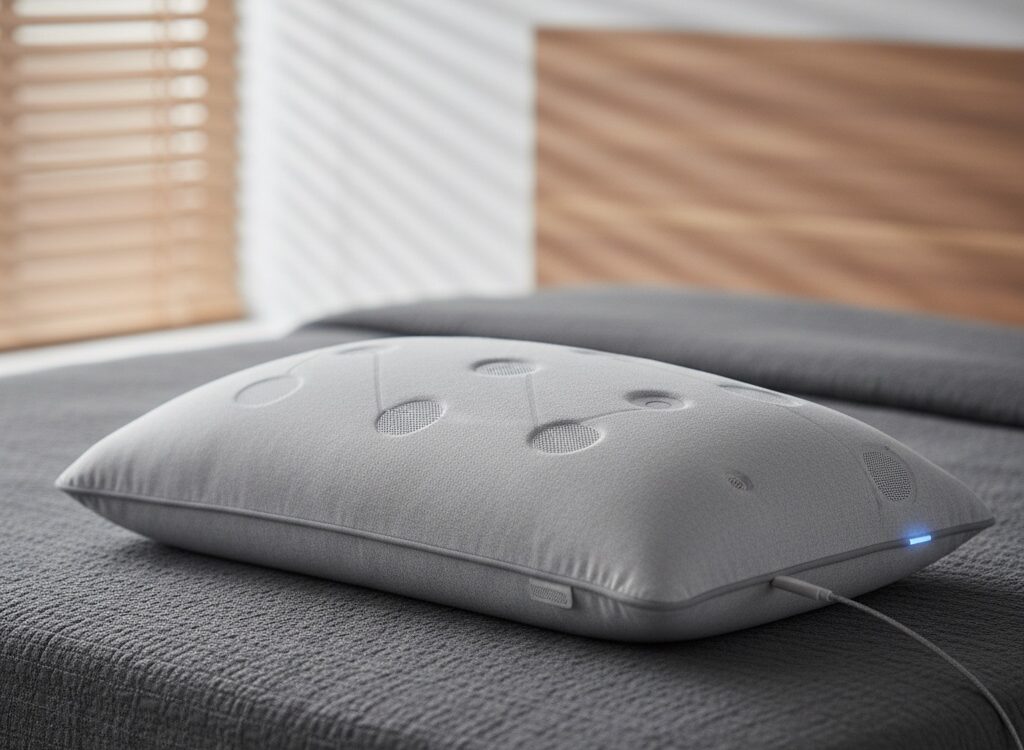
Every night, your body prepares for sleep not through words, but through rhythm. Your heart slows. Your breath softens. Your muscles release. And in this subtle choreography, there’s something powerful — a biological language of safety.
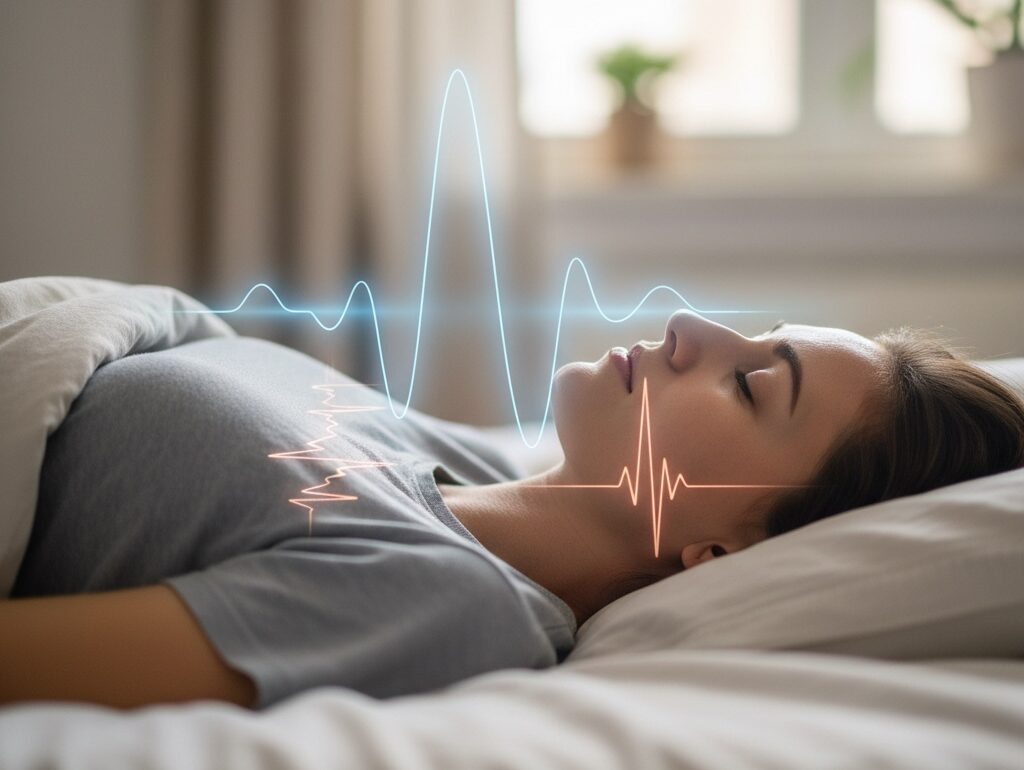
At the center of this conversation is the link between breath and heartbeat. When your inhale and exhale align with your heart’s rhythm, something remarkable happens: your nervous system begins to downshift naturally, activating rest-and-digest pathways that prepare both mind and body for deeper sleep.
This process — often called cardiorespiratory synchronization — isn’t just a meditative metaphor. It’s a measurable state where your breath and heart begin to move together in harmony, forming a kind of physiological coherence that supports not only better sleep, but emotional regulation, clarity, and long-term resilience.
What is breath–heartbeat synchronization?
Breath–heartbeat synchronization is a phenomenon where the pace of your breathing and the rhythm of your heart begin to align. Scientifically, this process involves respiratory sinus arrhythmia (RSA) — a natural variation in heart rate that occurs with the breathing cycle.
-
On the inhale, heart rate slightly increases
-
On the exhale, heart rate slows down
This pattern becomes more pronounced when you breathe slowly and evenly, especially around 5–6 breaths per minute — a rhythm shown in multiple studies to promote parasympathetic activation (the calm-down branch of your nervous system).
In this state, your vagus nerve — a major player in the body’s stress and recovery response — is more active. This promotes emotional steadiness, internal clarity, and deeper rest.
Why rhythm matters for sleep
The body craves rhythm. From the circadian clock that regulates your sleep–wake cycle to the gentle oscillations of brainwaves during different sleep stages, the nervous system is deeply tuned to patterns.
When you’re stressed, overstimulated, or anxious at night, these internal rhythms can become disrupted. Your heart may beat erratically. Breathing becomes shallow or held. Brainwave patterns become fragmented.
Breath–heartbeat synchronization acts like a reset button — gently nudging these rhythms back into sync. This matters because:
-
It lowers sympathetic activation (fight-or-flight)
-
Increases heart rate variability (HRV) — a marker of adaptability and recovery
-
Calms racing thoughts by engaging the prefrontal cortex
-
Supports the transition from wake to sleep by reducing cortical arousal
Think of it as giving your brain and body the same tempo — a shared rhythm that signals “safe to rest.”
How modern life disconnects us from internal rhythm
Most of us breathe and move through the day unconsciously — which isn’t a problem until external rhythms override our internal ones.
Common disruptions include:
-
Caffeine and screen exposure, which raise baseline heart rate
-
Constant multitasking, which fragments attention and disrupts breath
-
Emotional suppression, which causes irregular breath-holding patterns
-
High cognitive load, which keeps the nervous system in “bracing” mode
-
Overstimulation, as explored in Sensory saturation and overstimulation
These inputs make it harder to access the calm, slow breath that helps the heart settle into coherence. Over time, you may fall asleep with shallow breath, high heart rate, or latent physical tension — all of which undermine recovery.
How to feel the connection: interoception
To work with this synchronization, you don’t need a wearable or device — just awareness. The skill of tuning into your body’s internal rhythms is called interoception. It’s your ability to feel what’s happening inside: heartbeat, breath depth, temperature, tension, calm.
Here’s a simple interoceptive check-in to try before bed:
-
Lie down and place one hand on your chest, the other on your abdomen
-
Without changing anything, observe your breath — where does it move?
-
Notice the timing: does your heart beat faster on inhale? Slower on exhale?
-
Let your attention soften — not forcing synchronization, just listening
-
Imagine breath and heartbeat like two dancers gradually learning the same step
This process alone begins to calm the system. The more you observe without effort, the more the rhythms naturally align.
Breath practices that support coherence
While any slow, conscious breathing can support sleep, some patterns are especially effective at guiding heartbeat synchronization. Let’s briefly explore three:
1. The 5–5 rhythm (coherence breath)
This is the core practice used by the HeartMath Institute and multiple HRV studies:
-
Inhale for 5 seconds
-
Exhale for 5 seconds
-
Continue for 3–10 minutes before bed
This even rhythm optimizes vagal tone and increases HRV. You can do this seated, lying down, or during your wind-down routine.
2. The 4–6 rhythm (parasympathetic breath)
This version emphasizes a longer exhale, which is linked to calming the nervous system:
-
Inhale for 4 seconds
-
Exhale for 6 seconds
The exhale is key. As we explored in The pause exhale, this phase tells the body it’s time to release.
3. Resonant breathing with imagery
Combine slow breathing with gentle visualization:
-
Imagine a wave rising on inhale and falling on exhale
-
Picture your heart and lungs glowing with each breath
-
Sync breath with the feeling of “settling” into bed, like sinking into soft ground
This pairing of interoception and imagination deepens the body’s sense of safety and coherence.
Why this matters beyond sleep
Synchronizing breath and heartbeat doesn’t just prepare the body for sleep — it strengthens your ability to stay regulated during the day. This rhythm acts as a baseline of internal safety.
When the nervous system learns to return to this calm state repeatedly, you build:
-
Resilience to stress
-
Improved recovery from emotional triggers
-
Stronger focus and presence
-
More stable mood
It’s not a one-time technique but a neurophysiological skill — one that becomes more accessible the more you practice. And sleep is one of the most powerful windows for integrating that skill.
As discussed in The role of body scanning in reducing nighttime overthinking, the body is often the fastest way to interrupt mental spirals. Breath–heartbeat synchronization brings awareness inward in a tangible, trackable way — grounding you through rhythm, not just thought.
What the research says
Breathing and heartbeat have long been studied independently in the context of sleep and stress. But recent research is beginning to focus on their interaction — how the timing between the two influences physiological states.
Several studies have highlighted:
-
Increased HRV (heart rate variability) during slow-paced breathing, particularly in the 5–6 breaths-per-minute range — a biomarker associated with better emotional regulation and sleep quality (NIH)
-
Reduced cortisol levels and faster sleep onset in individuals practicing slow breath rhythms before bed
-
Enhanced vagal tone, particularly with longer exhale patterns, associated with increased parasympathetic activity
-
Subjective reports of greater calm, clarity, and emotional ease in individuals who regularly engage in resonance breathing (Frontiers in Psychology)
Wearables that track HRV and respiratory rate are beginning to include coherence metrics. However, you don’t need a device to benefit — in fact, over-reliance on data can distract from the felt experience. As noted in Why your sleep tracker might be lying to you, numbers don’t always reflect internal reality.
What matters most is the experience of felt rhythm — the internal state, not the metric.
When to practice: timing and setting
The best time to begin breath–heartbeat synchronization is during your wind-down window — the 30–60 minutes before sleep. But it’s also effective:
-
After waking during the night (to help reenter deep rest)
-
After emotionally charged conversations or overstimulating events
-
During transitions: shutting off work, shifting into evening, or preparing for travel
-
On waking, to set a calm tone for the day
The ideal setting is:
-
Quiet or softly lit
-
Without interruptions
-
With physical comfort (e.g., lying down with a pillow under knees, or seated in a supportive chair)
-
Optional: soft instrumental music or ambient pink noise (read more on soundscapes here)
What it feels like when synchronization “clicks”
You’ll know the practice is working not by sudden transformation, but by small shifts:
-
Your body starts to feel heavier or more grounded
-
Your breath becomes automatic, without needing to “count”
-
Thoughts slow down or become less sticky
-
You feel a sense of inner steadiness — like a hum beneath the surface
-
You may feel warmth in the chest, or a slight smile, or even tears — all signs of vagal tone shifting
Sometimes you’ll sense your heartbeat subtly aligning with your breath — a gentle pulse on the inhale, a softening on the exhale. That’s your body’s internal music returning to harmony.
A sample nighttime sequence
To help you integrate this into your evening routine, here’s a simple 10-minute practice that builds rhythm gradually.
Minute 1–2: Grounding
Lie down or sit comfortably. Place one hand on your belly, one on your chest. Simply observe your breath and heartbeat.
Minute 3–5: Begin pacing
Inhale for 4–5 seconds, exhale for 5–6 seconds. No need to be perfect. Just find a smooth, even flow.
Minute 6–8: Internal imagery
Imagine your heart and lungs moving together, like tides or wings. Feel a softness in your chest with each exhale.
Minute 9–10: Let go of control
Release the counting and let your body take over. Stay in the rhythm if it feels natural. Or drift into quiet stillness.
This simple sequence works well after journaling or stretching, and pairs especially well with the 5-minute wind-down.
Final thoughts: your body knows the way
Sleep is not something you force — it’s something you fall into, gently, when your system feels safe enough to let go.
Synchronizing breath and heartbeat is a way of reminding your nervous system of what it already knows: how to rest, how to reset, how to return to rhythm.
In a world of fragmented attention and overstimulated minds, this practice brings you back into wholeness. You don’t need to fix your thoughts or perfect your bedtime — you just need to remember your body’s original tempo.
And when you do, sleep often follows — not as a goal, but as a side effect of coherence.